
Sustainable Landscape Drainage: Smart Ways to Manage Rainwater
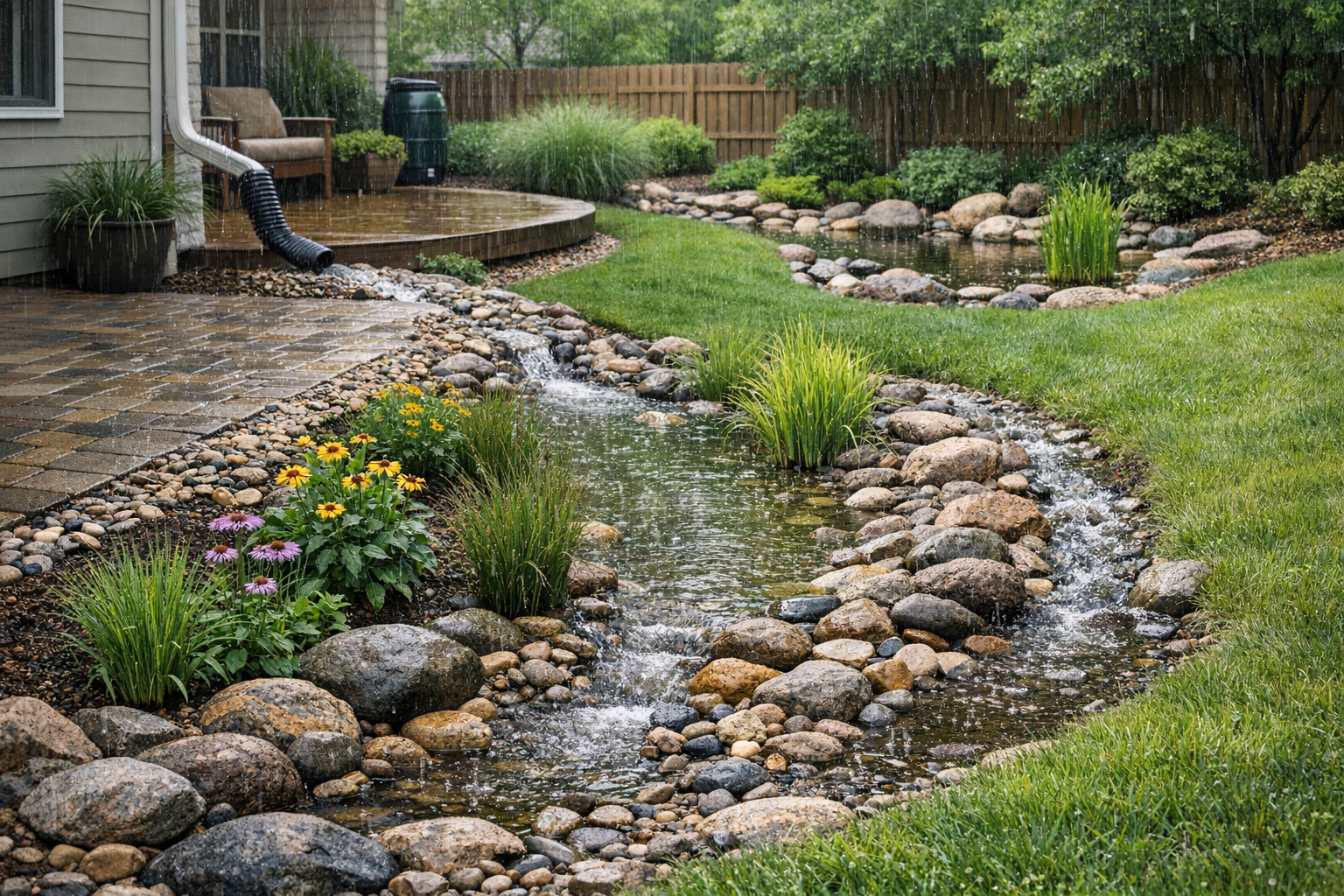
Sustainable landscape drainage helps rainwater soak into the ground, flow safely through your yard, and support healthy plants rather than rushing toward your home or into storm drains. By working with the natural shape of your property, you can reduce puddles and erosion while making better use of every rainfall.
You do not need a major construction project to get started. A few thoughtful changes—such as improving soil, directing downspouts, or planting a rain garden—can make a meaningful difference. The best approach depends on your site, local climate, and where water collects.
What Is Sustainable Landscape Drainage?
Sustainable landscape drainage manages rainwater close to where it falls. Instead of sending it quickly off-site, this approach slows, captures, filters, and absorbs runoff through soil and plants. It is sometimes called green infrastructure or low-impact development.
Conventional drainage often relies on gutters, pipes, and hard surfaces that move water away as fast as possible. These systems may be necessary in some places, but they can add pressure to storm drains and carry soil, fertilizer, and other pollutants into local waterways. Sustainable drainage uses landscape features to complement conventional systems and reduce runoff where practical.
Benefits of Sustainable Drainage
A well-planned drainage landscape can help protect your home and improve the health of your yard. When rainwater has a safe place to go, there is less chance of standing water near foundations, soil loss on slopes, or muddy paths and lawns.
- Less runoff: Absorbing water on-site can reduce the volume and speed of water flowing over paved areas.
- Healthier soil and plants: Water that infiltrates the soil can support roots and replenish moisture between rainfalls.
- Cleaner waterways: Soil and vegetation can help filter sediment and some pollutants before water reaches drains or streams.
- A more resilient yard: Diverse plantings and improved soil can help landscapes cope with both heavy rain and dry periods.
Sustainable Landscape Drainage Solutions
Many effective drainage features are simple to add, but they should be chosen for the conditions on your property. Observe where water flows during rain, note low spots, and consider whether the soil drains quickly or stays saturated.
Rain Gardens
A rain garden is a shallow planted area designed to collect runoff temporarily from a roof, driveway, or other surface. Water should soak into the ground rather than remain in the garden for long periods. Native plants with varied root depths are often a good choice because they can handle changing moisture levels once established.
Place a rain garden where it can receive water safely, away from building foundations and areas where water could affect neighboring properties. Soil conditions matter: a professional may recommend soil testing or amendments, especially where clay or a high water table limits infiltration.
Permeable Paving
Permeable pavers, porous asphalt, and other permeable surfaces allow rain to pass through gaps or a specially designed surface into a gravel base below. They can be useful for walkways, patios, and some driveways, reducing the amount of runoff compared with conventional paving.
These surfaces need the right base and installation to work well. They also require periodic maintenance, such as removing accumulated sediment, to keep openings from becoming clogged. Choose a system suited to your expected traffic and local conditions.
Rain Barrels and Cisterns
Rain barrels collect water from roof downspouts for later use on gardens and containers. Larger cisterns can store more water where space and local rules allow. Keep stored water covered, use a screened inlet to limit debris and insects, and include an overflow route that directs excess water away from the home.
Stored rainwater is useful for many landscape tasks, but it may not be suitable for drinking without appropriate treatment. Check local guidance before installing a collection system, since rules and recommendations vary.
Swales and Berms
A swale is a shallow, gently sloped channel that guides or slows water through a landscape. A low berm can sit beside it to help hold water in a planted area. Together, these features can spread runoff across the yard and encourage infiltration instead of allowing it to concentrate and erode soil.
Swales need a stable outlet or overflow path for intense storms. Avoid redirecting water onto a neighboring property, toward a foundation, or into a place where it could cause damage.
Healthy Soil and Deep-Rooted Plants
Good drainage begins below the surface. Compacted soil absorbs water poorly, so reducing unnecessary foot traffic, adding suitable organic matter, and maintaining ground cover can support better soil structure. Avoid working wet soil, which can increase compaction.
Trees, shrubs, grasses, and perennial ground covers can help hold soil in place and improve infiltration over time. Select plants suited to your local climate and the wet or dry conditions of each area. Native species can be particularly valuable because they are adapted to regional conditions, though the right choices depend on the site.
How to Plan a Drainage Project
Start by watching your yard during and after rain. Look for where runoff begins, where it travels, how long puddles last, and whether water enters from neighboring land. Check roof downspouts, slopes, compacted areas, and paved surfaces. Photos and simple notes can reveal patterns that are easy to miss on a dry day.
Next, identify a safe destination for excess water and choose features that match your soil, available space, and maintenance preferences. A small rain garden or rain barrel may be a manageable first step. Larger grading changes, persistent foundation moisture, steep slopes, or drainage near septic systems may require a landscape professional or other qualified expert.
Before digging or changing grades, contact local utility-locating services and check municipal requirements. Some drainage projects need permits, and local rules may govern where runoff can be directed. Planning ahead helps prevent damage and avoids shifting a water problem onto someone else.
Common Mistakes to Avoid
- Ignoring the source: A low spot may be caused by a leaking downspout or compacted soil, not a need for a larger drain.
- Planting without checking conditions: A rain garden needs suitable soil, a safe overflow route, and plants that can tolerate its moisture pattern.
- Sending water toward structures: Keep runoff moving away from foundations and other vulnerable areas.
- Forgetting maintenance: Clear leaves from inlets, inspect overflow routes, and remove sediment from permeable surfaces as needed.
Conclusion
Sustainable landscape drainage turns rainwater into a resource while helping protect buildings, soil, and local waterways. Start by understanding how water moves across your property, then choose practical solutions that suit your site. Even a few well-planned changes can create a yard that handles rain more gracefully.