
LED Landscape Lighting: A Complete Guide to a Brighter, More Beautiful Yard
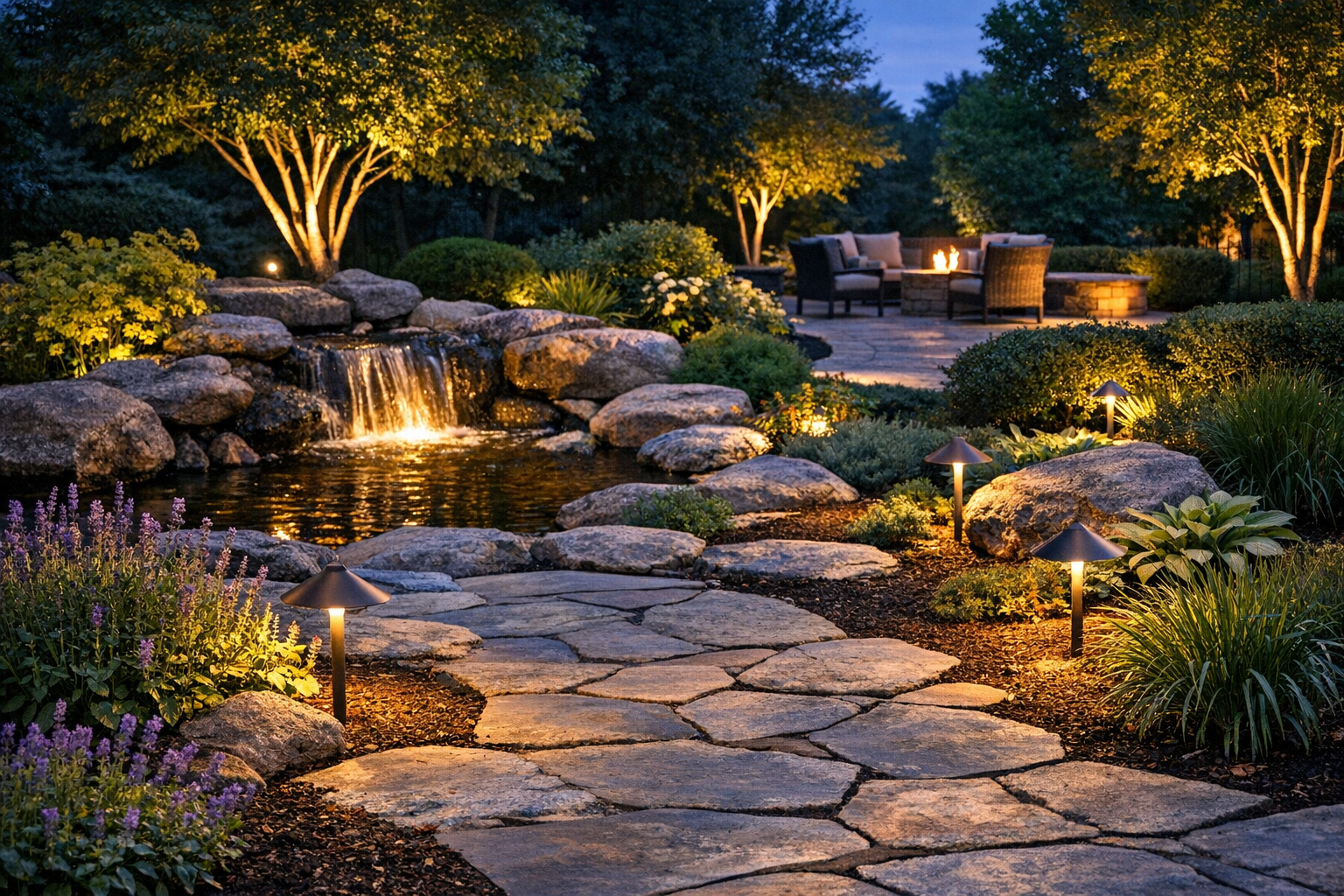
LED landscape lighting can make your yard safer, more welcoming, and easier to enjoy after sunset. From illuminating a front walkway to highlighting a favorite tree, the right lighting plan adds both practical visibility and nighttime appeal. LEDs are an especially popular choice because they use less electricity than many traditional bulbs and are available in a wide range of styles and color temperatures.
Whether you are planning a new installation or upgrading older fixtures, this guide covers the benefits, design basics, fixture types, and upkeep to consider before you get started.
What Is LED Landscape Lighting?
LED stands for light-emitting diode. Unlike incandescent bulbs, which create light by heating a filament, LEDs produce light through a semiconductor. In landscape lighting, LED technology is used in everything from small path lights to powerful spotlights and wall-mounted fixtures.
Many outdoor systems use low-voltage power. A transformer reduces household current to a lower voltage, which is then carried to the fixtures through outdoor-rated cable. Some products are solar-powered or connect directly to household voltage, so check the product specifications and installation requirements before choosing a system.
Benefits of LED Landscape Lighting
Lower energy use
LED bulbs generally use less electricity than comparable incandescent bulbs, which can help reduce the energy used for outdoor lighting. That advantage is especially useful when several fixtures run for hours each evening. Timers, dimmers, and smart controls can help avoid lighting areas when they are not needed.
Long-lasting performance
LEDs typically last much longer than traditional bulbs, meaning fewer replacements over time. Actual lifespan varies by product, operating conditions, and how the fixture handles heat and moisture. Choose fixtures designed for outdoor use, and follow the manufacturer’s guidance for installation and care.
More control over appearance
LED fixtures come in different brightness levels and color temperatures. Warm white light often feels relaxed and inviting, while cooler white light can look crisp and modern. Many systems also offer dimming or color-changing features. For a cohesive look, choose a consistent color temperature across nearby fixtures.
How to Plan Your Landscape Lighting
Start with a purpose
Think about what you want your lighting to do before you buy fixtures. Common goals include helping people see steps and walkways, improving visibility near entrances, highlighting garden features, or making a patio more comfortable after dark. A clear purpose helps you avoid adding lights that create glare or clutter without solving a real need.
Use layers of light
A balanced design combines several types of lighting. Path lights can guide people along a walkway, while spotlights can draw attention to a tree, architectural detail, or garden sculpture. Wall lights provide useful illumination near doors and seating areas. A few well-placed layers usually look more natural than lining every edge with bright fixtures.
Test placement before installation
Try temporary placement after dark before burying cable or fixing fixtures in place. Look for harsh glare, dark gaps, and light shining into windows or a neighbor’s yard. Adjust the angle and spacing until the scene feels comfortable. When illuminating a feature, aim the beam at the object rather than toward the viewer.
Common Types of LED Landscape Lights
- Path lights: Direct light downward near walkways, garden borders, and driveways.
- Spotlights and uplights: Create focused beams for trees, columns, signs, and other focal points.
- Floodlights: Spread light across a wider area, such as an entrance or a portion of a yard.
- Deck and step lights: Add low-level visibility to stairs, railings, and outdoor living areas.
- Wall lights: Illuminate exterior doors, garages, and covered patios.
Choose a fixture based on its job, beam spread, brightness, finish, and weather rating. A light that works well for a broad driveway may be too intense for a small garden bed.
Installation and Safety Considerations
Before installation, map out the fixture locations, cable route, and transformer position. Keep connections protected from water and use products intended for outdoor conditions. Low-voltage lighting can be a manageable project for some homeowners, but wiring still needs to be installed carefully and in line with local requirements.
Use a qualified electrician for line-voltage work or whenever you are unsure about electrical connections. If your plan includes a transformer, confirm that its capacity is suitable for the total load and that it is installed in an appropriate location. Follow the manufacturer’s instructions, and check local codes before beginning.
Maintaining LED Landscape Lights
LED systems need relatively little upkeep, but occasional checks keep them working and looking their best. Clean lenses to remove dirt, leaves, and insect buildup. Trim plants that have grown over fixtures, and check that lights still point where intended. After storms or landscaping work, inspect visible cable and fixtures for damage.
If a light stops working, first check the power supply, timer, connections, and any system controls. For low-voltage systems, a loose connection or damaged cable may affect one fixture or a group of lights. Consult the product instructions before replacing components.
Conclusion
LED landscape lighting combines energy-conscious performance with flexible design options. Start with safety and visibility, add a few thoughtfully chosen accents, and test the layout at night. The result can be a yard that feels more usable, secure, and inviting long after the sun goes down.