
Landscape Irrigation Design: Practical Guide to Efficient, Healthy Landscapes
Introduction
Good landscape irrigation design balances plant needs, water efficiency, and ease of maintenance. Whether you’re planning a new yard or upgrading an existing system, a thoughtful design saves money, conserves water, and keeps plants thriving. This guide walks through the principles, components, step-by-step design process, common mistakes, and sustainable options for smart landscape irrigation design.
Principles of Landscape Irrigation Design
Understand water efficiency and plant needs
Design starts with matching water delivery to plant requirements. Turf, shrubs, trees and native plants all have different water needs. Grouping plants with similar requirements—hydrozoning—reduces waste and simplifies scheduling. Prioritize deep, infrequent watering for roots over frequent shallow sprays that encourage surface roots and disease.
Account for soil type and topography
Soil texture affects infiltration and run-off. Sandy soils drain quickly and may need shorter, more frequent irrigation, while clay holds water longer and benefits from slower application rates. Slopes and low areas influence head placement and may require pressure regulation or separate zones to prevent runoff and uneven coverage.
Key Components of an Irrigation System
Sprinkler heads and emitters
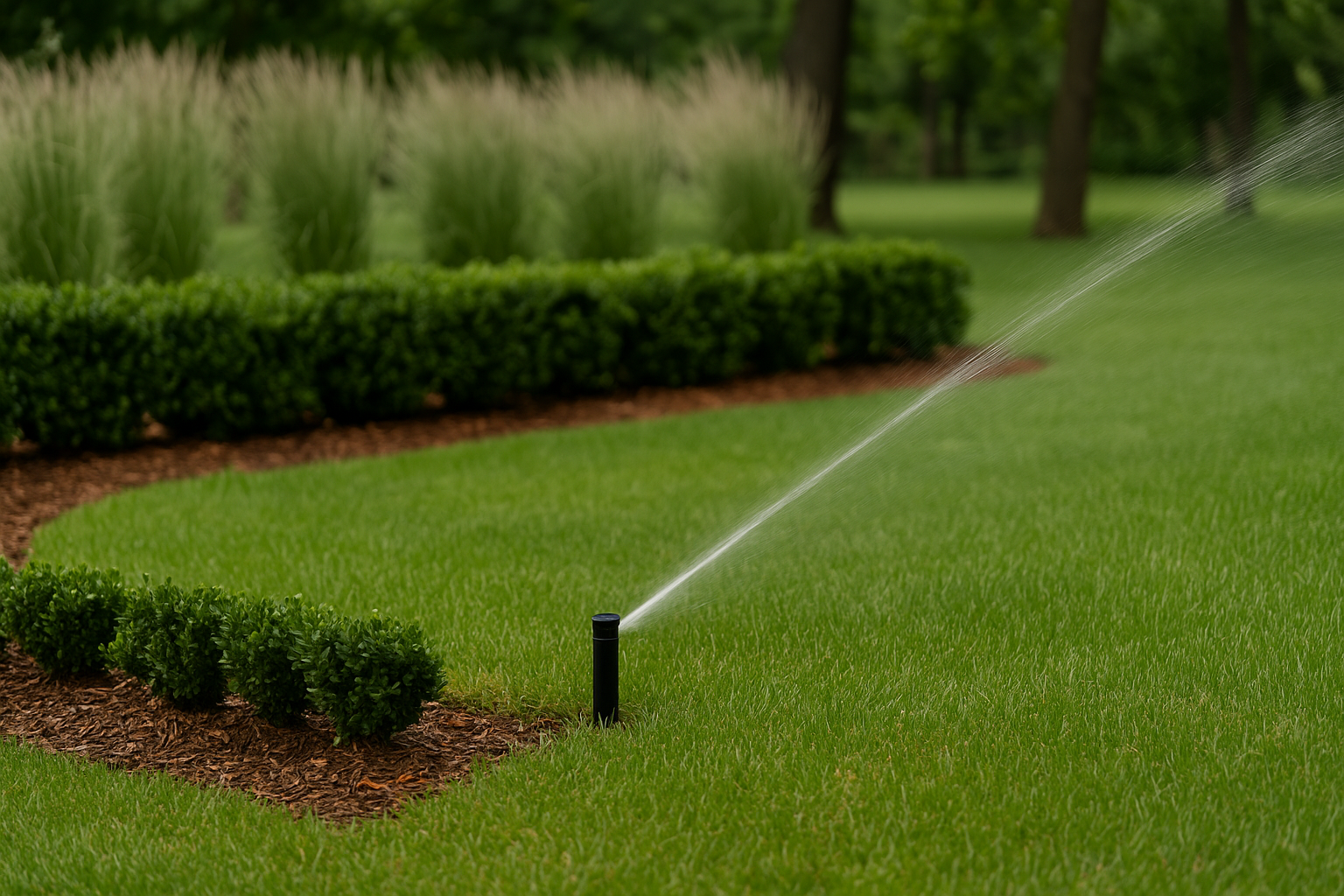
Choose sprinklers based on the area: spray heads for small, flat lawn areas; rotors for larger expanses; and rotary nozzles that improve uniformity. For planting beds, drip emitters and micro-sprays deliver water slowly at the root zone, minimizing evaporation and runoff.
Controllers, valves, and filters
A smart controller enables weather-based scheduling and zone-by-zone control, significantly improving efficiency. Solenoid valves organize the system into manageable zones. Filters and pressure regulators protect drip systems and ensure consistent application rates.
Piping, fittings, and backflow prevention
Properly sized mainlines and lateral pipes maintain pressure and uniform flow. Backflow preventers are critical to protect potable water from contamination. Use durable materials and place valves for easy access during maintenance.
Designing Your Irrigation System: Step-by-Step
1. Perform a site assessment
Map the site, noting plant types, sun exposure, topography, existing drainage and water source location. Identify high-use areas and sensitive plantings that need special attention. Accurate measurements are essential for head spacing and pipe length calculations.
2. Hydrozone the landscape
Group plants according to water needs and exposure. Create separate zones for lawn, flowerbeds, trees, and slopes. This allows tailored run times and reduces overwatering of drought-tolerant species.
3. Layout and head placement
Design sprinkler spacing to achieve head-to-head coverage for even distribution. Place drip lines under mulch near root zones for beds. Consider obstacles, walkways, and plant growth so heads aren’t blocked by foliage when mature.
4. Calculate flow and pressure, then size pipes
Measure available water flow (gallons per minute) and static pressure. Use this data to determine the number of heads per zone and to size mains and laterals. Proper pressure regulation prevents misting, overspray and poor performance.
Best Practices and Common Mistakes
Smart scheduling and regular maintenance
Run schedules based on season, rainfall and plant needs. Smart controllers or weather sensors automate adjustments. Inspect for leaks, clogged emitters, and misaligned heads regularly—small repairs prevent big water losses.
Avoid these frequent errors
- Mixing incompatible plant types in one zone (causes over- or under-watering)
- Placing heads too close to walkways and buildings (wastes water and causes damage)
- Neglecting system winterization or freeze protection in cold climates
Sustainable Considerations
Use drip irrigation and efficient nozzles
Drip systems reduce evaporation and deliver water directly to roots. Low-angle, matched-precipitation nozzles and rotors improve uniformity and reduce runoff in turf areas.
Harvest rainwater and smart controllers
Rain barrels or cisterns can supplement irrigation. Integrating a rain sensor or weather-based controller prevents unnecessary watering after storm events and adapts schedules during heat waves or cool spells.
Plant choice and mulch
Select native and drought-tolerant plants to lower long-term water demand. Mulch conserves soil moisture and moderates soil temperature, reducing irrigation frequency.
Conclusion
Well-designed landscape irrigation conserves water, promotes plant health, and reduces maintenance. Focus on hydrozoning, correct component selection, smart controls and routine upkeep. If your landscape is complex or water supply is limited, consider consulting a licensed irrigation designer to fine-tune the system and ensure regulatory compliance.