
Rain Garden Ideas: Beautiful Ways to Manage Rainwater
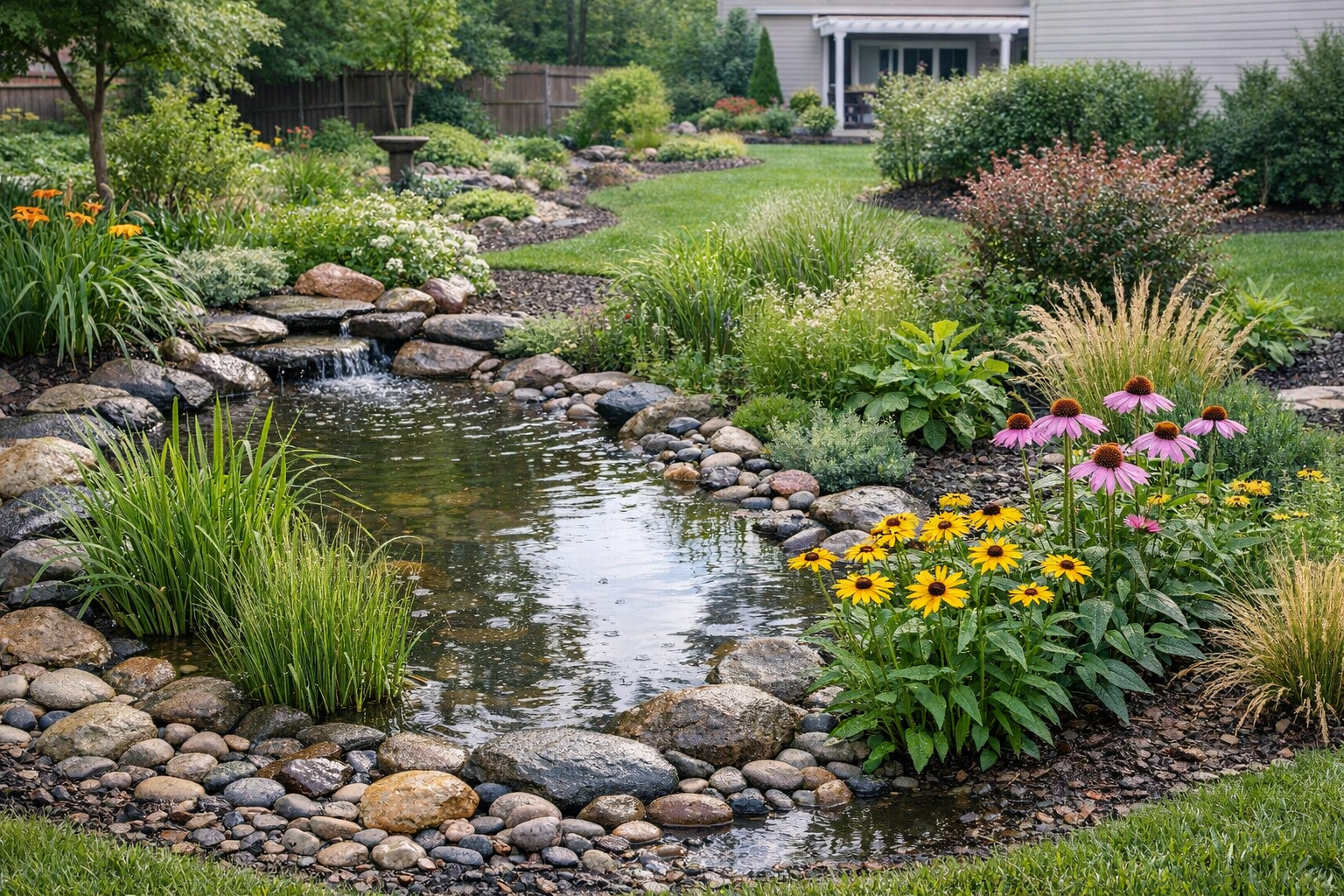
A rain garden can turn a soggy patch of yard into a colorful, wildlife-friendly feature. Designed to collect runoff from roofs, driveways, or patios, it gives rainwater time to soak into the ground instead of rushing toward storm drains. With the right location and plants, a rain garden can be both practical and beautiful.
Whether you have a spacious backyard or a compact front garden, these rain garden ideas can help you plan a space that suits your landscape and local climate.
Start with the Right Rain Garden Location
Good placement is the foundation of a successful rain garden. Look for a naturally low area where water already gathers, or choose a spot that can receive runoff through a shallow channel or downspout extension. The site should be reachable for maintenance and should have a safe route for excess water to flow during a very heavy storm.
Keep the garden away from building foundations, wells, septic systems, and underground utilities. Many guides recommend placing it at least 10 feet from a home, but local requirements and soil conditions vary, so check before digging. Avoid areas where water stands for long periods or where runoff could carry oil, chemicals, or other pollutants into sensitive soil.
Test the Soil Before You Dig
A simple drainage test can help you decide whether the location is suitable. Dig a small test hole, fill it with water, and observe how quickly the water drains. If it remains full for a long time, the soil may need professional assessment, amendments, or a different garden location. Local extension services and watershed organizations can often offer practical guidance.
Choose a Shape That Fits Your Yard
Rain gardens do not have to look like formal basins. A curved shape can blend naturally into a lawn, while a crisp rectangle can complement a modern landscape. In a cottage-style yard, a kidney-shaped bed with loose planting groups feels relaxed. For a narrow side yard, a long, shallow garden can collect runoff without taking up much space.
Use a Dry Creek Bed as a Decorative Channel
A dry creek bed made from rounded stones can guide water from a downspout or paved area toward the garden. Add a few larger rocks and moisture-tolerant plants along the edges to make the channel look intentional even when it is dry. Keep the channel shallow and stable, and make sure it will not direct water toward a neighbor’s property or a building.
Make a Small-Space Rain Garden
Even a modest garden can make a difference. A compact planting bed near a downspout, a rain garden along a driveway edge, or a series of small planted basins may suit a townhome or small lot. If space is extremely limited, consider a rain barrel paired with a planted area, while ensuring overflow has a safe destination.
Pick Plants for Changing Moisture Levels
Rain gardens alternate between wet conditions after storms and drier periods between them. Choose plants suited to your region that can handle both. Native plants are often a strong choice because they support local pollinators and wildlife and are adapted to regional weather patterns. Before buying, check each plant’s mature size, sun requirements, and water needs.
A useful planting plan places water-tolerant plants in the basin’s lowest area, plants that tolerate occasional moisture on the middle slopes, and more drought-tolerant species around the upper edge. Depending on your region, options might include sedges, rushes, native grasses, coneflowers, cardinal flower, or shrubs suited to damp conditions. Ask a local nursery or native plant society for recommendations that fit your soil and climate.
Layer Flowers, Grasses, and Shrubs
For a garden with year-round interest, mix plant forms and bloom times. Clumps of ornamental grasses add texture, flowering perennials bring seasonal color, and a small native shrub can create height. Repeat a few species in groups rather than using one of everything; this makes the design feel cohesive and gives pollinators easier access to blooms.
Add Features That Make the Garden Feel Finished
Thoughtful details help a rain garden look like a designed landscape rather than a drainage project. A low border of stone can define the bed, while a simple stepping-stone path makes it easier to inspect plants. A small sign explaining the garden’s purpose can be a welcoming touch in a front yard or community space.
Consider where people will see the garden from indoors and outdoors. Position taller plants where they will frame a view without blocking windows or walkways. If the garden is near a patio, choose plants that are attractive but not prone to flopping into seating areas. Keep sightlines clear near driveways and sidewalks.
Plan for Maintenance and Overflow
A rain garden is not maintenance-free, especially during its first year. Water new plants as needed while they establish, remove weeds, and replace mulch that has washed away. A thin layer of shredded wood mulch can help limit weeds, but avoid piling it against plant stems or creating a surface that prevents water from soaking in.
After storms, check for erosion, standing water that lasts longer than expected, or debris blocking the inlet. An overflow area is essential: it should carry extra water away safely when the garden reaches capacity. Keep the inlet and outlet clear, and prune plants as needed to preserve paths and visibility.
Avoid Common Rain Garden Mistakes
- Do not place a rain garden where it could send water toward a foundation, neighboring lot, or unstable slope.
- Do not assume every plant labeled “water-loving” will tolerate dry spells between storms.
- Do not let sediment, leaves, or lawn clippings build up where runoff enters the garden.
- Do not skip local guidance on drainage, permits, utilities, or suitable locations.
Conclusion
The best rain garden ideas combine smart drainage with a style that feels at home in your yard. Choose a suitable location, build in a safe overflow route, and plant for your local conditions. With a little planning, your rain garden can help manage runoff while adding color, texture, and habitat to your landscape.