
Pond Landscaping Plants: Best Choices for a Healthy, Beautiful Pond
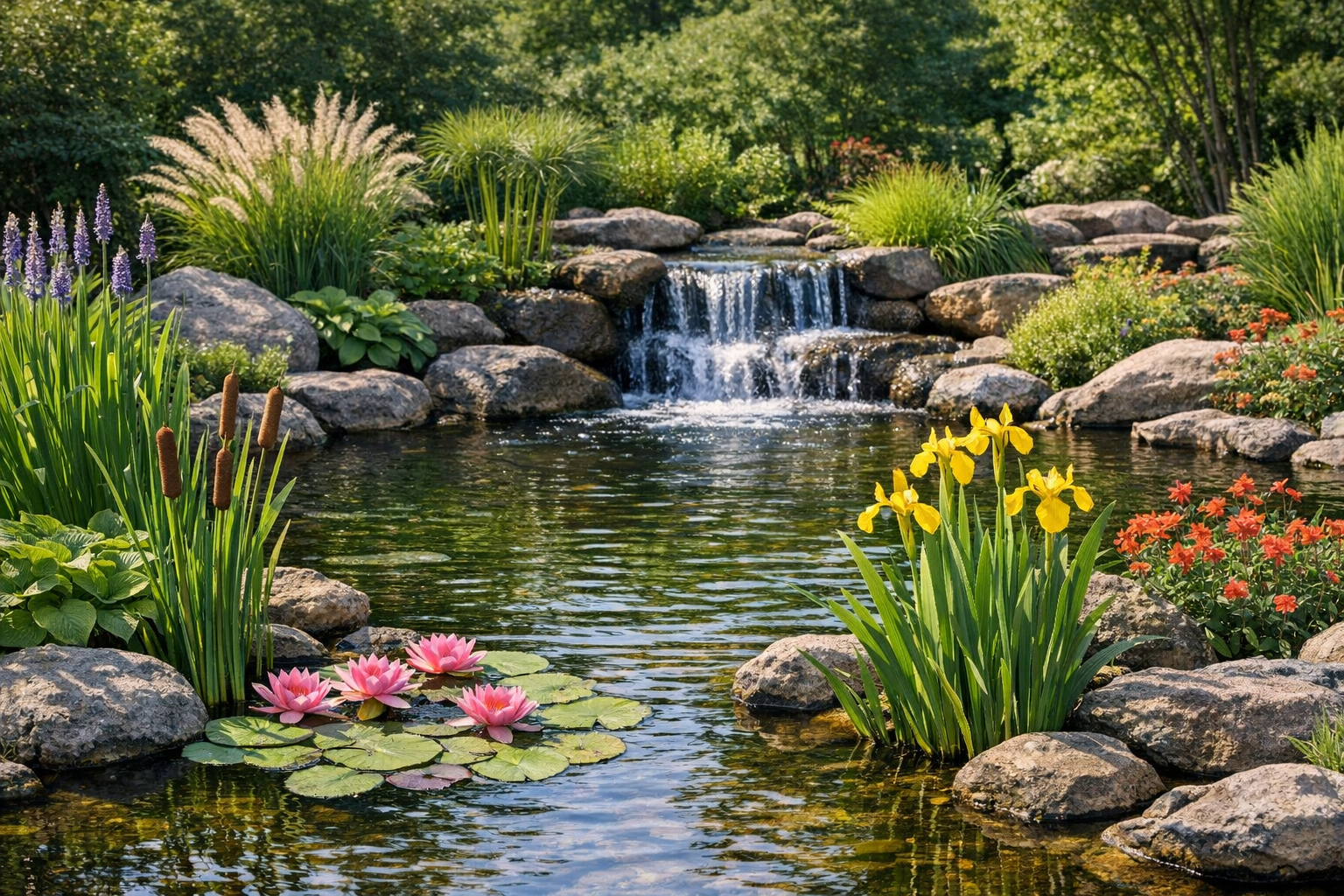
The right pond landscaping plants do more than soften the edges of a water feature. They add color and texture, provide shelter for wildlife, and help create a balanced environment for fish and other pond inhabitants. Whether you have a small backyard pond or a larger natural-looking water garden, choosing plants for different water depths is the key to a healthy, attractive design.
Use this guide to explore the main types of pond plants, learn where to place them, and find practical tips for keeping them under control.
Why Add Plants to a Pond?
Pond plants make a water feature feel connected to the surrounding landscape, but their benefits go beyond appearance. Floating leaves can shade the water and help limit algae growth by reducing available sunlight. Stems and roots create hiding places for fish, frogs, and beneficial insects, while some plants absorb excess nutrients that might otherwise contribute to cloudy water.
Plants also bring seasonal interest. Spring shoots, summer flowers, colorful foliage, and winter seed heads can give a pond changing points of interest throughout the year. A thoughtfully planted pond can look natural without becoming difficult to maintain.
Types of Pond Landscaping Plants
Most pond plants fall into a few groups based on how they grow and where they thrive. Combining several types helps create a layered look and supports a wider range of pond life.
Marginal Plants for Pond Edges
Marginal plants grow in shallow water or consistently wet soil around the pond’s edge. They are useful for softening hard pond liners, hiding equipment, and blending the water feature into nearby planting beds. Popular choices include marsh marigold, pickerelweed, rushes, and dwarf cattail.
Check the mature size before planting. Some marginals spread quickly or grow taller than expected, so compact varieties are often easier to manage in small ponds. Place them in planting baskets to limit root growth and make maintenance simpler.
Deep-Water Plants and Water Lilies
Deep-water plants grow with their roots below the surface and their leaves or flowers floating on top. Water lilies are a classic option, available in a range of flower colors and sizes. Choose a variety suited to your pond’s depth and available space, and leave room for its leaves to spread.
Hardy water lilies usually tolerate cold winters when planted at the right depth, while tropical varieties need warmer conditions and may require winter protection. Avoid covering the entire surface with leaves; leaving open water helps maintain a balanced, attractive pond.
Floating Plants
Floating plants rest on the water’s surface without being rooted in the pond bed. Depending on your climate, options may include water lettuce, frogbit, or water hyacinth. They can provide shade and shelter, but fast-growing varieties may multiply rapidly.
Check local rules before buying floating plants. Some species are invasive in certain regions and should never be released into natural waterways. Remove excess growth regularly and dispose of it responsibly.
Submerged Oxygenating Plants
Submerged plants grow largely underwater and can offer shelter for small pond animals. Examples include hornwort and certain pondweeds. They contribute to a more varied habitat, but the term “oxygenating” can be misleading: plants may release oxygen in daylight, yet use oxygen at night as they respire. Healthy water circulation and sensible stocking levels remain important.
How to Arrange Plants Around a Pond
Think in layers rather than placing plants randomly. Start with marginals along selected sections of the edge, then add deep-water plants where the pond is deep enough. Floating leaves can provide shade, while submerged plants add structure below the surface. Keep some sections open so fish can reach the surface and you can enjoy clear views across the water.
Match each plant to its preferred depth, sunlight, and mature size. A sunny pond can support many flowering water plants, while a shaded pond may need varieties suited to lower light. If you are unsure about water depth, check the plant label and measure from the planting shelf or pond bottom to the water surface.
For a natural look, repeat a few plant varieties in groups rather than using one of everything. Vary leaf shapes and heights, and use plants already present in your garden to connect the pond with its surroundings.
Planting and Care Tips
Use Pond-Safe Containers and Soil
Plant baskets make it easier to control spreading roots and reposition plants. Use aquatic planting soil or a heavy loam recommended for pond use. Regular potting mixes can contain fertilizers or lightweight ingredients that float into the water and encourage algae. Cover the soil surface with washed gravel to help keep it in place.
Manage Growth Through the Season
Remove yellowing leaves and spent flowers, and thin crowded plants before they cover too much of the pond. Divide vigorous plants when they outgrow their containers. In autumn, clear away decaying foliage that would otherwise sink and add excess organic matter to the water.
Choose plants suited to your local climate and avoid taking plants from wild ponds. Nursery-grown plants are a more reliable choice, and they reduce the risk of introducing unwanted pests or invasive species.
Common Pond Planting Mistakes to Avoid
- Planting too densely: Crowded growth can block views and make routine cleaning harder. Leave space for plants to mature.
- Ignoring mature size: A small starter plant may spread across a pond in one season. Check its growth habit before planting.
- Using garden chemicals: Herbicides and fertilizers can harm pond life. Choose pond-safe products and follow their labels carefully.
- Adding invasive species: Never release unwanted pond plants into streams, lakes, or wetlands. Follow local guidance for disposal.
Conclusion
The best pond landscaping plants balance beauty with practical growth and care. Combine marginals, deep-water plants, floating varieties, and submerged species suited to your pond’s size and climate. With careful placement and regular thinning, your pond can become a welcoming focal point for both your garden and local wildlife.