
Smart Landscaping for Water Conservation: Practical Tips to Save Water and Keep Your Yard Healthy
Why water conservation matters in landscaping
Water is a limited resource, and landscaping is one of the largest outdoor uses of water in many regions. Conserving water in your yard not only reduces utility bills but also protects local ecosystems and improves landscape resilience during dry spells. Thoughtful design and routine maintenance can dramatically cut water use while keeping a beautiful, functional landscape.
Assessing your yard’s water needs
Before making changes, take a walk around your property and note areas that soak up water, suffer from runoff, or rely on frequent watering. Understanding your soil type, sun exposure, and existing plant palette will help you tailor conservation strategies that actually work.
Soil and moisture testing
Test soil texture (sand, silt, clay) and organic matter. Sandy soils drain quickly and may need more frequent watering but less volume, while clay holds water longer but can lead to surface runoff. Amending soil with compost increases water retention and encourages deeper root growth.
Microclimates and plant zoning
Map sun, shade, and windy areas. Group plants by similar water needs into hydrozones—high, moderate, and low water use areas—so irrigation can be targeted and efficient.
Design strategies to reduce water use
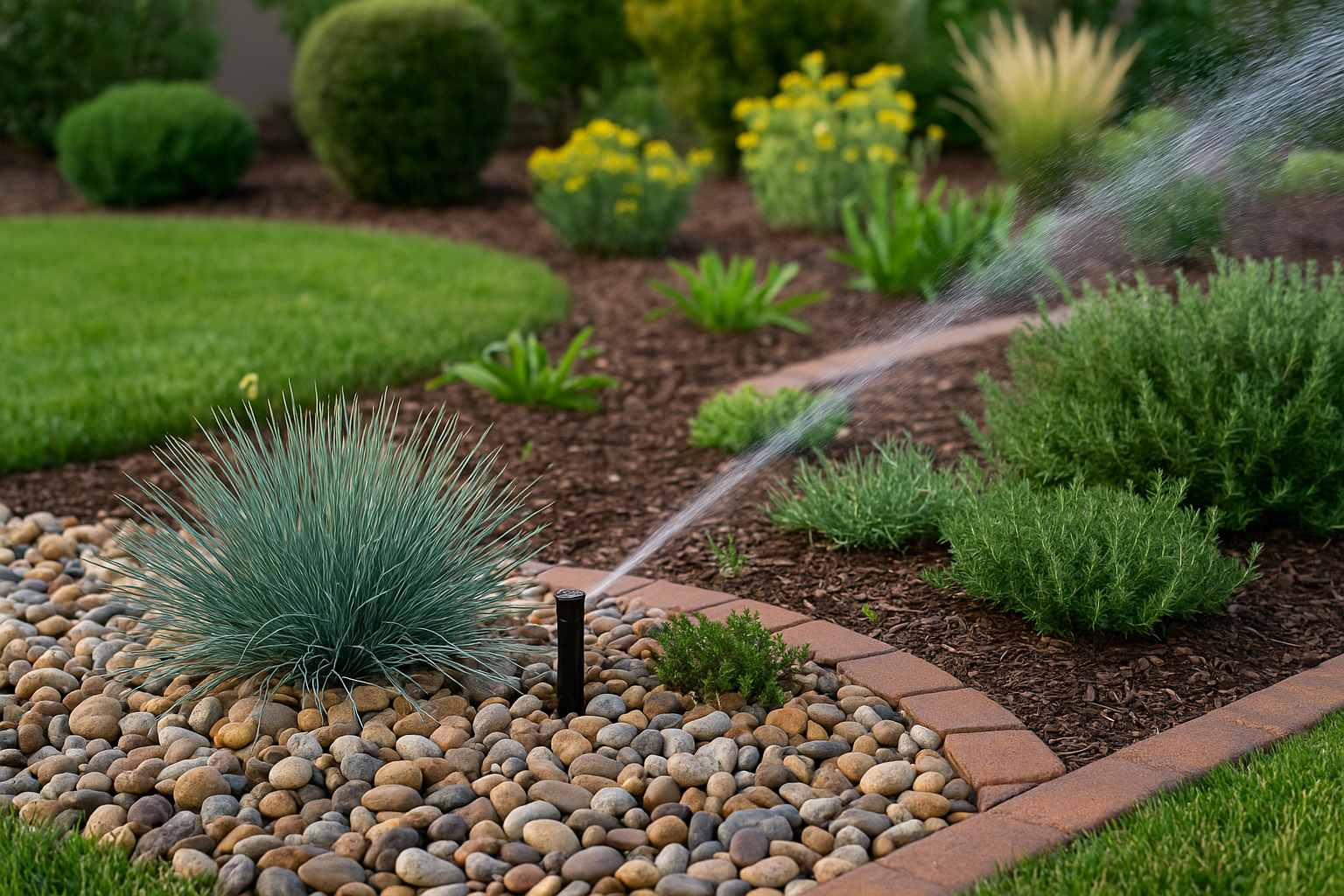
Design choices make the biggest difference. Use a combination of hardscapes, water-wise plants, and mulch to create a low-water landscape that still feels lush.
Xeriscaping: landscaping for dry conditions
Xeriscaping focuses on efficient water use without sacrificing beauty. It emphasizes soil improvement, appropriate plant selection, and efficient irrigation. Native and drought-tolerant species often require less supplemental water once established.
Choose the right plants
Prioritize native plants and drought-tolerant species adapted to your climate zone. These plants typically need less irrigation and care. Consider groundcovers, ornamental grasses, and succulents for low-water layers beneath trees and shrubs.
Mulching and soil improvement
A 2–3 inch layer of organic mulch reduces evaporation, moderates soil temperature, and suppresses weeds. Mulch decomposes to improve soil structure, helping the ground hold more water. Place mulch carefully—keep it a few inches away from trunks and stems to prevent rot.
Irrigation best practices
Efficient irrigation delivers water where roots need it most while minimizing waste. Small changes to your watering system can produce big savings.
Drip irrigation and soaker hoses
Drip systems and soaker hoses apply water directly to the root zone, reducing evaporation and runoff compared with overhead sprinklers. They’re ideal for beds, shrubs, and vegetable gardens and are easy to retrofit in many yards.
Smart controllers and timing
Smart irrigation controllers adjust schedules based on local weather, soil moisture, and plant needs. Program systems to water early in the morning when evaporation is lowest, and avoid frequent shallow watering that encourages shallow roots.
Fix leaks and manage pressure
Regularly inspect irrigation lines, drip emitters, and sprinkler heads. A single broken valve or misaligned sprinkler can waste large volumes of water. Use pressure regulators to prevent misting and fine sprays that evaporate before reaching the soil.
Maintenance tips that conserve water
Ongoing care supports conservative water use and keeps plants healthy with less supplemental irrigation.
Pruning, mowing, and plant care
Prune to maintain plant health and remove water-stressed limbs. Mow lawns at a higher setting to encourage deeper roots and reduce water loss—taller grass shades soil and lowers evaporation.
Seasonal adjustments
Reduce irrigation in cooler months and during rainy periods. Winterize irrigation systems to prevent leaks and damage, and re-evaluate watering needs during establishment periods versus mature stages.
Cost and environmental benefits
Water-efficient landscaping often reduces long-term costs: lower water bills, less fertilizer and pesticide need, and reduced maintenance time. Environmentally, it helps protect local waterways, reduces runoff pollution, and supports biodiversity when native plants are used.
How to get started: a simple action plan
Start small and build momentum. Here’s a quick action plan you can follow this season:
- Audit your yard: map sun, shade, and existing irrigation zones.
- Improve soil with compost and add mulch to beds.
- Replace high-water plants with drought-tolerant natives over time.
- Install drip irrigation for beds and a smart controller for sprinklers.
- Adjust mowing height and water schedule based on seasonal needs.
Conclusion
Landscaping water conservation is both practical and rewarding: small investments in design, plant choice, and irrigation pay off with long-term savings and a resilient, attractive yard. By assessing your site, choosing the right plants, and using efficient watering methods, you can significantly reduce water use without sacrificing curb appeal.