
Commercial Landscape Irrigation: Smart Strategies for Healthy, Water-Wise Properties
Why Commercial Landscape Irrigation Matters
Commercial landscape irrigation is more than keeping a property green. It’s about creating curb appeal, protecting investment in plants and hardscapes, and meeting sustainability goals while controlling operating costs. Whether you manage an office park, retail center, hotel, or municipal space, a properly designed irrigation system supports plant health, reduces water waste, and improves the overall tenant or customer experience.
Key Benefits of a Commercial Irrigation System
- Consistent plant health: Automated systems provide regular, appropriate watering that reduces stress and disease in turf and ornamentals.
- Water efficiency: Modern controllers, smart sensors, and drip technologies cut water use and lower utility bills.
- Labor savings: Automation reduces manual watering and frees maintenance crews for other tasks.
- Regulatory compliance: Systems can be tuned to meet local watering restrictions and demonstrate responsible water use.
- Property value and aesthetics: Healthy landscapes attract tenants, customers, and visitors, reinforcing brand image.
Types of Commercial Irrigation Systems
Sprinkler Systems
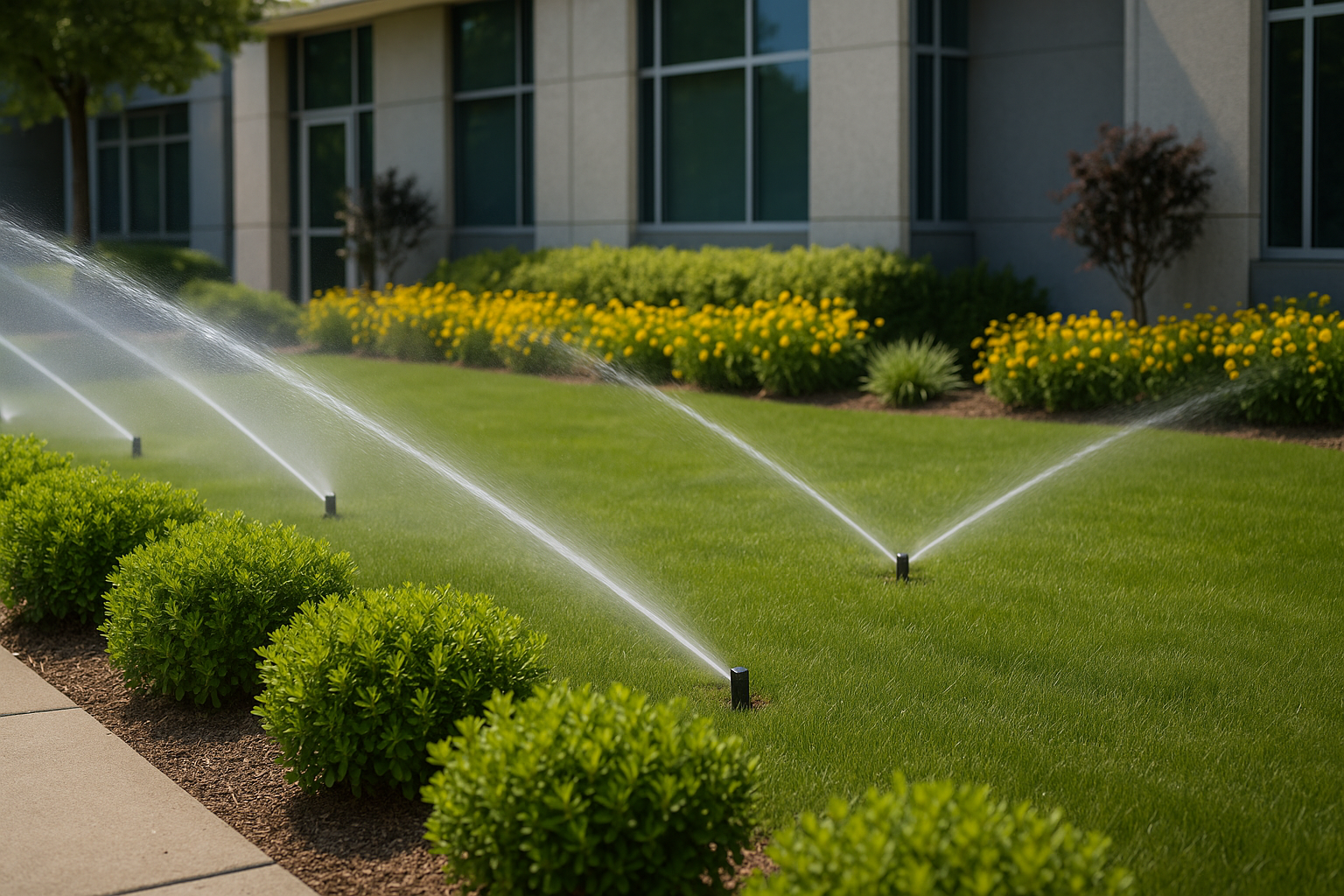
Sprinkler systems are the workhorses of commercial properties. Pop-up rotors and spray heads cover large turf areas efficiently. For best results, choose heads with matched precipitation rates and design zones by slope, plant type, and sun exposure.
Drip and Micro-Irrigation
Drip systems deliver water directly to the root zone of shrubs, trees, and planting beds. They reduce evaporation and runoff, making them ideal for beds, medians, and parking lot islands.
Mixed Systems
Many properties benefit from a hybrid approach: sprinklers for lawns and drip for beds and trees. Mixing systems optimizes water use across different landscape types.
Design and Planning Considerations
Site Analysis and Zoning
Start with a site analysis: soil type, topography, sun exposure, plant water needs, and irrigation water source. Divide the landscape into hydrozones—areas with similar water requirements—to ensure each zone gets the right amount of water.
Water Budgeting
Calculate crop coefficients and evapotranspiration (ET) rates for your region. Smart controllers can automate ET-based scheduling, adjusting run times seasonally and after rain events to avoid overwatering.
System Redundancy and Access
Design for accessibility: valves, filters, and controllers should be easy to reach for maintenance. Include redundancies where failure would cause major damage or downtime, such as separate sectors for high-value beds.
Components and Technology
Controllers and Smart Irrigation
Modern controllers range from simple timers to cloud-connected smart systems that use weather data and soil moisture sensors. These systems deliver big water savings and make it easy to monitor multiple sites remotely.
Valves, Filters, and Backflow Prevention
High-quality valves and proper filtration keep the system running reliably. Backflow prevention protects potable water supplies and is often required by code—don’t skip it.
Emitters and Nozzles
Choose emitters and nozzles designed for the specific planting and wind conditions. Matched precipitation rates and pressure regulation improve uniformity and reduce runoff.
Maintenance Best Practices
Regular maintenance extends system life and catches problems early. Typical tasks include seasonal startups and shutdowns, leak detection, pressure checks, filter cleaning, and controller programming updates. Inspect sprinkler coverage quarterly and after any renovations or turf repairs.
Common Troubleshooting
- Uneven coverage: check nozzle type, head spacing, and water pressure.
- Runoff or puddling: shorten run times, use cycle-and-soak scheduling, or improve infiltration.
- Frequent clogs: ensure filters are installed and maintained, and consider pressure-compensating emitters.
- Controller or sensor errors: verify power, wiring, and firmware updates for smart systems.
Water Conservation and Regulatory Compliance
Water restrictions and drought ordinances are becoming more common. Implementing water-efficient technologies—such as smart controllers, weather sensors, and drip irrigation—reduces consumption and lowers the risk of fines. Keep records of irrigation schedules, audits, and water use to demonstrate compliance and to guide future improvements.
Choosing the Right Contractor
Select a licensed, experienced irrigation contractor who understands commercial-scale needs. Ask for references, proof of licenses and insurance, and examples of local projects. A good contractor will provide a detailed plan, cost estimate, and maintenance agreement tailored to your property goals and budget.
Conclusion
Well-designed commercial landscape irrigation protects plant health, conserves water, and enhances property value. By combining thoughtful design, modern technology, and routine maintenance, property managers can achieve reliable, efficient irrigation that supports both aesthetics and sustainability. Start with a site audit, choose the right system components, and partner with a reputable contractor to keep your landscape thriving year-round.