
Energy Efficient Landscape Lighting: Brighten Your Outdoors Without Breaking the Bank
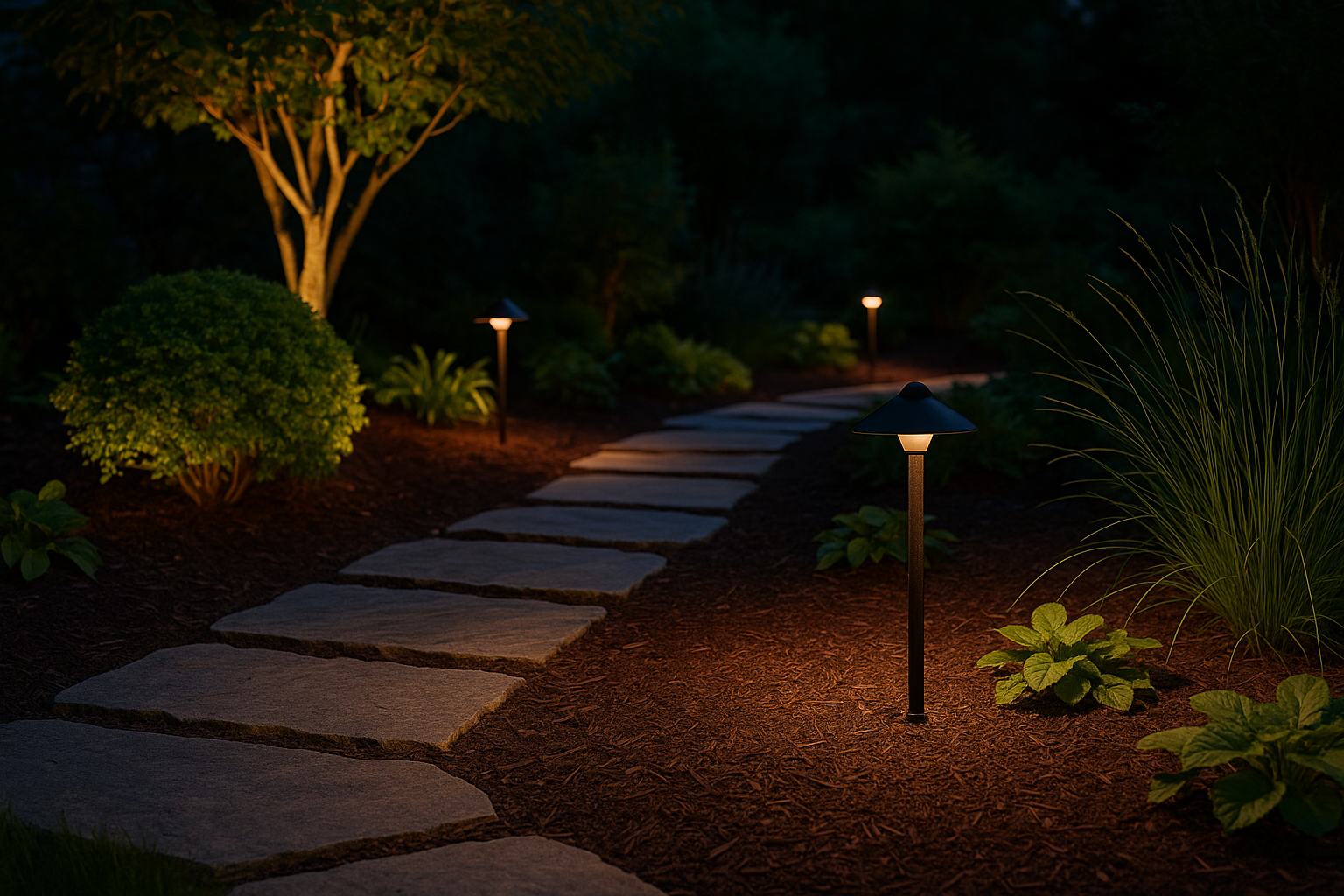
Why Energy Efficient Landscape Lighting Matters
Good outdoor lighting transforms a yard: it improves safety, extends usable space into the evening, and highlights landscaping and architecture. But traditional outdoor lighting can be costly to run and maintain. Energy efficient landscape lighting lets you enjoy the ambiance and security you want while cutting energy bills and reducing environmental impact.
Benefits of Choosing Energy Efficient Options
Lower operating costs
LEDs, low-voltage systems, and solar fixtures use far less electricity than incandescent or halogen bulbs. That translates to immediate savings on your electric bill and fewer bulb replacements over time.
Longer-lasting fixtures
Energy-efficient bulbs and fixtures tend to have longer lifespans. LEDs often last tens of thousands of hours, reducing maintenance and replacement frequency.
Improved environmental footprint
Lower energy consumption means fewer carbon emissions. Solar lighting that relies on renewable energy further minimizes your environmental impact.
Types of Energy Efficient Landscape Lighting
LED Lights
LEDs are the most energy-efficient choice for landscape lighting. They offer excellent light output per watt, immediate startup, and a wide range of color temperatures. Choose warm-white LEDs (2700K–3000K) for a welcoming glow and cooler tones for task or security lighting.
Solar-Powered Fixtures
Solar lights charge during the day and run at night—no trenching or wiring required. Modern solar fixtures have improved battery technology and brighter LEDs. For best results, place them in well-sunlit locations and choose models with replaceable batteries.
Low-Voltage Systems
Low-voltage (12V) systems provide safety and flexibility. They run on a transformer from your home’s electrical supply and allow multiple fixtures to be wired on the same circuit. Low-voltage systems are efficient when paired with LED bulbs.
Smart Controls and Motion Sensors
Timers, dimmers, motion sensors, and smart home integration prevent wasted runtime. Use motion sensors for security fixtures and timers for decorative lighting to ensure lights run only when needed.
Design Tips for Energy Efficiency and Beauty
Plan with layers
Think in layers: ambient lighting for general visibility, task lighting for pathways and steps, and accent lighting to highlight trees, walls, or water features. Layering allows you to use lower wattage fixtures strategically.
Focus light where it matters
Aim light precisely to avoid illuminating the sky or your neighbor’s yard. Shielded fixtures and directional beams improve effectiveness and reduce wasted light.
Use warm color temperatures
Warmer tones feel more natural in gardens and reduce glare and light pollution compared with bluer light. Warm LEDs also complement plants and outdoor materials better.
Opt for dimming and zoning
Divide your landscape into zones with separate controls so you can run only the zones you need. Dimming saves energy and creates subtle ambiance without turning everything full brightness.
Installation and Maintenance Essentials
Professional vs. DIY installation
Simple solar lights and plug-in fixtures are DIY-friendly. For low-voltage wired systems, safety, wiring layout, and correct transformer sizing are important—consider hiring a professional if you’re unsure.
Routine maintenance
Keep fixtures clean, trim vegetation blocking light, and check batteries in solar lights annually. Inspect connections for corrosion and tighten loose fittings to maintain performance.
Weatherproofing
Choose fixtures rated for outdoor use and appropriate for your climate (look for IP ratings). Properly sealed fixtures and connectors help prevent moisture damage and extend lifespan.
Cost Considerations and Incentives
Upfront costs vs. long-term savings
Energy-efficient fixtures, especially high-quality LEDs and solar units, can cost more up front than basic halogen fixtures. However, energy savings, lower replacement frequency, and reduced maintenance typically offset initial costs over time.
Rebates and incentives
Check local utility programs and government incentives for rebates on energy-efficient lighting or solar installations. These can significantly reduce your out-of-pocket expense.
Practical Tips Before You Buy
- Measure and sketch your landscape to determine fixture placement and lighting zones.
- Prioritize LED or high-quality solar fixtures with low standby power draw.
- Pick fixtures with replaceable components (LED modules or batteries) for longevity.
- Test fixtures in the evening before final installation to confirm beam angles and brightness.
Conclusion
Energy efficient landscape lighting is an investment that pays back in lower bills, less maintenance, and a more enjoyable outdoor space. By choosing LEDs, solar options, low-voltage systems, and smart controls—and by designing thoughtfully—you can create a beautiful, eco-friendly landscape that lights only what matters.