
Irrigation for Gardens: Practical Guide to Systems, Design, and Water-Saving Tips
Introduction
Good irrigation is the backbone of a healthy garden. Whether you’re tending a small vegetable patch, containers on a balcony, or a sprawling landscape, the right irrigation approach saves time, conserves water, and promotes stronger plants. This guide walks you through the types of irrigation, how to design a system, installation tips, maintenance, and ways to water smarter.
Why Proper Irrigation Matters
Water is essential, but how you deliver it matters just as much as how much you give. Proper irrigation:
- Encourages deep root growth and drought resilience
- Reduces disease by keeping foliage drier
- Saves water and money through efficient delivery
- Ensures even growth across planting areas
Types of Garden Irrigation
Different garden layouts and plant types benefit from different irrigation methods. Here are the most common options:
Drip Irrigation
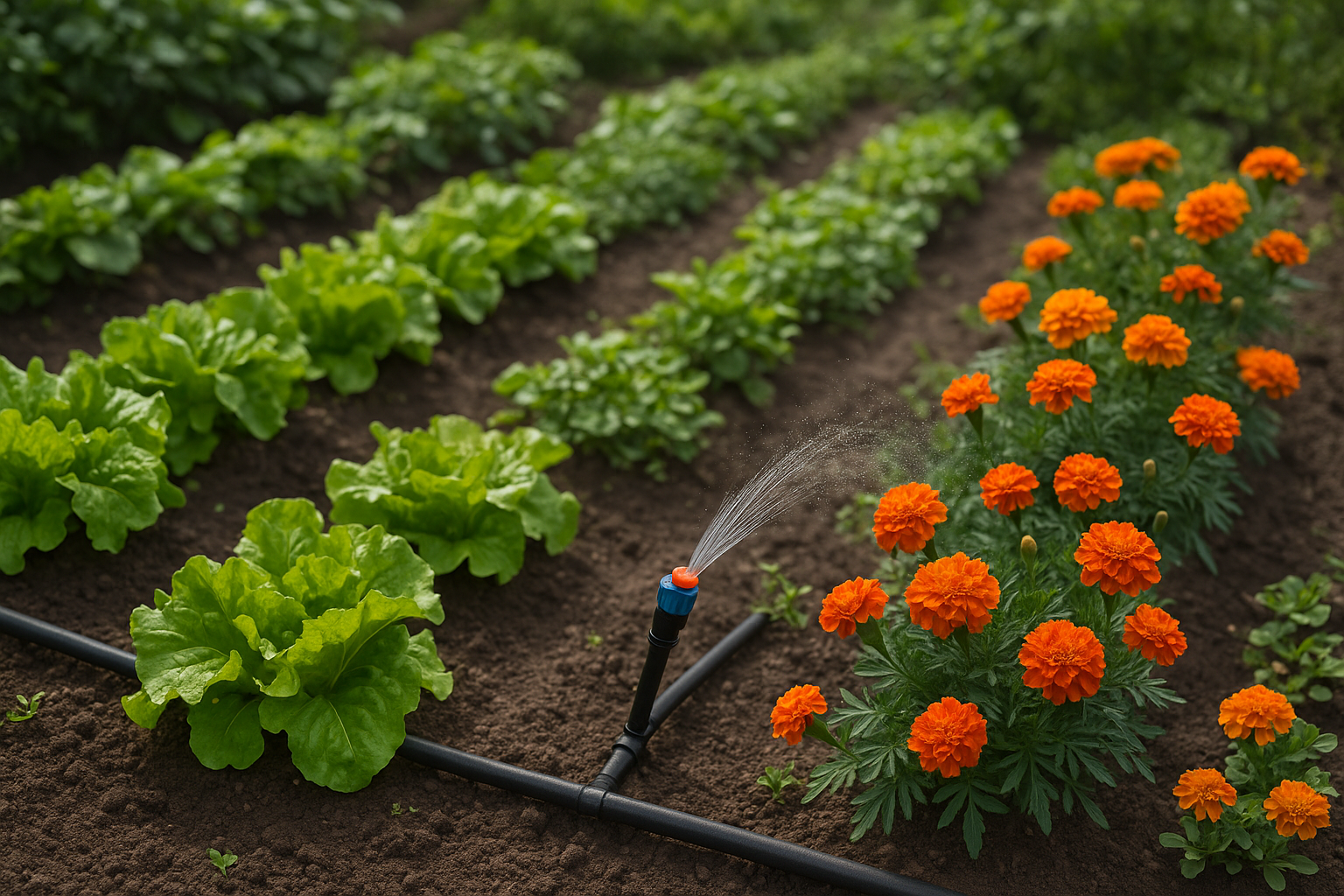
Drip systems deliver water slowly, directly to the soil at the plant’s root zone. They are highly efficient and ideal for vegetable beds, flower borders, and shrubs. Emitters, tubing, and pressure regulators make the system flexible and scalable.
Soaker Hoses
Soaker hoses allow water to seep out along the hose length. They’re an easy, lower-cost option for densely planted rows or beds. They’re less precise than drip emitters but still conserve water compared to overhead sprays.
Sprinklers
Sprinklers are useful for lawns and large areas where overhead coverage is needed. They can waste more water through evaporation and wind drift, so choose low-angle or rotary heads and water during cooler times of day to reduce loss.
Hand Watering
For small gardens, containers, or delicate seedlings, hand watering with a watering can or hose gives you control. It’s time-consuming but precise, and it’s easy to avoid overwatering individual plants.
Subsurface Irrigation
Subsurface systems place emitters below the soil surface, delivering water directly to roots. They reduce evaporation and surface runoff, but installation is more involved and maintenance can be trickier.
Smart Controllers and Timers
Modern controllers can schedule irrigation based on weather, soil moisture, or plant type. Smart irrigation minimizes overwatering and adapts to seasonal changes automatically.
Designing an Irrigation System
A thoughtful design makes your irrigation efficient and reliable. Follow these steps:
Assess Your Garden
Map sunlight, slope, soil types, and plant water needs. Group plants with similar requirements together to simplify watering zones.
Determine Water Requirements
Estimate each zone’s water demand based on plant type, soil infiltration rate, and microclimate. Sandy soils need more frequent watering than clay soils.
Plan Layout and Zones
Divide the garden into zones with similar water needs and sun exposure. Zoning prevents overwatering thirstier plants and underwatering drought-tolerant ones.
Choose Components
Decide on emitters, tubing, valves, filters, and controllers. Use pressure regulators for drip systems and filters where water quality could clog emitters.
Installation Tips
Install thoughtfully to avoid common headaches:
- Run a mainline from the water source and branch into zones with valves or manifolds.
- Lay drip tubing along planting rows and secure with stakes; burying tubing slightly can reduce UV wear.
- Position sprinklers to avoid watering pavement and to minimize overlap for even coverage.
- Test each zone after installation to check pressure and coverage, and adjust emitters as needed.
Maintenance and Troubleshooting
Routine care keeps systems working efficiently:
Seasonal Care
Flush lines at the start and end of the season. In colder climates, winterize systems to prevent freeze damage by draining lines or using compressed air to blow out water.
Common Problems
Clogged emitters, leaks, uneven coverage, and low pressure are typical issues. Filters and regular checks prevent clogs. Use pressure gauges to diagnose low pressure and inspect hoses and fittings for leaks.
Water Conservation Best Practices
- Water early morning to reduce evaporation and fungal risk.
- Use mulch to retain soil moisture and reduce surface evaporation.
- Implement soil amendments to improve structure and water-holding capacity.
- Install rain sensors or soil moisture probes to prevent unnecessary cycles.
Conclusion
Choosing the right irrigation strategy for your garden pays off in healthier plants, lower water bills, and less daily hassle. Start with a clear plan, choose efficient components like drip systems and smart controllers where appropriate, and maintain your setup seasonally. With a little planning and care, your garden will thrive while using water responsibly.