
Effective Drainage Techniques: Practical Solutions for Wet Yards and Buildings
Introduction
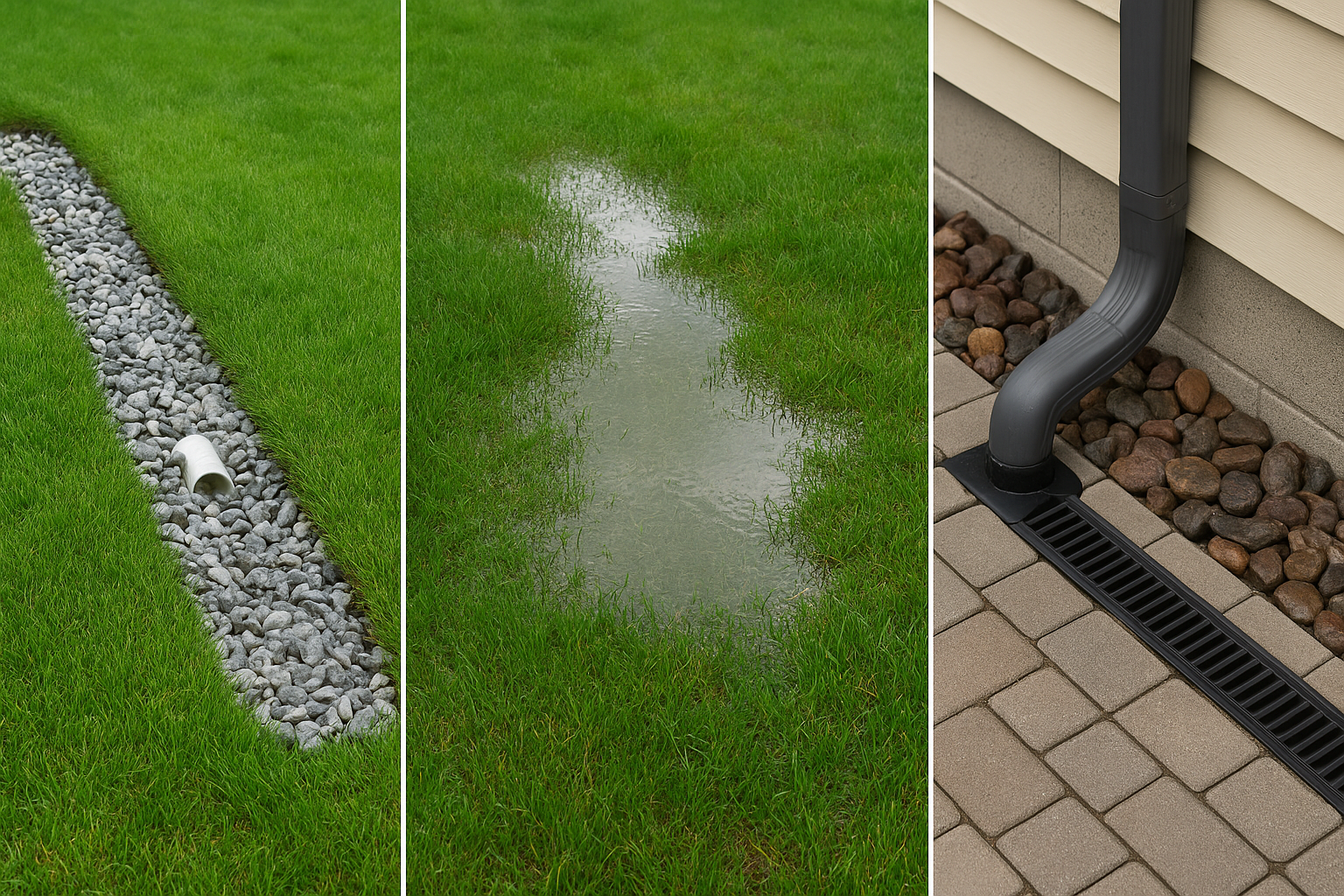
Poor drainage creates soggy lawns, foundation damage, and frustration. Fortunately, a mix of simple grading, smart landscaping, and targeted subsurface systems can solve most water problems. This guide explains effective drainage techniques you can use for yards, gardens, and properties—whether you’re tackling standing water after heavy rains or preventing long-term moisture issues.
Understanding Drainage Basics
Before choosing a solution, it helps to understand how water moves across and through your property. The three core factors are soil type, slope, and the local water table.
Soil Type and Percolation
Sandy soils drain quickly but may not retain needed moisture. Clay soils drain slowly and are prone to puddling. A simple percolation test (dig a hole, fill with water, measure drainage time) tells you how fast water soaks away and guides your technique choice.
Slope and Surface Flow
Water follows the path of least resistance. Even a slight slope (1-2%) is enough to move runoff away from buildings. Identify natural low spots and uphill sources to plan grading, swales, or flow channels.
Water Table and Seasonal Variations
High water tables limit the depth of subsurface solutions and can cause chronic wetness. Check local seasonal high-water marks before installing deep drains or basements.
Effective Drainage Techniques
Below are proven methods, grouped by surface and subsurface approaches, plus landscape-based options that combine function and aesthetics.
Surface Drainage: Grading, Swales, and Gutters
- Proper grading: Regrade soil to slope away from foundations at a 2% grade where possible. Adding or removing soil is a low-tech, cost-effective fix.
- Swales and berms: Shallow, vegetated channels (swales) move water to a safe discharge point. Berms redirect flow around vulnerable areas.
- Gutters and downspouts: Ensure gutters are clear and connected to downspouts that discharge at least 3–6 feet from the foundation or into a drainage system.
Subsurface Drainage: French Drains, Perforated Pipes, and Dry Wells
- French drain: A gravel-filled trench with a perforated pipe is ideal for redirecting groundwater away from foundations. Slope the pipe toward a legal discharge point.
- Perforated pipe systems: These distribute or collect water underground. Use filter fabric to prevent sediment clogging and proper gravel bedding for long life.
- Dry wells and infiltration basins: For properties with good percolation, dry wells capture roof or surface runoff and allow it to infiltrate slowly into the ground.
Rain Gardens and Permeable Surfaces
Rain gardens, planted with water-tolerant native species, temporarily hold stormwater and promote infiltration. Permeable pavers, gravel drives, and porous concrete reduce runoff and recharge groundwater.
Retaining Walls and Terracing
On slopes, retaining walls and terraces slow and redirect surface flow. Combine with subdrainage and weep holes to prevent hydrostatic pressure buildup behind walls.
Maintenance: Keep Systems Working
- Regular inspections: Check gutters, downspouts, and outlet points after storms. Remove debris from grates and clean sediment from dry wells.
- Vegetation management: Keep grass and plants from blocking swales and inlets. Replace clogged filter fabric in subsurface systems if needed.
- Monitor and adjust: Seasonal shifts can change flow paths. Be ready to regrade low spots or extend downspout drainage as landscaping and soil settle.
Selecting the Right Solution
Choose methods based on the severity of the problem, budget, and local regulations.
Cost, Climate, and Property Type
Simple grading and gutter improvements are inexpensive and effective for light issues. French drains and engineered subsurface systems cost more but solve persistent groundwater problems. In cold climates, select materials and pipe depths that resist frost heave.
Permits and Professional Help
Large grading projects or systems that discharge into public drains often require permits. For complex or high-risk cases—near foundations, basements, or steep slopes—consult a civil engineer or licensed contractor.
Practical Tips and Common Mistakes
- Don’t divert water onto a neighbor’s property—plan legal discharge points.
- Avoid burying downspout extenders too shallowly; they can clog or shift.
- Use geotextile fabric to reduce sediment entry into gravel beds and pipes.
- Test changes incrementally; small adjustments to grade or outlet location often fix problems without major construction.
Conclusion
Effective drainage combines observation, the right technique, and ongoing maintenance. Start with grading and gutter improvements, add landscape solutions like rain gardens, and use subsurface systems for chronic issues. With thoughtful planning you can protect your property, improve plant health, and reduce flooding risk.