
Retainer Wall Drainage: A Practical Guide to Keep Your Wall Dry and Stable
What is retainer wall drainage and why it matters
Retainer wall drainage (often called retaining wall drainage) refers to the systems and techniques used to control water behind and around a wall. Water buildup behind a wall adds hydrostatic pressure, which can cause bowing, cracking, bulging, or complete failure. Proper drainage extends the life of your wall, protects landscaping, and prevents costly repairs.
How water affects a retainer wall
Soil holds moisture. When that moisture can’t escape, it pushes against the wall. Even a modest amount of trapped water multiplies the load on the structure. Freeze-thaw cycles, heavy rains, and poor surface runoff management make drainage planning essential for any type of retainer wall — concrete, block, timber, or stone.
Common retainer wall drainage solutions
Perforated drain pipe (the backbone)
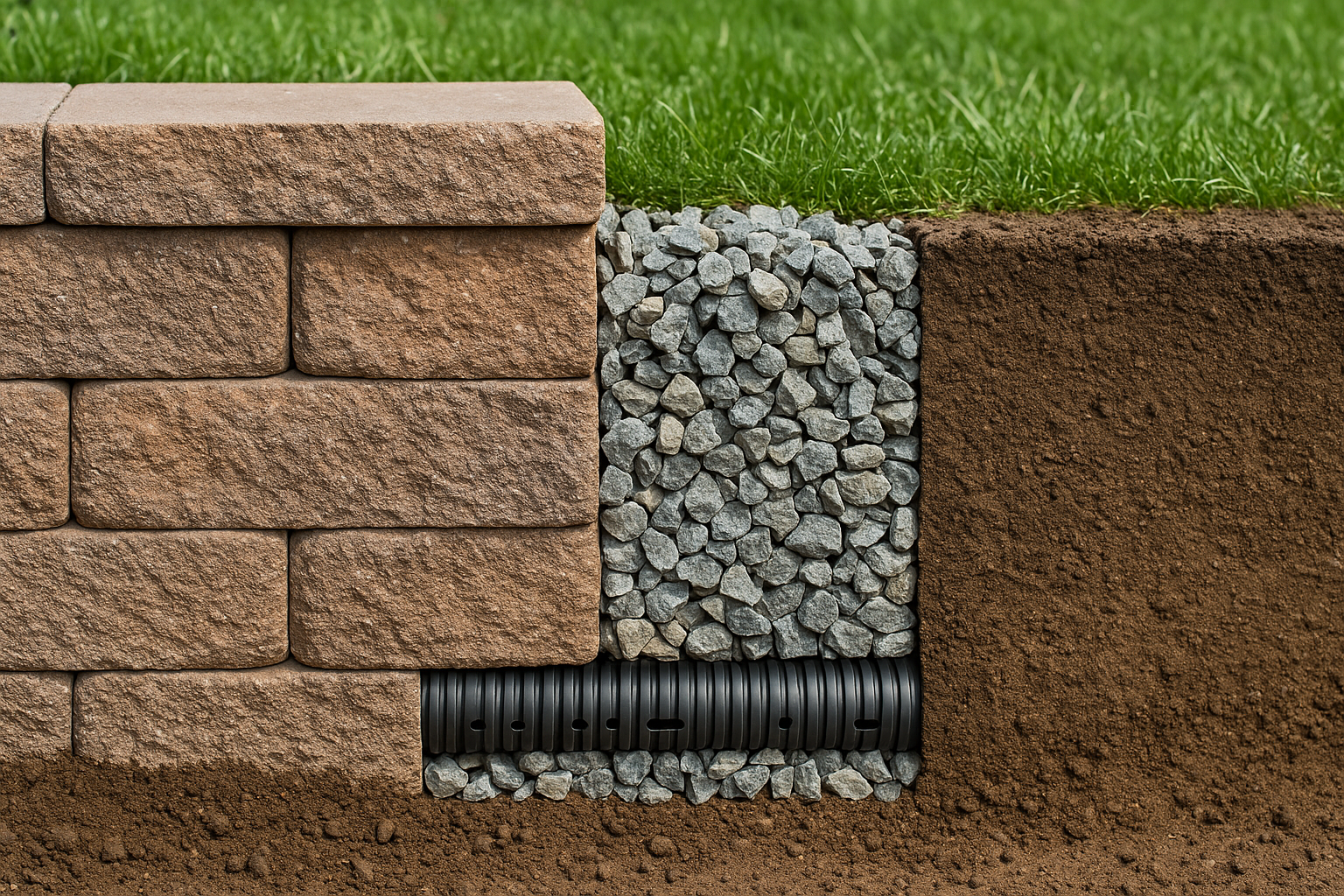
Also known as a French drain or footing drain, a perforated pipe placed at the base of the wall collects groundwater and channels it away. The pipe is typically wrapped in filter fabric and surrounded by clean gravel to prevent clogging. The outlet should discharge to a safe location — storm sewer, dry well, or downslope area — where it won’t cause erosion.
Gravel and drainage layer
A drainage layer behind the wall (6–12 inches of clean, washed gravel) allows water to flow downward toward the drain pipe. Unlike soil, gravel doesn’t compact and holds continuous void space for water movement. Combining gravel with a wrapped pipe creates a dependable path for water escape.
Filter fabric
Filter fabric (geotextile) prevents fine soil particles from migrating into the gravel or pipe, reducing the risk of blockage. Place the fabric between native soil and the gravel layer, and wrap it around the pipe before backfilling.
Weep holes
For masonry or block walls, small weep holes allow water to escape through the wall face. While helpful, weep holes alone are not a substitute for an internal drainage system — they can clog and often don’t provide sufficient relief on their own.
Drainage boards and membranes
Drainage boards or dimpled membranes attach to the back of the wall to create a vertical channel for water to travel to the footing drain. They are especially useful for taller walls and for walls built with concrete poured against soil.
Surface drainage
Controlling surface water is the first defense: grade the area so water flows away from the wall, use swales, gutters, and downspout extensions, and avoid placing impermeable hardscapes that direct water toward the structure.
Step-by-step best practices for installing drainage
Follow these steps to improve the drainage performance of a new or existing retainer wall:
- Plan the outlet: decide where collected water will go before digging.
- Excavate behind the wall to create space for geotextile, gravel, and pipe.
- Install a filter fabric layer against the native soil.
- Place a 6–12 inch gravel drainage layer directly behind the wall.
- Lay a perforated pipe at the base, sloped 1%–2% toward the outlet; wrap it in fabric.
- Cover the pipe with more gravel and fold the fabric over the gravel layer.
- Backfill with free-draining material and compact in lifts where appropriate.
- Finish surface grading so water sheds away from the wall face.
Materials and approximate costs
Costs vary by region and wall size, but common materials include clean drain gravel, perforated PVC or corrugated polyethylene pipe, and geotextile fabric. For a typical residential project, expect drainage materials to add a few hundred to a few thousand dollars depending on length and complexity. Labor is a significant factor; proper trenching and pipe sloping are vital for performance.
Signs of poor drainage and maintenance tips
Watch for bulging, tilt, new cracks, wet spots or efflorescence on masonry, and pooling water nearby. Regular maintenance keeps drainage systems working:
- Inspect outlets and discharge points seasonally to ensure they are clear.
- Remove vegetation that can clog weep holes or trap moisture.
- Flush the pipe if slow drainage is detected or consider professional cleaning.
- Check downspouts and surface grading after heavy storms and correct any changes.
Landscaping considerations
Choose plants with moderate water needs for the top of the wall, and avoid planting large trees near the base where roots can disrupt drains. Use mulch and groundcovers to reduce surface erosion but keep organic material away from weep holes and pipe inlets. Hardscapes should direct runoff to safe drainage points.
When to call a pro
If your wall is showing structural distress, or if redesigning drainage requires complex rerouting of water, consult a qualified contractor or civil engineer. Professionals can assess hydrostatic loads, recommend suitable outlets, and provide long-term solutions like subdrain replacement or wall reinforcement.
Conclusion
Good retainer wall drainage is not optional — it’s essential. Combining a properly sloped perforated pipe, a gravel drainage layer, filter fabric, and sound surface-water management will greatly reduce the risk of failure and keep your wall stable for years. Inspect regularly and address issues early to protect your investment.