
Pondless Water Features: Beautiful, Safe, Low-Maintenance Backyard Waterfalls
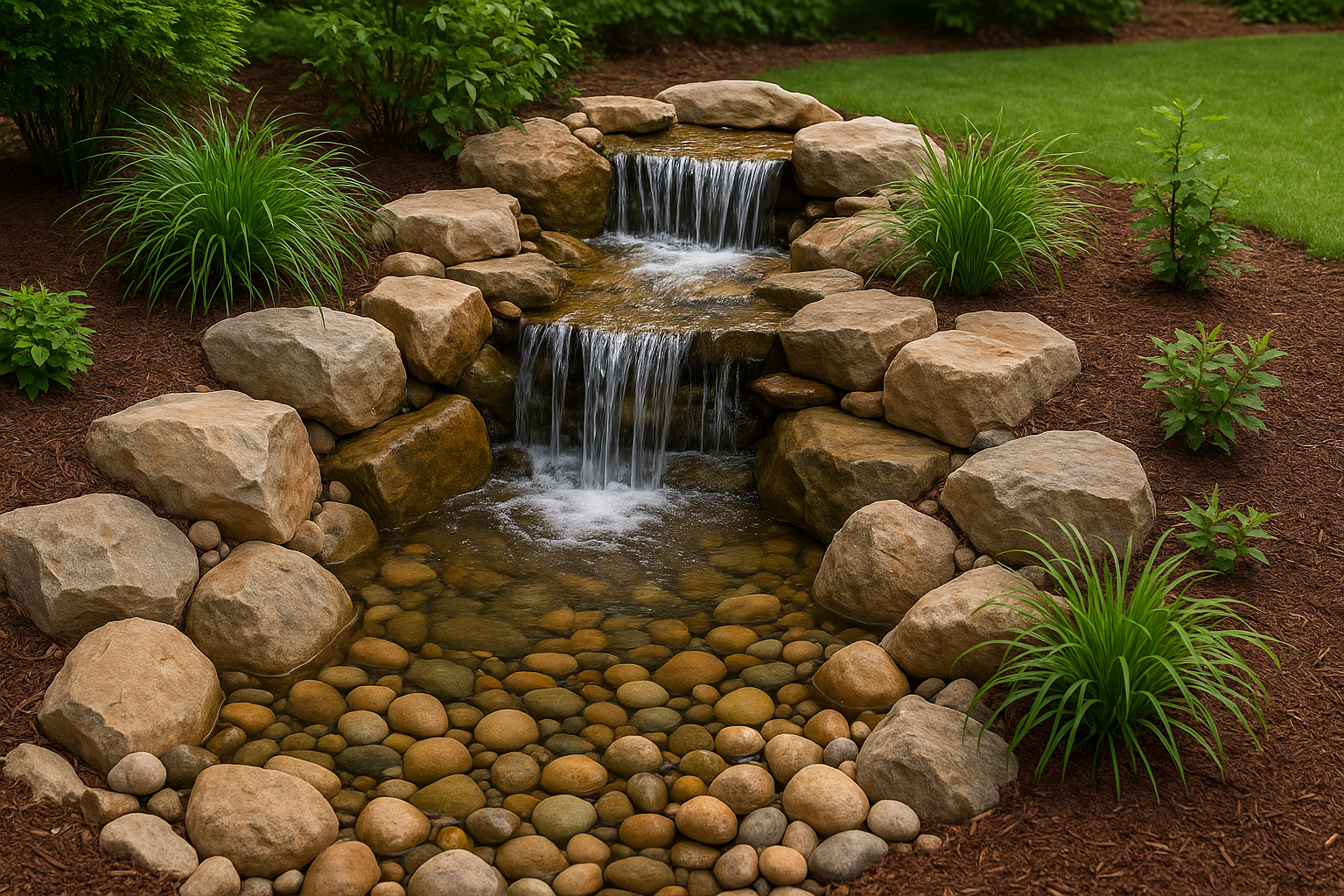
What is a Pondless Water Feature?
Pondless water features are landscape elements that capture the sights and sounds of moving water without an open, standing pond. Often called pondless waterfalls or disappearing fountains, these features circulate water from a hidden reservoir below grade, creating the visual and auditory appeal of a waterfall or stream while eliminating swim hazards and many maintenance headaches.
Key Components
- Hidden reservoir: A basin or tank buried beneath the surface that stores recirculating water.
- Submersible pump: Moves water from the reservoir to the spillway or streamhead.
- Plumbing: Flexible tubing or PVC connects the pump to the outlet.
- Rocks and spillway: Natural stone or a manufactured spillway shapes the waterfall or fountain.
- Skimmer or drain: Helps keep the hidden reservoir clear of debris in some designs.
How It Works
Water is pumped up from the buried reservoir and released at the top of the waterfall, spillway, or bubbler. Gravity pulls the water back over rocks and into the hidden basin, where it’s filtered and recirculated. Because the reservoir is enclosed or below ground, you get the sound and sight of flowing water without an exposed pond.
Benefits of Choosing a Pondless Feature
Pondless water features have become popular for homeowners who want the charm of a water element with fewer tradeoffs. Here are the main advantages:
Safety and Cleanliness
With no open water surface, pondless features reduce drowning risks for children and pets and minimize mosquito breeding. The water is also less likely to get slimy or algae-covered like a surface pond.
Lower Maintenance
Because the reservoir is smaller and often concealed, you’ll spend less time skimming leaves, treating algae, or dealing with fish care. Routine pump checks and occasional debris removal are usually all that’s needed.
Design Flexibility
Pondless systems fit a variety of spaces—from small courtyards and narrow side yards to larger garden retreats. They can be configured as a single spillway, a winding stream, or a compact bubbling rock.
Cost and Environmental Considerations
Installation can be less expensive than a full pond and uses less water overall because the small reservoir reduces evaporation. Electric pumps still use energy, but efficient models and timers can minimize operating costs.
Types and Style Ideas
Pondless water features come in many styles to fit different landscapes and budgets.
Waterfall Spillways
A spillway produces a smooth sheet of water over a stone or metal lip. It’s modern and clean-looking—perfect for contemporary designs.
Rock Waterfalls and Streams
Natural-looking cascades using boulders and river rock create a rustic, tranquil setting. You can design winding channels that mimic natural streams.
Bubblers and Fountains
Compact bubblers or decorative fountains are ideal for patios and small yards where a full waterfall wouldn’t fit.
Planning and Installation
Careful planning ensures your pondless feature operates well and complements your yard.
DIY vs Professional Installation
Experienced DIYers can tackle small pondless projects with a kit, but complex designs, electrical work, or heavy stone placement are best handled by professionals who can ensure proper pump sizing, waterproofing, and safe wiring.
Site Selection and Permits
Choose a level area with good access to electricity and minimal shade for easier maintenance. Check local codes if your feature requires excavation or electrical work.
Plumbing and Electrical Considerations
Use correctly sized tubing and a GFCI-protected outlet for safety. Properly rated pumps and inline filters can extend the life of the system.
Maintenance Tips
Routine care keeps a pondless water feature attractive and reliable.
Seasonal Care
- Remove debris like leaves and twigs regularly.
- In colder climates, follow manufacturer guidelines for winterizing pumps or use cold-weather pumps.
- Top off the reservoir periodically to compensate for evaporation.
Pump and Reservoir Care
Clean the pump intake and any pre-filters quarterly. Inspect tubing and liners annually for wear or blockage.
Cost and Budget Considerations
Costs vary widely: small DIY kits can start under a few hundred dollars, while professionally installed rock waterfalls and streams can run several thousand dollars depending on materials, labor, and electrical work. Factor in long-term energy use and occasional maintenance when budgeting.
Design Tips to Maximize Impact
Place the feature where you can enjoy it from a patio, window, or walkway. Add low-voltage landscape lighting to highlight texture and water at night. Surround the feature with native plants and textured rock for a natural look that blends with your yard.
Conclusion
Pondless water features offer a beautiful, safer, and lower-maintenance way to bring water into your landscape. Whether you want a modern spillway, a natural stream, or a cozy bubbler, thoughtful planning and the right equipment will help you enjoy the relaxing sound and timeless charm of flowing water without the upkeep of a traditional pond.