
25 Retaining Wall Ideas to Transform Your Yard: Styles, Materials & Tips
Introduction
Retaining walls are more than just practical structures that hold back soil. With thoughtful design, they become focal points, seating areas, garden stages, and privacy screens. Whether you have a sloped yard or want a raised planting bed, these retaining wall ideas will help you choose the right style, material, and approach for lasting beauty and function.
Retaining Wall Types and Ideas
Gravity Walls
Gravity walls rely on their mass to resist the pressure of the soil behind them. Built from large stones, poured concrete, or heavy block, they work well for low to medium heights and offer a classic, solid look.
Cantilevered Concrete Walls
Cantilevered walls use reinforced concrete and a footing to resist lateral pressure efficiently, making them ideal for taller slopes. They provide a clean, modern appearance when left smooth or can be textured or stained to suit your landscape.
Segmental Block Walls
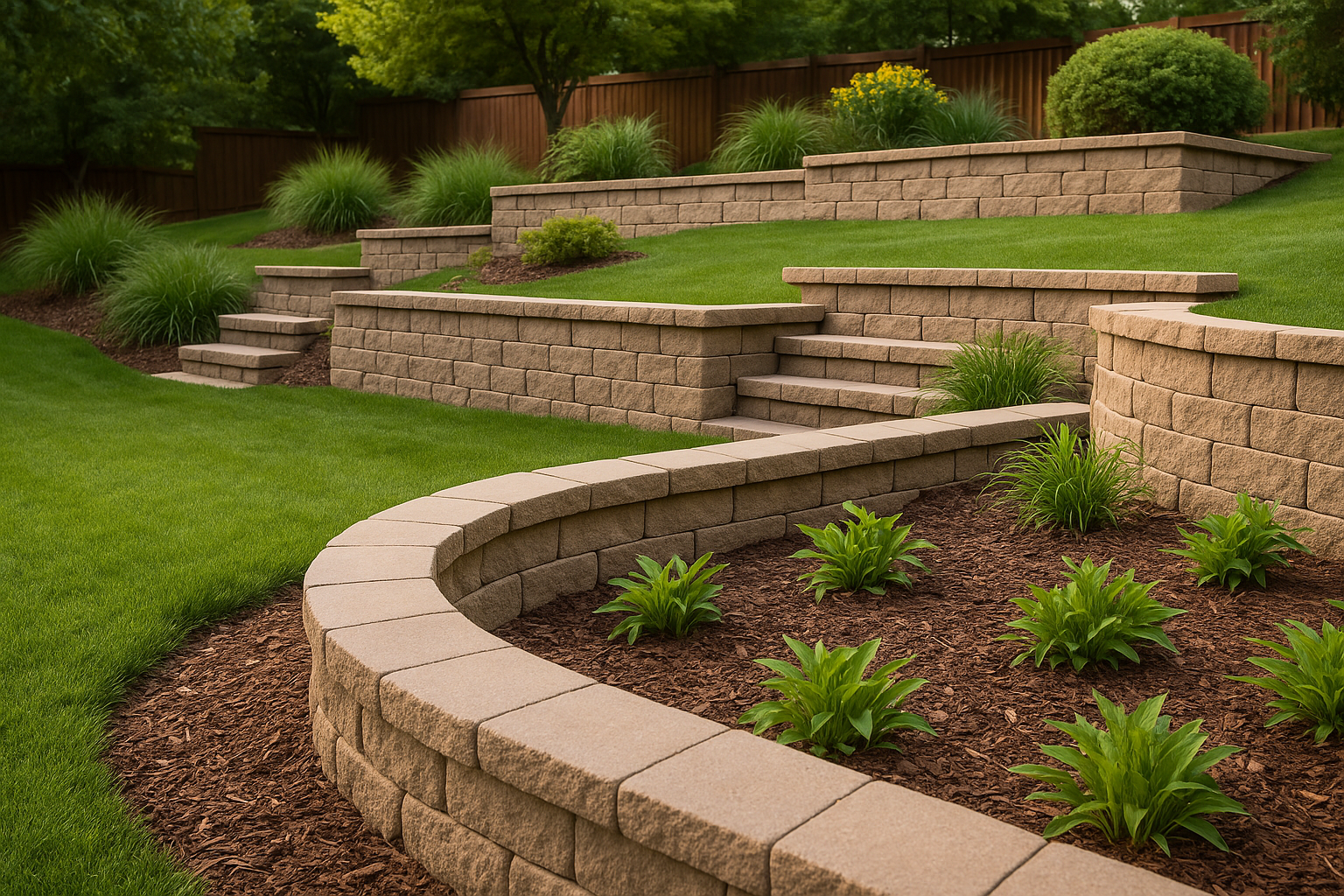
Interlocking segmental block systems are popular for homeowners and landscapers because they don’t require mortar, are relatively quick to install, and can be stacked to create curves or terraces. Many blocks include options for caps and integrated curves.
Gabion Walls
Gabions are wire baskets filled with rock, glass, or recycled materials. They’re industrial-chic, excellent for drainage, and great for projects that celebrate texture and ruggedness. Use them as standalone features or combined with plantings for a softer edge.
Timber and Railroad Ties
Wood retaining walls give a warm, rustic feel. Pressure-treated timber or reclaimed railroad ties are cost-effective for short walls, though they require maintenance and shorter lifespans compared to stone or concrete.
Natural Stone Walls
Dry-stacked or mortared stone is timeless. Stone walls can be formal or rustic, contour to curves easily, and age beautifully. They’re often the go-to when you want a garden that feels integrated with nature.
Anchored and Sheet Piling Walls
For very tall or high-pressure situations—near roads or heavy fills—anchored walls and sheet piling (steel, vinyl) are engineered options. These are best left to professionals due to the structural complexity.
Design Tips to Improve Function and Style
Always Prioritize Drainage
Poor drainage is the top cause of retaining wall failure. Include a gravel backfill, perforated drain pipe (weeping tile), and proper slope away from structures. Weep holes or drainage channels can relieve water pressure behind the wall.
Integrate Plantings
Layer groundcovers, native grasses, and shrubs along the wall and in front of it to soften hard lines. Use creeping plants for dry-stacked stone, and add drought-tolerant choices for south-facing walls.
Think About Multi-Use Features
Turn a low retaining wall into seating, build integrated planters, or create built-in steps. Adding LED strip lighting or low-voltage spotlights along the cap enhances nighttime use and safety.
Choose Materials That Match Your Home
Coordinate finishes with your house and landscape—smooth precast concrete for modern homes, natural stone for cottage or rustic styles, and textured blocks for transitional yards.
DIY vs Hiring a Pro
Small, low walls (under 3 feet) with simple layouts can be DIY-friendly if you research techniques and tools. For taller walls, steep grades, or load-bearing situations, hire a licensed contractor or structural engineer. Proper footings, geogrid reinforcement, and permitting can be technical and are worth professional oversight.
Budgeting and Maintenance
Costs vary widely: timber and simple block walls tend to be cheaper upfront, while natural stone and reinforced concrete cost more but last longer. Factor in long-term maintenance—wood may need replacement or sealing every few years, while stone and concrete require minimal care. Regularly inspect for bulging, settling, or drainage issues and address them early.
Creative Design Ideas
Terraced Garden Walls
For steep slopes, use multiple low walls to create terraces. This increases usable space, prevents erosion, and allows for layered planting beds.
Curved and Meandering Walls
Curved walls are softer and more inviting than straight lines. Use flexible block systems or stone to create gentle arcs that guide movement through the yard.
Built-In Seating and Steps
Make your retaining wall double as outdoor seating or integrate steps and landings for seamless circulation—perfect for entertaining spaces that flow into the garden.
Living Retaining Walls
Combine a retaining structure with pockets or modular planters to create a living wall. These are great for herbs, succulents, or trailing flowers and add biodiversity and texture.
Conclusion
Retaining walls can solve landscape challenges while adding character and usable space. Choose materials and designs that match your site, prioritize drainage and structural needs, and consider features that make the wall multifunctional. With the right planning, a retaining wall becomes a lasting landscape asset that enhances both form and function.