
Garden Pond Landscaping: Design, Plants, and Care for a Beautiful Water Feature
Introduction
A garden pond can transform a backyard into a soothing retreat, attract wildlife, and add year-round interest. Whether you want a small wildlife pond, a formal koi basin, or a planted water garden, thoughtful landscaping makes the difference between a pretty puddle and a stunning focal point. This guide walks you through planning, design, planting, and maintenance so your pond looks great and stays healthy.
Planning Your Pond
Site selection
Start by choosing the right spot. Look for a level or gently sloped area with some sun and light shade. Avoid placing a pond directly under trees (leaves and roots cause problems) and away from steep runoff paths. Consider sightlines from your house or patio—how you view the pond will influence its landscaping.
Size, shape, and purpose
Decide how big and what you want the pond to do. A larger pond is more stable ecologically but requires more work. Shapes can be natural and curvy or formal and geometric. Think about uses: wildlife habitat, ornamental plants, fish, or a water feature such as a fountain.
Pond Types and Construction
Common pond systems
- Preformed ponds: Easy to install, ideal for small gardens.
- Flexible liner ponds: Customizable shapes and sizes; most popular for DIY projects.
- Fiberglass or rigid forms: Durable and low-maintenance but more costly.
Depth and shelves
Design shelves at different depths for marginal plants and gradual edges. If you keep fish or want overwintering habitat, include deeper zones (at least 2-3 feet in colder climates).
Edging, Hardscaping, and Visual Flow
Natural edges
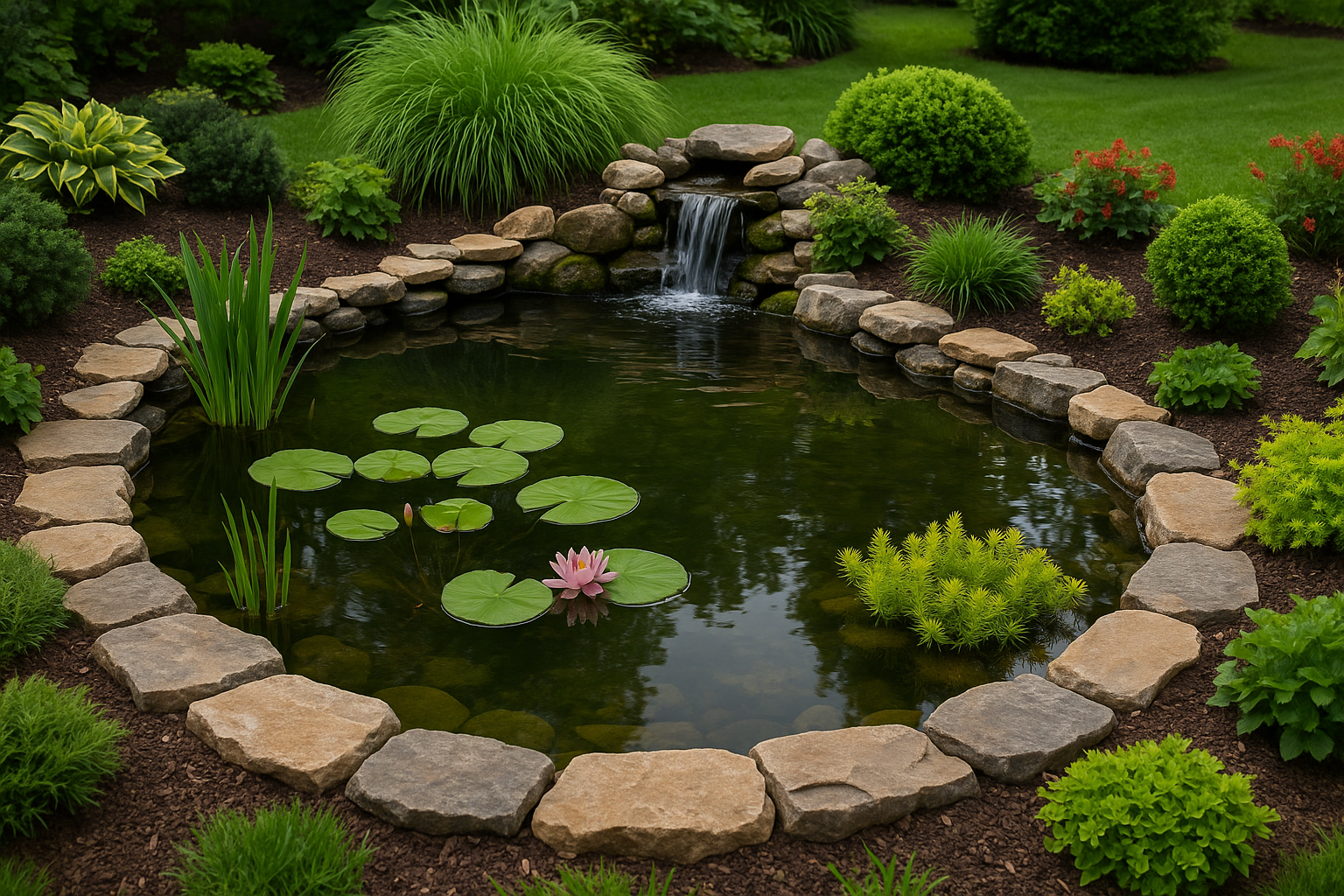
Soft, planted edges blend the pond into the landscape. Use a mix of rocks, gravel, and native planting to create a relaxed look. Stepping stones or a simple path invite visitors to the water’s edge.
Formal edges
For a contemporary garden, consider neat paving, low walls, or metal edging. These materials create clean lines and frame the water feature as a focal element.
Planting for Beauty and Balance
Plant types and placement
Use a combination of submerged, marginal, and floating plants for balance:
- Submerged (oxygenators): Elodea, hornwort—help water clarity.
- Marginal (shelf plants): Iris, pickerelweed, marsh marigold—soften edges.
- Floating: Water lilies, water hyacinth—provide shade and reduce algae.
Creating habitat
Plants provide shelter for tadpoles and insects, and attract birds. Add a log, rock pile, or gently sloped bank for amphibians. Avoid aggressive invasive species and choose native plants where possible.
Water Quality, Pumps, and Filtration
Circulation matters
Moving water reduces stagnation and mosquito breeding. Install a pump sized for your pond volume and planned features (falls, fountains). Aim to turn over the pond water at least once every two hours for small ponds.
Filtration and biological balance
Mechanical filters remove debris while biological filters host beneficial bacteria that break down waste. Maintain a balance of plants, bacteria, and occasional cleaning to keep water clear and healthy.
Lighting and Water Features
Underwater and path lighting extend enjoyment into the evening and highlight textures and reflections. Small waterfalls or streams add sound, oxygenation, and visual motion—placing them so water flows gently into the pond keeps things serene.
Maintenance and Seasonal Care
Regular tasks
- Skim leaves and debris regularly, especially in fall.
- Clean filters monthly or as recommended by the manufacturer.
- Trim back aggressive plants and divide crowded planting every few years.
Winter and summer tips
In winter, keep an opening in ice for gas exchange if you have fish. In summer, monitor temperature and oxygen levels; add shade with floating plants if water overheats. Top up evaporative losses and use dechlorinated water when replacing large volumes.
Budgeting, Materials, and Practical Tips
Costs range widely based on size, materials, and whether you install professionally. Save money by using preformed ponds or doing a DIY liner installation. Invest in a reliable pump and quality liner—these components pay off with fewer headaches later.
Quick practical tips
- Start small and expand—it’s easier to learn pond maintenance on a modest scale.
- Plant densely but avoid overstocking fish; overcrowding stresses the ecosystem.
- Use native plants and avoid chemicals to protect wildlife.
Conclusion
Garden pond landscaping combines art and ecology. With thoughtful planning, the right plants, good circulation, and routine care, your pond will be an attractive, low-stress centerpiece that supports wildlife and enhances your outdoor space. Start with a clear plan, be patient as the ecosystem establishes, and enjoy the calming presence of water in your garden.