
Pond Edge Landscaping: Practical Ideas for a Beautiful, Low-Maintenance Shoreline
Why Pond Edge Landscaping Matters
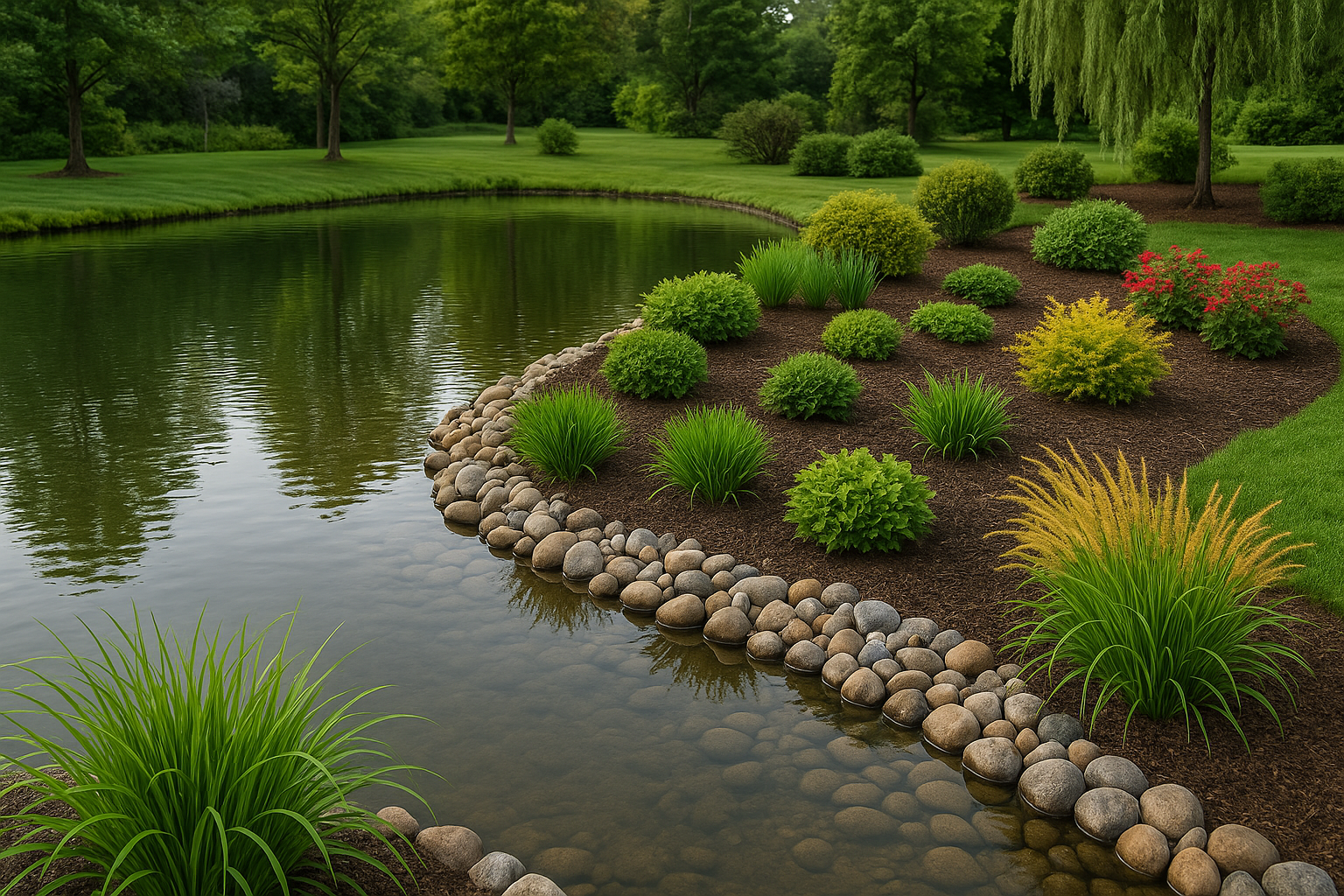
The edge of a pond is where water meets land, and it’s one of the most visible and important parts of your water feature. Thoughtful pond edge landscaping not only improves aesthetics but also helps with erosion control, water quality, and wildlife habitat. A well-designed edge feels natural, is easy to maintain, and balances plant life with hardscape elements.
Planning Your Pond Edge
Assess the Site and Define Your Goals
Start by observing sunlight, soil type, and how water behaves around the pond. Do you want a wildlife-friendly margin, a formal stone edge, or a mix? Consider safety, accessibility for maintenance, and how the pond sits in the overall landscape — is it a focal point or a secluded retreat?
Set a Budget and Select a Style
Costs vary widely depending on materials and plants. Naturalistic edges with plants and gravel are budget-friendly, while stonework, retaining walls, or decking increase costs. Choose a style that complements your home: rustic, formal, cottage-garden, or modern minimalism.
Plant Choices for the Pond Edge
Plants soften the transition between water and land, filter runoff, and support wildlife. Use layers: submerged plants, marginal/bog plants at the water’s edge, and shrubs or grasses set back a bit.
Marginal and Bog Plants
- Irises (Iris sibirica) — striking foliage and blooms; do well at the waterline.
- Cattails (Typha) — great for wetlands but can spread aggressively.
- Pickerelweed (Pontederia cordata) — attractive spikes that pollinators love.
- Marsh marigold (Caltha palustris) — early spring flowers and bright foliage.
Grasses, Sedges, and Groundcovers
Sedges (Carex spp.) and ornamental grasses provide texture and trap sediment. Low-growing groundcovers like ajuga or creeping thyme can stabilize banks that aren’t constantly wet.
Trees and Shrubs
Use small, water-tolerant shrubs and trees set a few feet back to provide vertical structure and seasonal interest without dropping too much debris into the pond. Avoid large leaf-shedding species too close to the water.
Hardscape Options
Rocks, Gravel, and Boulders
Natural stone creates a clean, stable edge and looks great with plantings. Use a mix of sizes: larger boulders as focal points and smaller cobbles or gravel to fill gaps and provide drainage. Gravel paths can sit a few inches above the waterline to prevent washout.
Decking, Steps, and Seating
A small deck or stepping stones provides access and creates viewing spots. Choose rot-resistant wood or composite materials and think about safety — non-slip surfaces and railings where needed.
Building the Edge: Practical Steps
Follow these steps for a durable, attractive shoreline:
- Grade the bank so water flows gently to the pond without creating steep drop-offs.
- Install an erosion-control fabric where slopes are vulnerable, then place stone or gravel over it.
- Plant in stages: submerged/surface plants first, then marginal plants, and finally back-border shrubs.
- Use planting baskets or pots for marginal plants if you need to control spread or relocate them later.
- Mulch back areas with gravel or shredded bark, avoiding loose mulch right at the waterline to prevent runoff.
Preventing Erosion and Managing Runoff
Direct roof and landscape drains away from the pond. Use swales, rain gardens, or buffer strips of native vegetation to intercept sediment and nutrients. For steep banks, terraces or retaining stones can stabilize soil while creating planting pockets.
Maintenance Tips
Routine maintenance keeps the edge attractive and functional. Remove invasive species before they establish, trim dead foliage in spring, and pull excess algae. Check for erosion after heavy rains and replenish gravel or stone as needed. Seasonal pruning and a light clean-up reduce debris falling into the water.
Encouraging Wildlife and Biodiversity
A thoughtfully landscaped edge attracts frogs, dragonflies, birds, and pollinators. Provide shallow shelves for amphibians, leave some fallen logs or rock crevices for shelter, and avoid chemical pesticides that harm aquatic life. Native plant choices boost biodiversity and require less care once established.
Common Mistakes to Avoid
- Planting high-maintenance or invasive species too close to the water.
- Ignoring drainage — concentrated runoff causes erosion and poor water quality.
- Overlooking access for maintenance — design pathways or removable plantings.
- Using organic mulch at the waterline, which can float and pollute the pond.
Conclusion
Pond edge landscaping balances form and function. By planning for site conditions, choosing the right mix of plants and hardscape, and committing to simple maintenance, you’ll create a shoreline that looks natural, supports wildlife, and stands up to the seasons. Start small, observe how your pond behaves, and adapt your edge over time — you’ll be rewarded with a thriving, beautiful water feature.