
Pond Landscaping Tips: Create a Beautiful, Balanced Water Garden
Introduction: Why Pond Landscaping Matters
A backyard pond can transform an ordinary yard into a peaceful retreat, attract wildlife, and increase property appeal. But good pond landscaping does more than look pretty: it balances ecology, reduces maintenance, and keeps your pond healthy year-round. These pond landscaping tips will help you plan, build, and maintain a water feature that looks natural and functions well.
Plan First: Location, Size, and Purpose
Choose the right location
- Pick a spot with a mix of sun and shade; most aquatic plants need 4–6 hours of sun daily.
- Avoid placing a pond directly under large trees to reduce leaf litter and root issues.
- Consider sight lines from your home and popular outdoor living areas.
Decide on size and depth
Smaller ponds are easier to maintain, but larger ponds provide more stable ecosystems. Include deeper areas (18–24 inches or more) if you want fish or to help plants survive cold winters.
Design Principles for a Natural Look
Use asymmetry
Avoid perfectly circular designs. Natural shapes with gentle curves look more organic and integrate better with existing landscaping.
Layer plantings
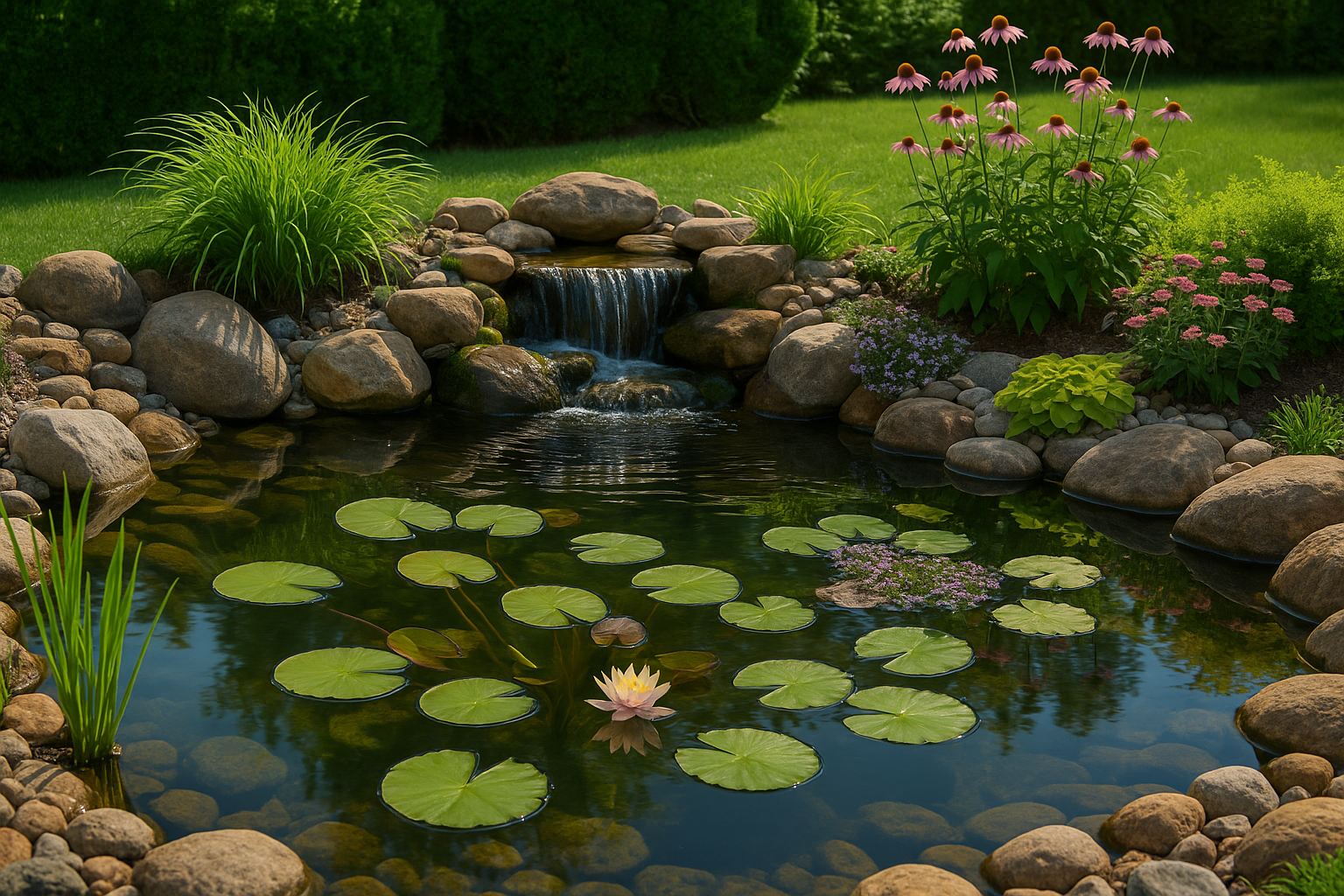
Create visual depth by planting in tiers: submerged plants, marginal plants at the water’s edge, then taller border plants and shrubs. This mimics natural shorelines and provides habitat for wildlife.
Blend hardscape and softscape
Use rocks, gravel, and pavers sparingly to define edges and create seating areas. Combine them with native plants and mulch to soften hard lines.
Plant Selection: Balance Beauty and Function
Choose plants by zone
- Submerged plants (oxygenators): hornwort, elodea — improve water quality.
- Marginal plants (edge): pickerelweed, irises, cattails — hide liners and provide habitat.
- Floating plants: water lilies, water lettuce — provide shade and reduce algae.
Favor native species
Native plants are adapted to local conditions, require less care, and support pollinators and aquatic wildlife. Check local guidelines to avoid invasive species.
Hardscaping Tips: Edging, Rocks, and Water Features
Natural-looking edges
Layer flat stones and plantings along the edge instead of concrete or sharp liners. Allow small pockets of marshy soil where marginal plants can thrive.
Add focal points
Introduce a small waterfall, fountain, or sculptural element to provide motion and sound. Moving water improves oxygenation and discourages mosquitoes.
Filtration, Aeration, and Equipment
Right-sized filtration
Select a biological and mechanical filter sized for your pond volume and fish load. Filters keep water clear and reduce algae blooms.
Aeration and circulation
Pumps, aerators, and waterfalls maintain oxygen levels and prevent stagnation. Position returns to create gentle circulation without disturbing plants.
Wildlife and Fish: Creating a Balanced Ecosystem
Attract beneficial wildlife
Include a variety of plant heights and hiding spots to welcome frogs, dragonflies, and birds. Shallow shelves and rocks provide basking and breeding areas.
Fish considerations
If you add fish, avoid overstocking. Fish produce waste that increases nutrient loads and algae. Provide shaded areas and deeper refuges for them.
Maintenance: Simple Routines for Long-Term Success
Seasonal tasks
- Spring: remove winter debris, check equipment, divide overgrown plants.
- Summer: monitor water levels, trim marginal plants, skim surface debris.
- Fall: net overhanging trees where practical, move tropical plants indoors if needed.
- Winter: maintain circulation if you have fish; leave some plants for shelter and oxygen balance.
Common maintenance mistakes to avoid
Don’t overfeed fish, don’t remove all plants (they control nutrients), and don’t add chemicals without testing water first.
Budget-Friendly Tips
- Start small and expand: a modest, well-planned pond is better than an oversized, neglected one.
- Use reclaimed stone or recycled materials for edging and hardscape.
- Propagate plants from neighbors’ ponds or local plant swaps to save money and ensure native choices.
Safety and Accessibility
Make edges gradual or add railings if you have small children. Keep electrical equipment installed by a professional and use GFCI outlets for pumps and lighting. Create clear paths and seating areas so the pond can be enjoyed safely.
Conclusion
Thoughtful pond landscaping blends form and function: choose the right location, layer plants, incorporate natural materials, and maintain a healthy balance of wildlife and equipment. With careful planning and seasonal care, your pond will become a serene focal point that enhances both your landscape and the local ecosystem.