
Complete Guide to Landscape Lighting Installation: Planning, Installation & Maintenance
Why Landscape Lighting Matters
Landscape lighting transforms the look and feel of your outdoor space after dark. It improves safety, highlights architectural and garden features, extends usable time outdoors, and increases curb appeal. A thoughtfully designed lighting plan can make your home feel more welcoming while also improving security.
Planning Your Landscape Lighting Installation
Assess Your Space
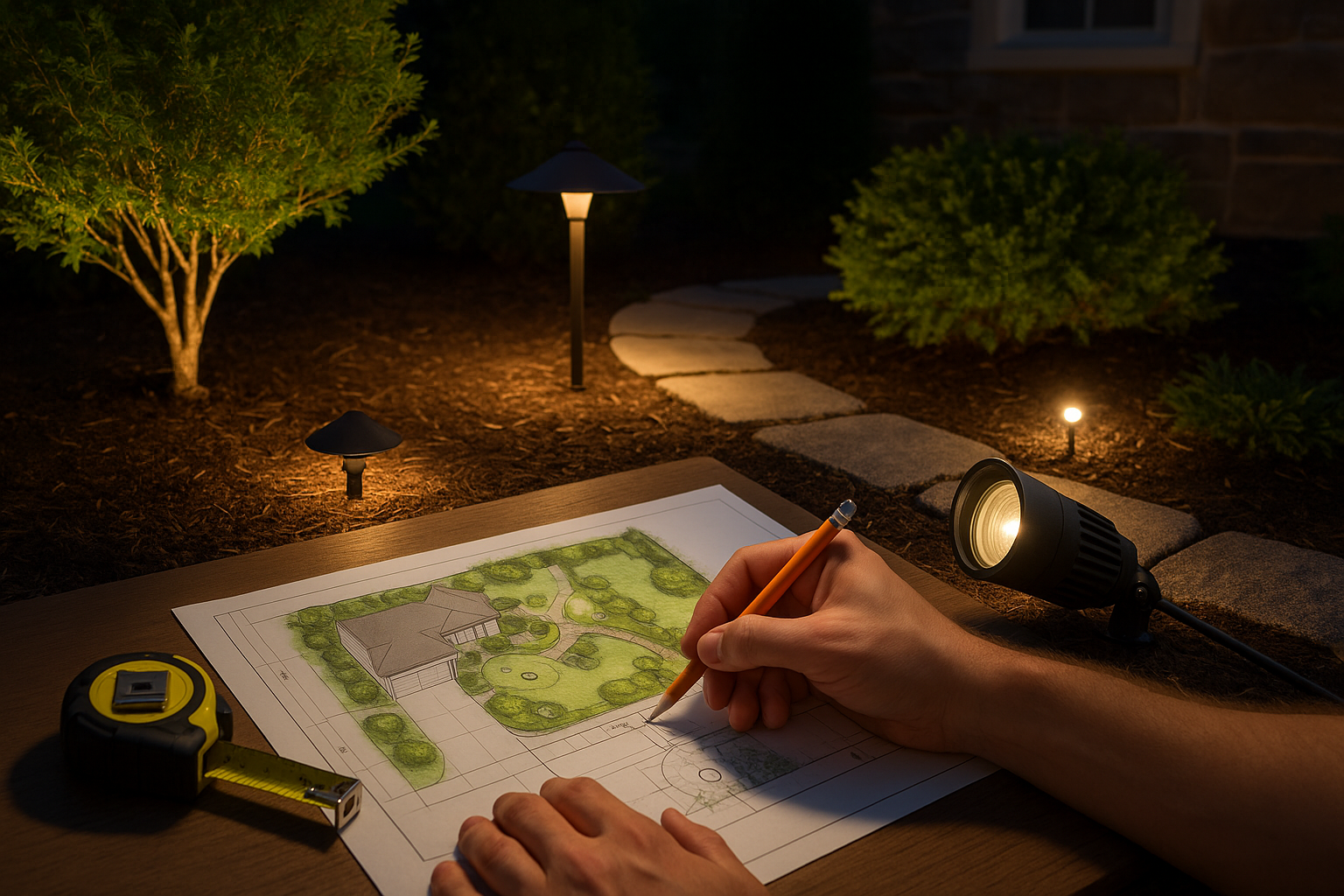
Start by walking your property at dusk to see where natural shadows fall and which areas need illumination. Prioritize entryways, walkways, patios, driveways, and focal points such as trees, sculptures, or water features. Sketch a simple plan and note power sources, outlets, and potential obstacles like garden beds.
Choose Fixtures and Bulbs
Common fixture types include path lights, spotlights (or accent lights), floodlights, well lights, step lights, and deck or rail lights. Decide between low-voltage, line-voltage, and solar. Low-voltage (12V) systems are popular for residential landscapes because they are safer and easier to install. LEDs are recommended for energy efficiency, long life, and a range of color temperatures. For warm, inviting light use 2700K–3000K; for brighter task lighting, choose 3000K–4000K.
Layout and Wiring Basics
Map out fixture placement with spacing that provides even illumination—path lights about 8–12 feet apart, accent lights spaced according to the object size. Consider beam angles: narrow beams for accenting tall features, wider beams for general area lighting. When planning wiring, account for voltage drop by measuring run lengths and sizing transformers and cable accordingly. Include a transformer capacity that exceeds total wattage by 20–25% to avoid overloads.
DIY vs Professional Installation
Pros of DIY
- Lower upfront cost and flexible scheduling.
- Many low-voltage kits are beginner-friendly with simple plug-and-play connectors.
- Full control over design and placement.
When to Hire a Pro
Hire a licensed electrician or landscape lighting specialist if you plan to work with line-voltage, need trenching across large areas, require permits, want advanced controls (smart systems), or need a design that integrates with hardscaping and irrigation. Pros can also ensure compliance with local codes and handle complex wiring safely.
Step-by-Step Installation Overview
Tools and Materials
- Fixtures, transformer, low-voltage cable, connectors
- Shovel or trenching tool, wire stripper, voltage tester
- Silicone sealant, landscape staples, timer or smart controller
Trenching and Wiring
For low-voltage systems, trenches typically need to be only 3–6 inches deep. Always call your local utility hotline (811 in the U.S.) before digging to locate underground utilities. Run the main cable from the transformer to the first fixture, then daisy-chain to other fixtures. Use waterproof wire connectors and protect connections with silicone-filled wire nuts or connector boxes.
Mounting Fixtures and Aiming
Set fixtures into the ground and use angle-adjustable heads to aim light where you want it. For uplighting, place fixtures several feet from the tree or structure to create a natural look. For path lighting, aim fixtures slightly away from the path to avoid glare. Always test placement at night before finalizing positions.
Testing and Controls
Turn the system on and inspect each fixture for correct operation and desired beam spread. Install a timer, photocell, or smart controller for automated scheduling and energy savings. Smart systems let you adjust brightness and scenes from your phone.
Maintenance and Energy Tips
- Clean lenses annually and trim plants that obstruct fixtures.
- Check connectors and transformer for moisture; replace worn cables.
- Use LED fixtures and consider motion sensors for areas that don’t need constant light.
- Seasonally check aim and coverage; plants grow and can change lighting effects.
Safety, Codes, and Permits
Follow local electrical codes and obtain permits when required. Use GFCI protection for outdoor power sources. If you’re unsure about wiring or permit requirements, consult a licensed electrician. Always call utility location services before digging.
Conclusion
Landscape lighting installation is a rewarding project that boosts safety, beauty, and usability of your outdoor space. With thoughtful planning, the right fixtures, and basic maintenance, you can create a welcoming nighttime atmosphere that enhances your home’s value and curb appeal. When in doubt, consult a pro to ensure performance and safety.