
12 Walkway Lighting Ideas for a Safer, More Welcoming Path
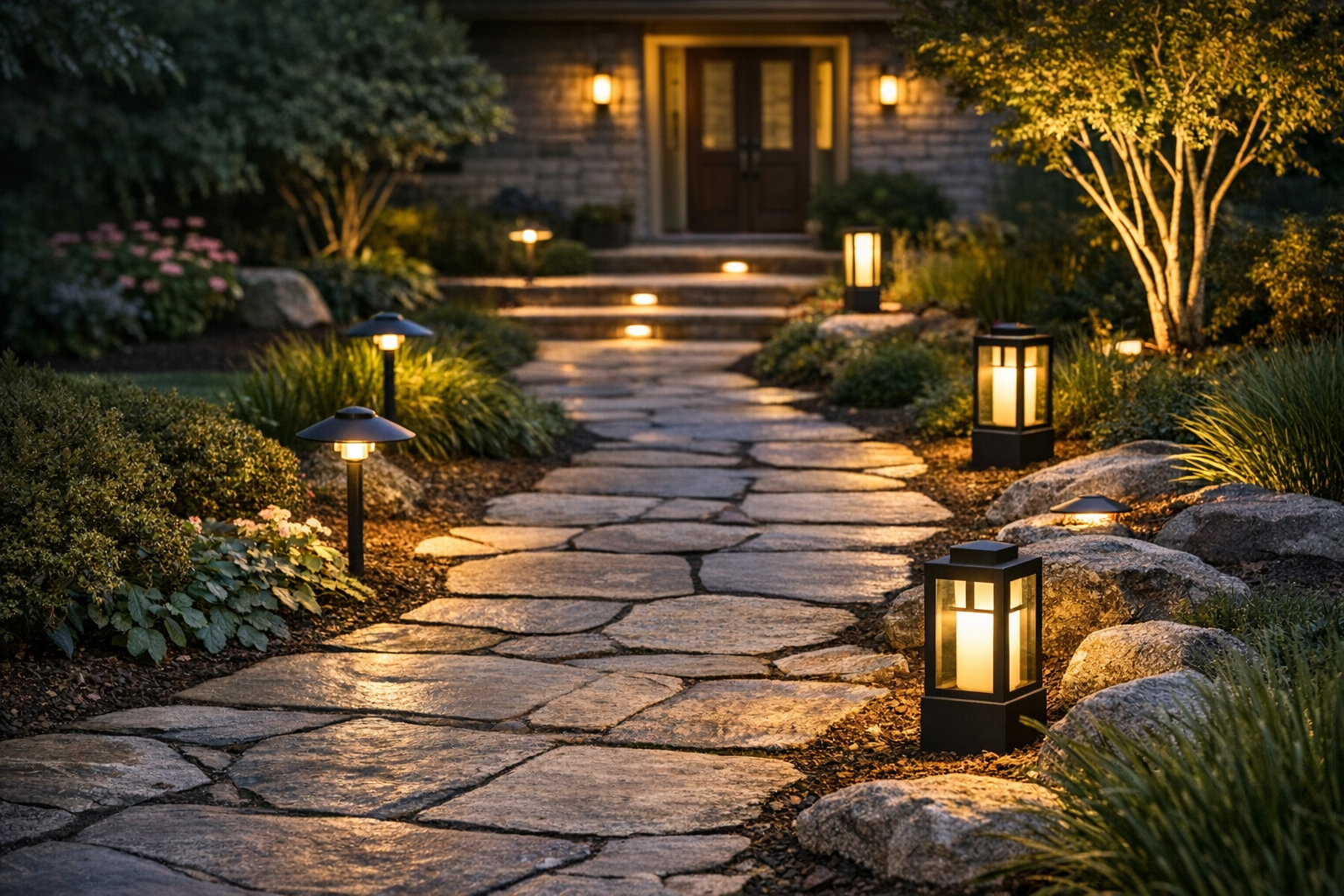
The right walkway lighting does more than help you find your way after dark. It can highlight landscaping, make your home feel more welcoming, and reduce the risk of trips and falls. Whether you have a winding garden path or a straight sidewalk to the front door, these walkway lighting ideas combine good looks with practical, even illumination.
Walkway Lighting Ideas for Every Outdoor Style
Before choosing fixtures, consider how you use the path and what you want to highlight. A front entry may need brighter, more focused light, while a garden walkway can benefit from a softer glow. For the most comfortable result, light the route consistently without creating glare or bright spots.
1. Line the Path with Low-Level Bollard Lights
Bollard lights are short, sturdy fixtures that cast light across the ground. Place them along one or both sides of a walkway to define its edges and improve visibility. They work especially well on wide paths and contemporary landscapes. Choose shielded designs that direct light downward rather than into the eyes of people approaching the house.
2. Add Classic Path Lights
Stake-style path lights are a familiar, flexible option for garden paths and front walks. Their variety of finishes and shapes makes it easy to match traditional, cottage, or modern homes. Space fixtures far enough apart to create overlapping pools of light without making the walkway look like an airport runway. A short test with temporary lights can help you find the right spacing.
3. Use Recessed Lights Along the Edges
Recessed ground lights offer a clean, low-profile look. Set them into pavers, stone borders, or nearby retaining walls to mark the path without adding visual clutter. Use outdoor-rated fixtures designed for ground installation, and position them so their beams do not shine directly upward into visitors’ eyes.
4. Highlight Steps and Changes in Level
Steps, slopes, and uneven surfaces deserve special attention. Install small lights on risers, under stair nosings, or beside steps to make each edge easy to see. Even a beautifully lit path can be hazardous if its transitions disappear in the dark, so prioritize these areas when planning your layout.
5. Try Wall-Mounted Lights Beside the Walkway
If your path runs along a house, fence, or garden wall, mounted fixtures can provide useful light without taking up ground space. Sconces create a welcoming feel near an entry, while compact wall lights can illuminate longer routes. Look for a downward-facing design with a cutoff that keeps light focused on the walking surface.
6. Add a Soft Glow with String Lights
Outdoor string lights bring a relaxed, festive touch to a walkway near a patio, pergola, or courtyard. Hang them overhead or along a fence, taking care to keep cords well above head height and away from the walking surface. They are best as ambient lighting, paired with lower fixtures that illuminate steps and path edges.
7. Use Lanterns for a Charming Accent
Portable or fixed lanterns can make a short path feel personal and inviting. Set them beside an entry or at a garden gate, and choose weather-resistant models made for outdoor use. For convenience, battery-powered or solar lanterns avoid the need for a nearby outlet, though brightness and runtime vary by product.
8. Install Lights in Retaining Walls
Low-profile wall lights can wash the path with light while emphasizing stonework or planting beds. They are a smart choice when there is little room for fixtures beside a narrow walkway. Keep the light aimed down and use matching fixtures at a consistent height for a neat, intentional effect.
9. Add Motion-Sensor Lighting at Key Points
Motion-sensor fixtures are useful near gates, side entrances, and less-frequented paths. They switch on when someone approaches, improving convenience while limiting the time the lights stay on. Adjust the sensor’s range and direction to reduce false triggers from passing cars or moving branches.
10. Choose Solar Lighting for Easy Installation
Solar path lights can be installed without trenching wires, making them convenient for quick updates. For dependable performance, place them where the solar panels receive several hours of direct sunlight. In shaded yards or cloudy climates, wired low-voltage lights may provide more consistent brightness throughout the year.
11. Highlight Plants and Landscape Features
Not every light needs to point at the path. A small spotlight aimed at an ornamental tree, textured wall, or large planter adds depth and helps visitors understand the layout of the space. Keep decorative lighting subtle so it supports, rather than competes with, the lights that guide people along the walkway.
12. Choose Warm, Shielded LEDs
LEDs are energy-efficient and available in a range of brightness levels. For a relaxed residential feel, look for a warm color temperature, often around 2700K to 3000K. Select fixtures with shields or diffusers to reduce glare, and use only as much brightness as needed to see the route clearly.
How to Plan Walkway Lighting
Start by walking the route at night and noting dark patches, steps, corners, and changes in surface. Then decide where you need functional light and where you want an accent. Avoid placing every fixture in a perfectly straight line if a staggered layout provides more balanced coverage. Check product ratings for wet locations, and follow local electrical requirements for wired installations. When in doubt, hire a qualified electrician.
It is also worth considering timers, dimmers, or smart controls. These can help you set a dependable evening schedule and reduce unnecessary light after bedtime. Aim fixtures carefully to limit glare and light spilling into neighbors’ windows or the night sky.
Conclusion
The best walkway lighting makes a path easy to navigate while fitting naturally into your home’s landscape. Combine a few well-placed, shielded fixtures with gentle accent lighting, and give steps and uneven areas priority. With a thoughtful plan, your walkway can feel safer and more inviting every evening.