
LED Landscape Lighting: Brighten Your Outdoor Space with Style and Efficiency
Why Choose LED Landscape Lighting?
LED landscape lighting has become the go-to solution for homeowners and designers who want beautiful, durable, and energy-efficient outdoor illumination. Compared with traditional halogen or incandescent fixtures, LEDs consume far less power, last longer, and offer more flexible color and brightness options. Whether you want to highlight architectural features, light a pathway, or create a cozy backyard ambiance, LED fixtures deliver consistent results with lower maintenance.
Benefits of LED Landscape Lighting
Energy Efficiency and Cost Savings
LEDs use a fraction of the electricity that traditional outdoor bulbs require. That reduces monthly energy bills and makes it easier to power multiple fixtures from a single transformer or low-voltage driver. Over the lifetime of the system, energy savings often offset the higher upfront cost of quality LED fixtures.
Longevity and Low Maintenance
Quality LED landscape fixtures commonly last 25,000–50,000 hours or more, meaning years of use without frequent bulb changes. Fewer replacements mean less hassle and lower long-term maintenance expenses.
Color, Control, and Light Quality
LEDs are available in a wide range of color temperatures (from warm 2700K to cool 5000K) and offer excellent color rendering. Many systems also support dimming, smart controls, and color-changing options—so you can shift ambiance for seasonal events or evening gatherings.
Durability and Weather Resistance
Outdoor LED fixtures are designed to withstand rain, wind, and varying temperatures. Most are sealed and rated with IP (Ingress Protection) codes to indicate resistance to dust and moisture, making them suitable for long-term outdoor use.
Types of LED Landscape Lighting
Choosing the right fixture type depends on the function and look you want to achieve. Common options include:
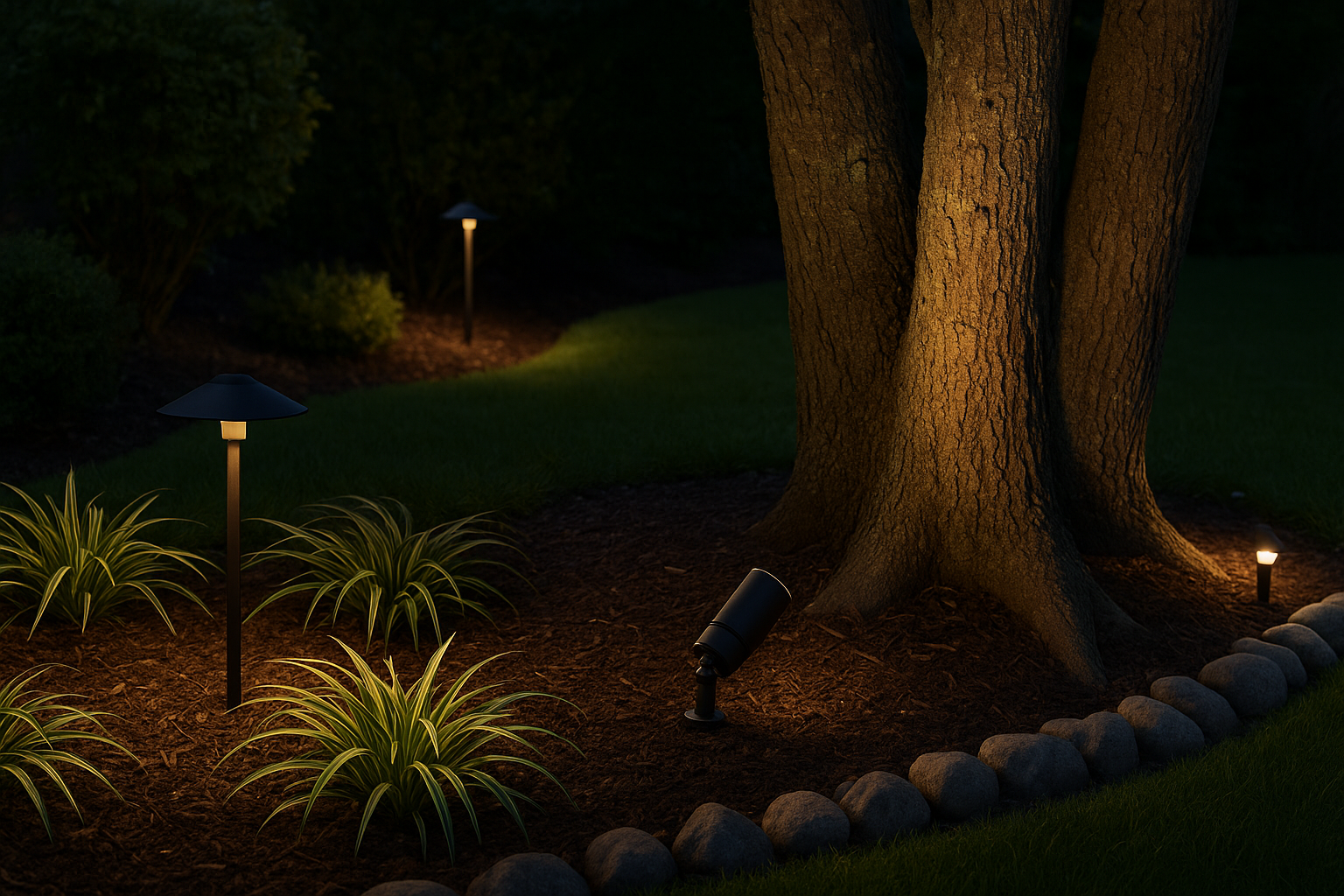
- Path Lights: Low-profile fixtures that guide walkways and add safety.
- Spotlights and Floodlights: Used for accenting trees, statues, or building facades.
- Well Lights and In-Ground Uplights: Recessed fixtures that create dramatic uplighting effects without visible hardware.
- Deck and Step Lights: Integrated lighting for stairs, railings, and deck surfaces to prevent slips and define edges.
- Wall Washers: Fixtures that cast broad, even light over walls to emphasize texture and color.
- String and Accent Lights: Flexible and often decorative—perfect for patios, pergolas, and dining areas.
Designing Your Lighting Plan
Assess Your Outdoor Space
Start by mapping out key zones: entryways, pathways, landscape beds, focal trees, water features, and outdoor living areas. Consider safety priorities—such as steps and driveways—along with areas where you want to draw attention.
Layer Lighting for Depth
Effective landscape lighting uses three layers: ambient (general illumination), task (for specific activities), and accent (to highlight features). Layering creates depth and a more natural nighttime scene compared with single-source lighting.
Color Temperature and Glare Control
Warm white (2700K–3000K) is popular for residential landscapes because it creates a welcoming, cozy feel. Use shields, diffusers, and proper aiming to prevent glare and light trespass. Soft diffusion can soften shadows and improve visual comfort.
Installation Tips and Best Practices
Placement and Beam Angles
Place spotlights at a distance to allow full coverage of the subject and adjust beam angles to avoid harsh highlights. For tree uplighting, aim slightly off-center to reveal trunk texture and canopy layers naturally.
Wiring, Power, and Controls
Most residential LED landscape systems use low-voltage (12V) power for safety and ease of installation, though line-voltage fixtures exist. Consider smart timers, motion sensors, or app-controlled systems for convenience and added security.
Protect Against Moisture and Critters
Use properly rated fixtures and sealed connections. Bury cable at recommended depths, use conduit where needed, and employ gel-filled connectors to keep moisture out of electrical joints.
Maintenance
Periodic cleaning of lenses, checking for loose fittings, and trimming back foliage that obstructs light will keep your system performing well. Replace drivers and transformers as needed—these often outlast bulbs but can fail before fixtures in some setups.
Cost Considerations and ROI
Upfront costs vary based on fixture quality, the number of fixtures, and control options. While LED fixtures cost more initially than halogen, lower energy use and reduced replacement frequency provide strong long-term savings. Additionally, lighting increases curb appeal and property value, and some local utilities offer rebates for energy-efficient outdoor lighting.
Conclusion
LED landscape lighting is a smart investment that enhances safety, extends usable outdoor time, and showcases your landscape after dark. With thoughtful planning—considering fixture type, placement, color temperature, and control options—you can create an attractive, efficient lighting scheme that lasts for years. Start small if you like, then expand your system as you refine your design and see the results.