
Solar Landscape Lights: A Complete Guide to Choosing, Installing, and Maintaining Your Outdoor Illumination
What Are Solar Landscape Lights?
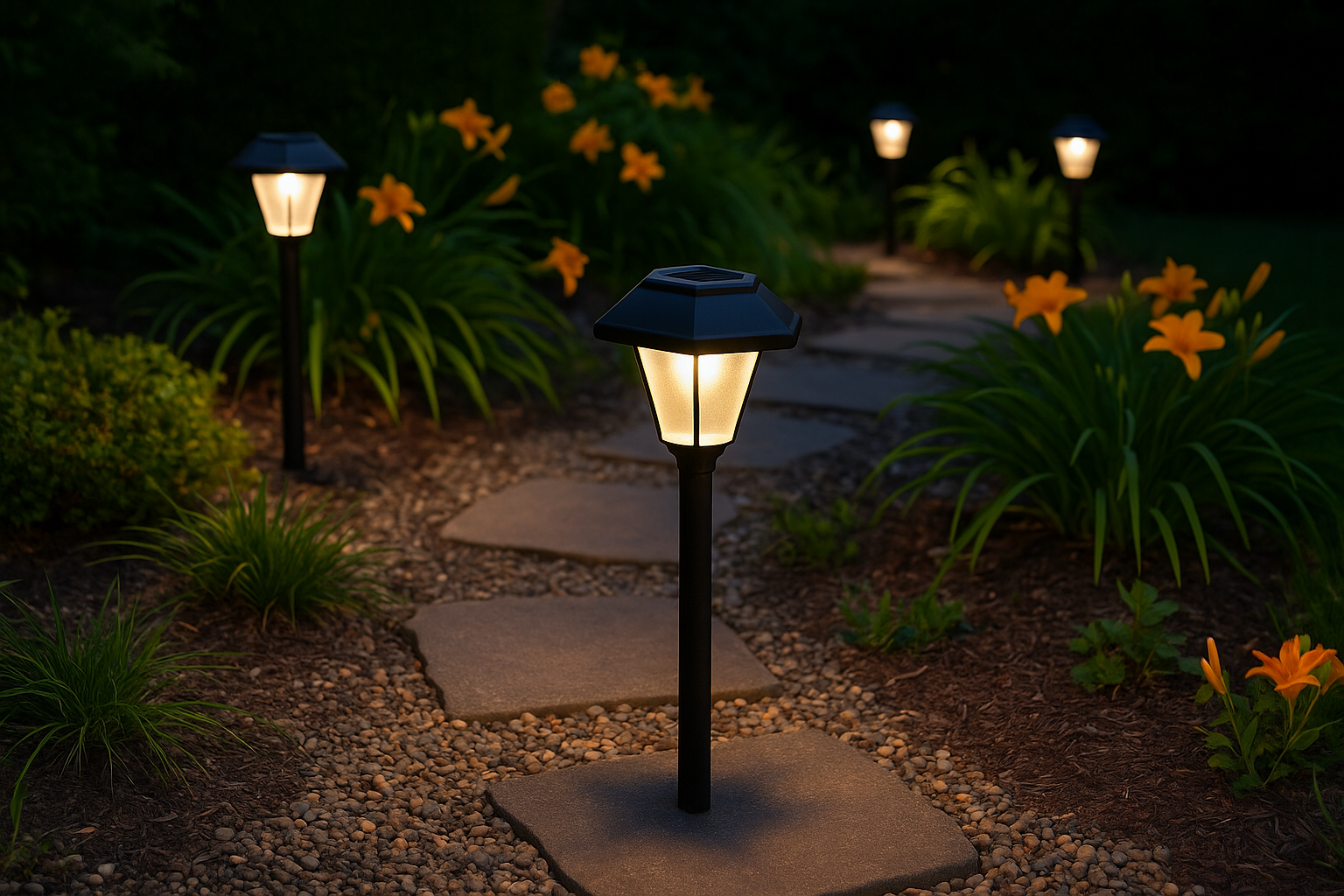
Solar landscape lights are low-voltage lighting fixtures powered by built-in solar panels and rechargeable batteries. They collect sunlight during the day and automatically illuminate pathways, gardens, and outdoor features at night. Because they require no wiring and draw energy from the sun, they’re a popular, eco-friendly way to enhance curb appeal and safety.
Why Choose Solar Landscape Lights?
There are several reasons homeowners and landscapers opt for solar lighting:
- Energy savings: They run on free solar energy—no added electricity cost.
- Easy installation: No trenching, wiring, or electrician needed for most models.
- Low maintenance: Minimal upkeep besides occasional cleaning and battery replacement.
- Safety and aesthetics: Improve nighttime visibility and highlight landscaping features.
- Flexibility: Moveable and scalable—add more lights anytime.
Types of Solar Landscape Lights
Understanding the main types will help you pick the right fixtures for your outdoor space:
- Path lights: Small posts used to line walkways and driveways. They provide low, even light to guide foot traffic.
- Spotlights and accent lights: Brighter fixtures used to highlight trees, architectural features, or water elements.
- Deck and step lights: Compact units installed on stairs, railings, or deck floors for safety and ambiance.
- String and fairy lights: Decorative solutions for patios and pergolas that add a warm glow.
- Solar floodlights: High-output fixtures for security or broad illumination where you need more light.
Key Features to Consider Before Buying
Brightness and LED Type
Brightness is measured in lumens. For path lighting, 10–50 lumens per fixture is typically sufficient. Accent and floodlighting need more—up to several hundred lumens. Look for quality LEDs with good color rendering (CRI) if accurate hues are important to your landscape.
Solar Panel and Battery Quality
A higher-efficiency solar panel and a quality battery (often lithium-ion or NiMH) will extend runtime and longevity. Lithium batteries last longer and perform better in cold weather but are pricier. Aim for fixtures that promise 8–10 hours of runtime after a full day of sun.
Durability and Weather Resistance
Outdoor fixtures should be rated for water resistance (look for IP65 or higher) and built from rust- and UV-resistant materials. Ensure stakes are sturdy if you’ll place lights in high-traffic or windy areas.
Controls and Smart Features
Some solar lights offer dusk-to-dawn sensors, motion activation, dimming modes, or even Bluetooth/Wi-Fi control. Choose based on how automated or customizable you want the system to be.
Placement and Installation Tips
- Maximize sun exposure: Place panels where they’ll get 6–8 hours of direct sunlight. Avoid shady spots under trees or behind buildings.
- Consider spacing: For path lights, space fixtures 6–8 feet apart for balanced illumination. Adjust spacing based on brightness and landscape layout.
- Angle panels correctly: Tilt panels to receive the most midday sun. Fixed-angle panels should face south in the Northern Hemisphere.
- Test before permanent placement: Stick lights in the ground temporarily to evaluate coverage and adjust as needed.
Maintenance and Troubleshooting
Solar landscape lights are low-maintenance, but a little care keeps them reliable:
- Clean solar panels seasonally to remove dust, pollen, and debris.
- Replace rechargeable batteries every 2–4 years depending on type and usage.
- Check for corrosion or water ingress after heavy storms and replace damaged fixtures promptly.
- If a light dims prematurely, try repositioning for better sun exposure or swapping the battery.
Common Mistakes to Avoid
- Placing lights in shaded areas and expecting full-night runtime.
- Buying the cheapest option without checking lumens, battery specs, or weather ratings.
- Mixing different brands and light output levels in the same area, creating uneven lighting.
- Failing to consider seasonal changes—panels that receive sun in summer might be shaded in winter.
Budgeting and Cost Expectations
Solar landscape lights range from budget-friendly packs for under $50 to premium fixtures costing $50–$150 each. Factor in battery type, build quality, and warranty when comparing prices. Often investing a bit more upfront yields longer life and better performance.
Conclusion
Solar landscape lights are an attractive, cost-effective way to brighten your outdoor spaces while lowering energy use. By choosing the right styles, paying attention to brightness and battery quality, and placing them where they get enough sun, you can create a welcoming and safe landscape with minimal fuss. With a little planning and occasional maintenance, solar lighting can be a rewarding upgrade that enhances both functionality and curb appeal.