
Landscape Lighting Ideas: Transform Your Yard with Light
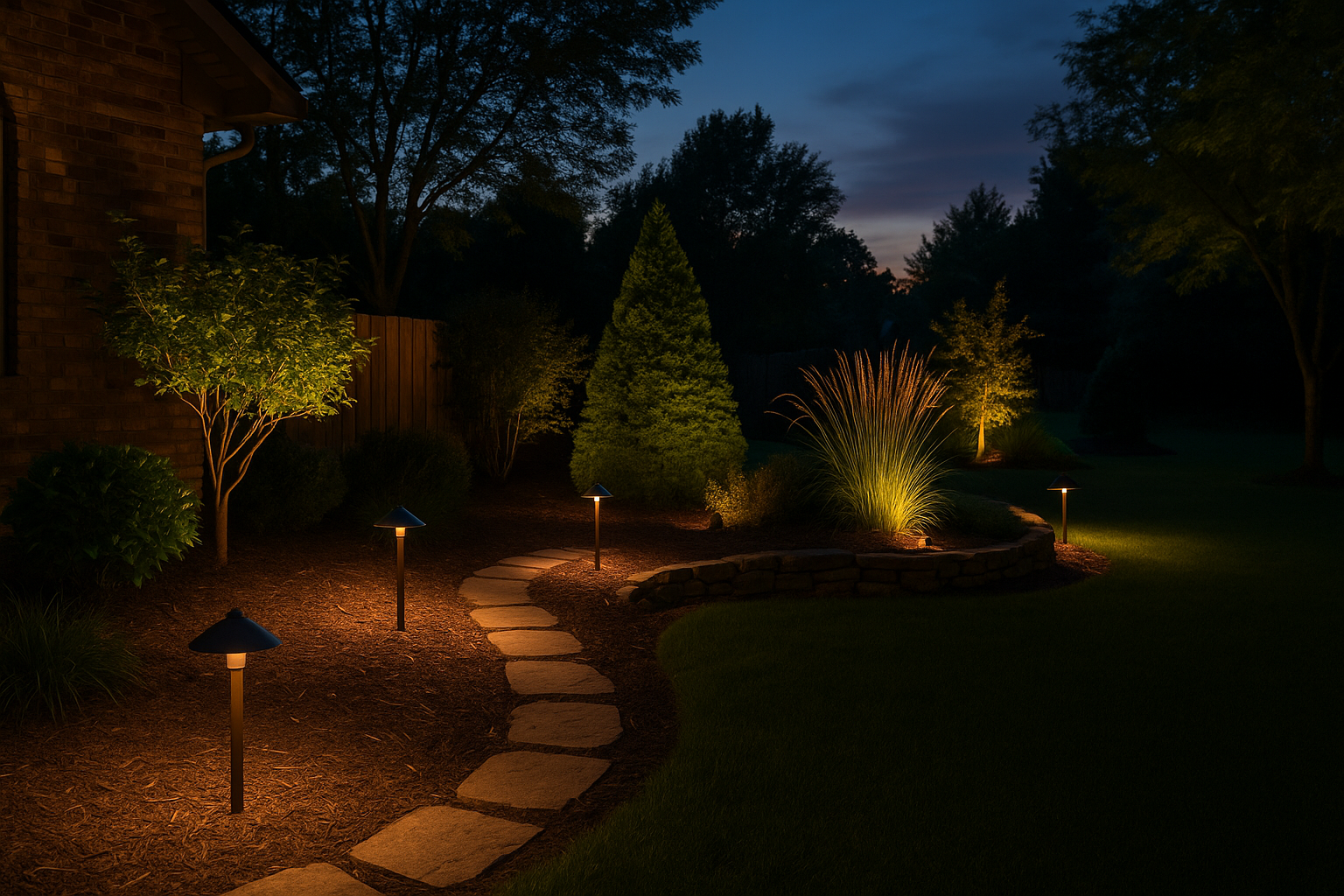
Landscape Lighting Ideas to Transform Your Yard
Landscape lighting is one of the fastest, most cost-effective ways to boost curb appeal, increase safety, and extend the use of your outdoor spaces after dark. With the right plan, a modest budget and a few strategically placed fixtures, you can turn your yard into a warm, inviting retreat.
Why Plan Your Landscape Lighting
Good lighting does more than illuminate — it guides movement, highlights focal points, creates mood, and deters intruders. Before buying fixtures, think about goals: do you want drama, safety, subtlety, or a mix? A clear intent helps you choose the right techniques and controls.
Lighting Techniques
Uplighting
Uplighting places fixtures at ground level pointing upward to emphasize trees, architectural features, or statues. It creates dramatic silhouettes and adds depth to a nighttime scene. Use narrow-beam fixtures to focus on trunks or columns for a crisp look.
Downlighting
Downlighting (also called moonlighting) mounts lights in trees or structures and points downward. This mimics natural moonlight, casts soft shadows, and improves safety on paths and steps. Keep fixtures tucked away to avoid glare.
Silhouetting and Backlighting
Backlight a plant or sculpture by placing a fixture behind it, aimed toward a vertical surface. This creates a striking silhouette and draws attention to textures and shapes.
Grazing
Grazing places a light close to a textured surface like a stone wall to emphasize its texture. It’s ideal for retaining walls, columns, and large boulders.
Placement and Layout Ideas
Highlight the Entry
Light the walkway, steps, and front porch to welcome guests and improve safety. Combine path lights for guidance with a brighter porch light for visibility.
Layer Your Lighting
Use three layers: ambient (general area lighting), task (steps, grill, path), and accent (feature-focused). Layering creates balance and flexibility for different occasions.
Frame Focal Points
Choose 2–4 focal points — a specimen tree, fountain, or architectural element — and accent them with uplights or spotlights. Avoid lighting everything the same; selective focus feels intentional and elegant.
Define Outdoor Living Areas
Use soft, warm lights around seating zones, dining areas, and patios. Low-level deck lights, step lights, and post caps provide safety without overwhelming the ambiance.
Fixture Types and Power Options
LED vs. Halogen
LEDs are the modern standard: energy-efficient, long-lasting, and available in various color temperatures. Halogen can be warm but runs hotter and uses more energy.
Low-Voltage vs. Line Voltage vs. Solar
Low-voltage systems are popular for residential use because they balance brightness and safety with manageable installation. Line-voltage delivers more power for large areas but often requires a licensed electrician. Solar lights are affordable and easy but depend on sun exposure and generally provide softer light.
Smart Controls and Timers
Smart controllers and motion sensors increase convenience and safety while limiting wasted energy. Consider a timer or app-based system to automate scenes, dimming, and schedules.
Design Tips and Best Practices
Keep these practical tips in mind while planning:
- Choose warm color temperatures (2700K–3000K) for a cozy, inviting look.
- Avoid glare by hiding fixtures behind landscaping or using shields and baffles.
- Space path lights closer in high-traffic areas and farther apart where less guidance is needed.
- Test fixture placement at night before burying wires — a temporary setup helps fine-tune angles and intensity.
- Use dimmers to adjust mood and save energy.
Maintenance and Safety
Regular maintenance ensures your lighting continues to look great:
- Inspect fixtures and connections annually for corrosion, water intrusion and loose wiring.
- Trim plants that block or diffuse light unintentionally.
- Clean lenses to maintain brightness and replace bulbs promptly when they dim or fail.
- Follow local electrical codes and use a professional for line-voltage work to reduce risk.
Budget-Friendly Ideas
If you’re on a budget, start small and prioritize impact: light your entry and one focal tree, then expand over time. Solar accent lights and low-voltage spotlights can be added incrementally to create a cohesive scheme without a big upfront cost.
Conclusion
Landscape lighting can transform your property after dark, blending beauty, safety, and functionality. With a little planning — choosing the right techniques, layering light, and focusing on key features — you can create a nighttime landscape that feels both magical and practical. Start with a simple plan, test placements at night, and build from there to achieve lasting results.