
Natural Drainage Landscaping: Practical Ways to Manage Rainwater
What Is Natural Drainage Landscaping?
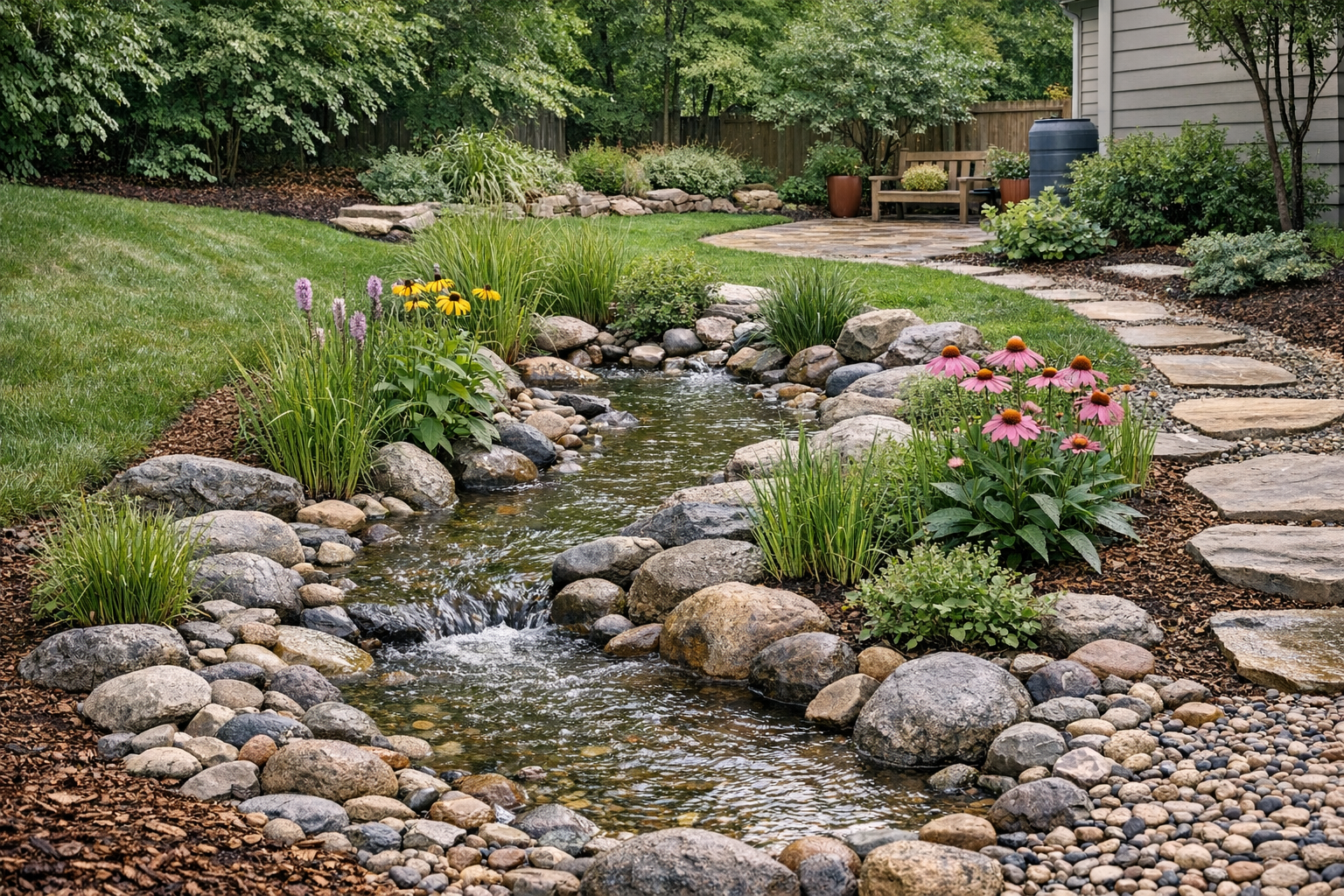
Natural drainage landscaping uses the shape of your yard, healthy soil, and well-chosen plants to guide rainwater where it can soak into the ground. Instead of relying only on pipes and drains to move water away, it slows runoff and helps it spread across suitable areas. The result can be a yard that handles storms more effectively while supporting local wildlife and reducing erosion.
It is useful to think of natural drainage as a system rather than a single feature. A rain garden may collect water from a roof, for example, while a shallow swale carries extra runoff toward a lawn or another safe destination. The right combination depends on your property, soil, climate, and local drainage rules.
Start by Understanding How Water Moves
Before changing your landscape, observe your yard during and after rainfall. Note where puddles form, how long they remain, and where water flows from roofs, driveways, and neighboring areas. Look for signs of erosion, soggy soil, or water entering the basement or crawl space. These clues help you identify both the source of a drainage problem and a suitable place for runoff to go.
Check the Slope and Soil
Water generally flows downhill, so even a gentle change in grade can affect drainage. Your yard should slope away from the foundation, but runoff should not be directed onto a neighbor’s property or toward a sidewalk where it could create a hazard. Soil matters too: sandy soil usually absorbs water more quickly than dense clay. A simple infiltration test—digging a small hole, filling it with water, and observing how quickly it drains—can offer a useful starting point. For persistent water issues, a drainage professional can assess the site more accurately.
Natural Drainage Landscaping Ideas
Build a Rain Garden
A rain garden is a planted, shallow depression designed to collect runoff from a roof, patio, or other surface. It temporarily holds water so it can gradually soak into the soil. Choose a location that is safely away from the house and suited to the amount of water it will receive. Plants should be able to tolerate both occasional wet conditions and periods of dry weather. Native grasses, sedges, flowering perennials, and shrubs are often good choices, but the best options depend on your region.
Create a Shallow Swale
A swale is a gently sloped, open channel that directs water across the landscape. Unlike a steep ditch, a planted swale can slow runoff and help limit erosion as water travels. Line it with sturdy, water-tolerant plants or use stones in areas where flow is stronger. Keep the channel broad and shallow where possible, and make sure it leads to a safe outlet, such as a rain garden or a well-draining section of the yard.
Use Permeable Surfaces
Traditional concrete and asphalt prevent rain from soaking into the ground, increasing runoff. Permeable pavers, gravel paths, and other porous materials allow some water to pass through into a prepared base below. These surfaces can work well for walkways, patios, and parking areas. They still need proper installation and occasional maintenance to prevent sediment or debris from blocking the openings.
Improve Soil and Plant Coverage
Healthy soil acts like a sponge. Adding compost to suitable garden beds can improve soil structure and water absorption, while ground covers and deep-rooted plants help hold soil in place. Avoid compacting wet soil with heavy equipment or repeated foot traffic. In lawns, aeration may help if compaction is the main issue, although it will not solve every drainage problem. Choose plants suited to your soil and rainfall rather than relying on frequent watering to maintain unsuitable species.
Manage Roof Runoff
Clean gutters and downspouts regularly so water can flow freely. Downspout extensions can direct runoff away from the foundation toward a rain garden, lawn, or other appropriate area. Rain barrels can store some roof water for later use, but they need an overflow plan for heavy storms. Avoid placing an outlet where water will collect beside the house, wash out soil, or flow onto a neighboring property.
Plan for Safety and Long-Term Performance
Good drainage landscaping works with the site rather than simply moving a water problem elsewhere. Keep water away from foundations, septic systems, wells, and areas where standing water could cause damage. Before digging, check for underground utility lines. If runoff problems are severe, the site is very steep, or water regularly enters your home, seek advice from a qualified landscape professional or drainage specialist. Local rules may also apply to grading, rain gardens, and stormwater management.
Once installed, natural features need a little care. Remove leaves and sediment from inlets, check swales after major storms, and replace plants that do not thrive. A newly planted rain garden may need watering while it becomes established, even though mature plants are selected for local conditions. Watch how the system performs through different seasons and make small adjustments as needed.
Benefits Beyond Drainage
When planned well, natural drainage landscaping can do more than reduce puddles. It can limit soil erosion, help recharge groundwater, and reduce the amount of sediment and pollutants carried into storm drains. Native plants may also provide food and shelter for pollinators and birds. And because these features can be designed to look like ordinary garden beds, paths, and lawns, they can add visual interest while serving a practical purpose.
Conclusion
Natural drainage landscaping is a practical way to manage rainwater by slowing it down, guiding it safely, and helping it soak into the ground. Start by observing how water moves through your yard, then choose features that suit your soil and space. With thoughtful planning and simple maintenance, your landscape can be both attractive and better prepared for rainy weather.