
Pond Waterfall Landscaping: Design, Build, and Maintain a Stunning Water Feature
Introduction
A pond waterfall can transform a backyard into a peaceful retreat, masking noise, attracting wildlife, and adding motion and sound to the landscape. Whether you plan a small backyard pond or a larger naturalistic water garden, thoughtful pond waterfall landscaping brings balance and beauty. This guide walks through planning, design ideas, construction basics, planting, and maintenance tips so your waterfall is both gorgeous and low-maintenance.
Planning Your Pond Waterfall
Choose the right location
Pick a spot visible from primary living areas, like a patio or kitchen window. Consider sunlight exposure — too much sun can increase algae, while heavy shade limits aquatic plant growth. Avoid placing the waterfall under trees that drop lots of leaves, and ensure easy access for maintenance.
Size and scale
Match the waterfall size to your yard. Small yards work well with modest spillways or a single cascading ledge. Larger spaces can support multi-tiered falls or rock-lined streams that reconnect to the pond. A good rule is to keep features proportionate to surrounding plants and hardscape.
Design Ideas for Pond Waterfalls
Natural stone cascade
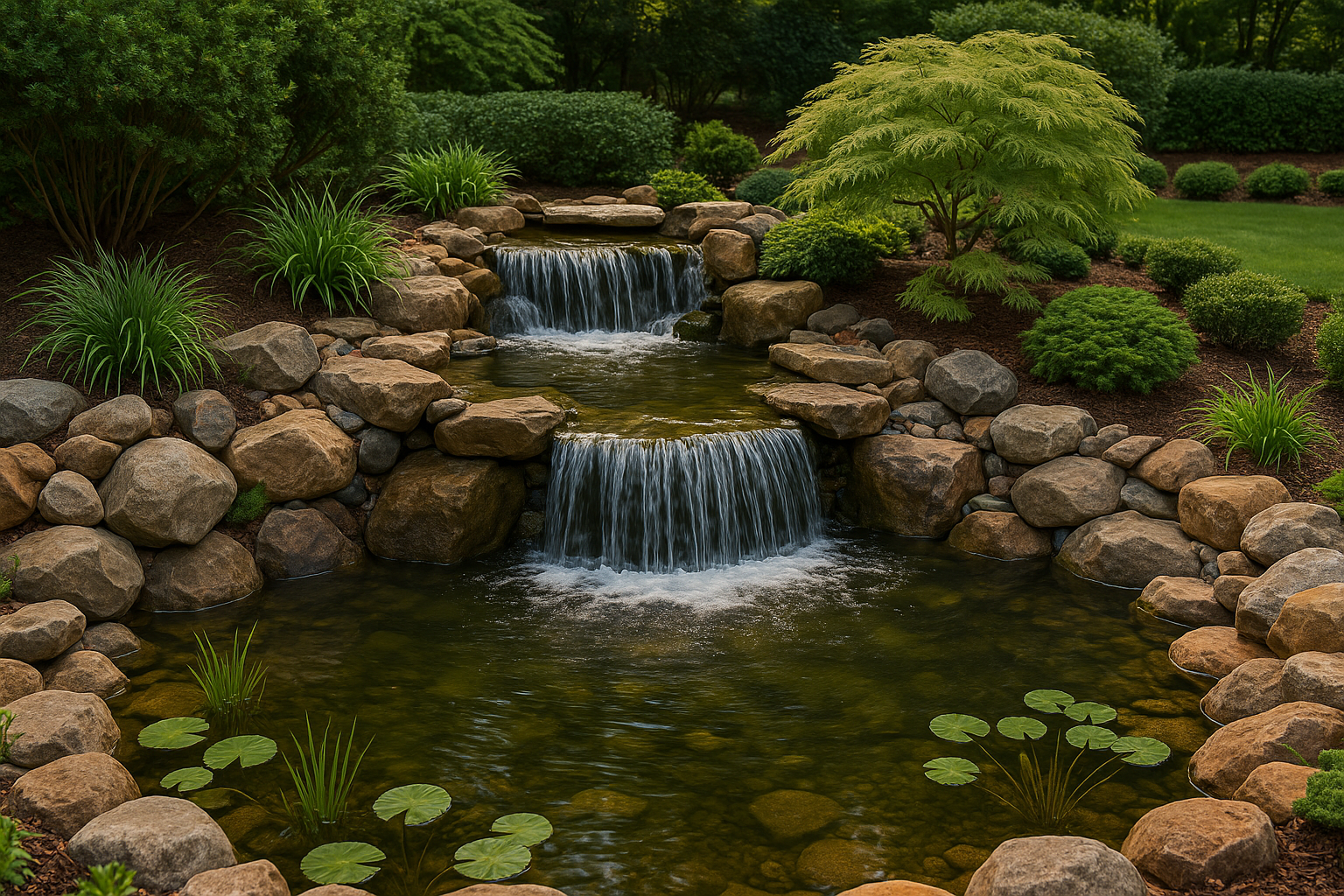
Stacking flat stones creates a natural-looking cascade that blends into planting beds. Use a variety of stone sizes to create depth and interest, and tuck plants between rocks to soften edges.
Tiered falls and streams
Tiered falls offer visual drama and more movement. A series of small drops mimics mountain streams and oxygenates the pond water, which benefits fish and aquatic plants.
Modern spillway
For contemporary gardens, a clean-lined spillway or weir provides a sleek look. Pair stainless steel or concrete elements with minimalist planting for a refined feel.
Mini waterfall for small spaces
Even tiny patios can host a waterfall: a container pond with a recirculating pump and a small slate spill creates the soothing sound of running water without a large footprint.
Construction Basics
Excavation and liner
Excavate the pond and waterfall channel to proper depths, then install an underlayment and a flexible pond liner. Ensure the liner is well-secured beneath stones at the waterfall edge. For complex builds, rigid preformed ponds or fiberglass shells can simplify the process.
Anchoring rocks and shaping
Anchor large rocks with gravel and compacted soil to prevent shifting. Build the waterfall from the top down, checking water flow frequently to avoid surprises. Use smaller stones and gravel to form natural-looking riffles and pools.
Pump and plumbing
Select a pump sized to the height and width of your waterfall. Manufacturers provide flow calculators to estimate required gallons per hour. Bury flexible tubing beneath rocks and connect to an accessible skimmer or pump vault for easy servicing.
Plants and Hardscaping
Marginal and bog plants
Border the waterfall and pond with marginal plants like irises, cattails, and marsh marigold to soften edges and add seasonal color. Bog plants planted in shallow baskets stabilize soil and filter nutrients.
Floating and submerged plants
Floating plants such as water lilies and water lettuce reduce algae by shading the pond, while submerged oxygenators improve water clarity and habitat for fish.
Hardscape accents
Pathways, benches, and lighting enhance enjoyment. Use stepping stones or gravel paths to create access for maintenance and viewing points that frame the waterfall.
Equipment, Filtration, and Maintenance
Filtration and skimming
A quality biological filter and skimmer keep water clear. Position the skimmer intake to capture surface debris before it sinks. Consider a UV clarifier if algae are a persistent problem.
Seasonal care
Regularly remove debris from skimmers and clean filter media as recommended. In colder climates, winterize pumps and ensure fish have deep water refuges. Partial water changes and spring cleanouts help maintain a healthy balance.
Algae control and water chemistry
Balance nutrients with plants, avoid overfeeding fish, and maintain proper circulation. Test water periodically for pH and ammonia to catch issues early.
Budget and Timeline
Costs range widely based on materials and scale. A DIY small pond with a waterfall can be affordable, while professionally installed features can be several thousand dollars. Expect a small project to take a weekend or two, while larger builds may take weeks when including planting and settling.
Conclusion
Pond waterfall landscaping blends art and science. With careful planning, proper equipment, and thoughtful planting, you can create a water feature that enhances your landscape and provides years of enjoyment. Start small if you’re new, test water flow as you build, and adjust planting to create a natural, low-maintenance oasis.