
Drainage Design for Landscapes: Practical Strategies for a Healthy Yard
Why Proper Landscape Drainage Matters
Poor drainage ruins lawns, damages foundations, and creates breeding grounds for pests. Thoughtful drainage design protects property value, preserves plant health, and prevents costly repairs. Whether you’re dealing with a soggy lawn after every rain or chronic erosion, a well-designed drainage plan turns problems into manageable, long-term solutions.
Common Drainage Problems
Surface Ponding
Water that sits on the surface after a rain is the most visible problem. It suffocates roots, creates muddy areas, and invites mosquitoes.
Erosion and Soil Loss
Concentrated flows down slopes can wash away topsoil, expose roots, and undermine hardscape like walkways and patios.
Foundation and Basement Issues
Water that pools near a home can seep into basements or crawl spaces, causing mold, rot, and structural damage. Redirecting that water is critical to protecting your home.
Principles of Effective Drainage Design
Evaluate the Site
Start with a simple site assessment: map slopes, note low spots, identify impermeable surfaces, and locate water sources such as gutters, neighboring runoff, or high groundwater. Soil type matters—sandy soils drain quickly while clay holds water.
Move Water to a Safe Outlet
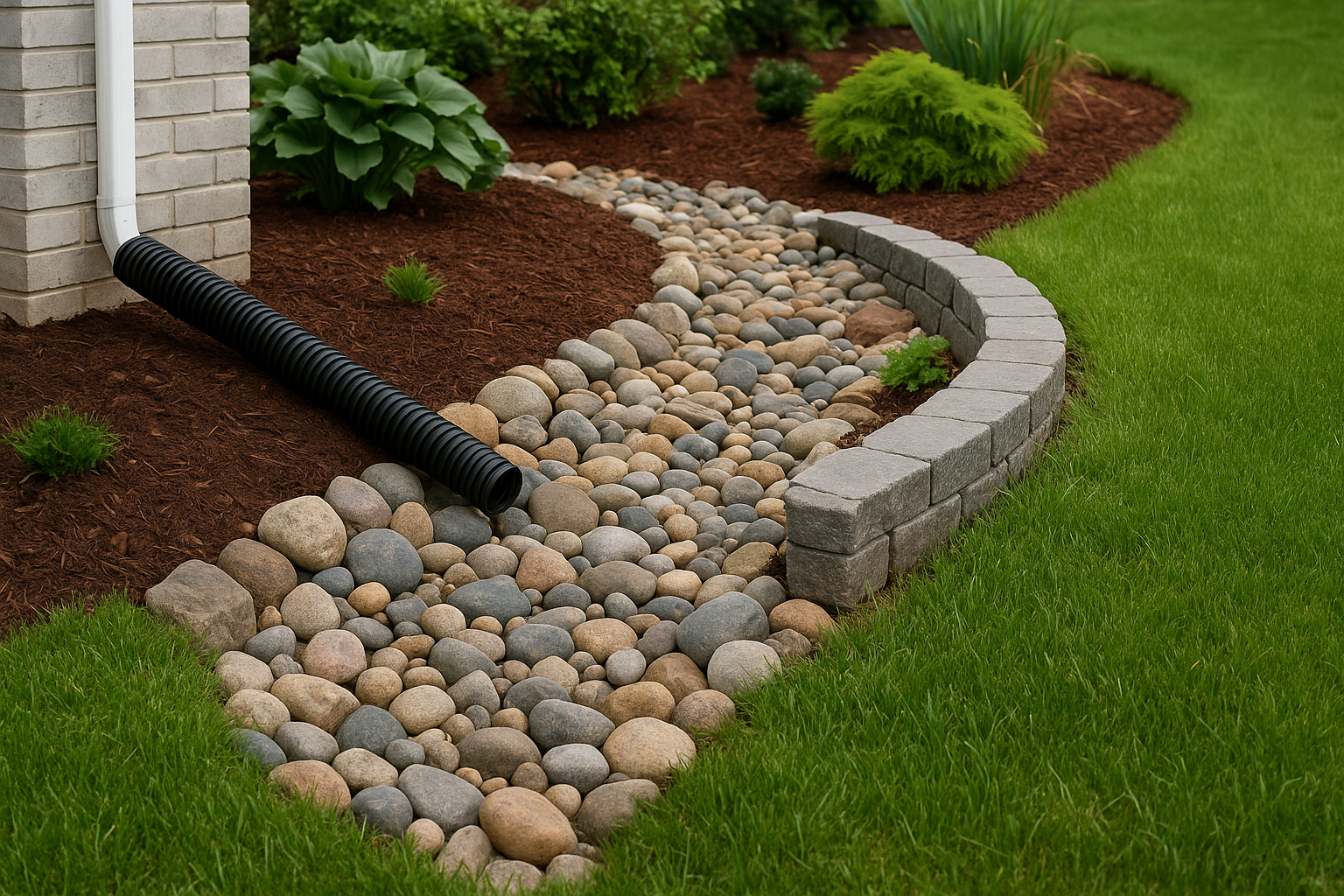
Your goal is to move water away from vulnerable areas to a legal, safe outlet: street drains, dry wells, rain gardens, or natural depressions that can accept runoff. Never direct concentrated flow onto a neighbor’s property or block public storm systems.
Use Gravity When Possible
Design systems that rely on gravity first: shallow swales, gentle slopes, and properly pitched pipes. Pumps are an option but add maintenance and energy costs.
Practical Drainage Solutions
Grading and Swales
Regrading creates a gentle slope away from foundations (a 2% grade—about 2 feet of drop over 100 feet—is a good target). Swales are shallow, broad channels that direct surface runoff while blending into the landscape.
French Drains and Gravel Trenches
French drains—perforated pipe surrounded by gravel—capture subsurface water and carry it to an outlet. They’re ideal along foundations, behind retaining walls, or in low-lying areas. Proper trench depth and outlet placement are crucial for effectiveness.
Dry Wells and Rain Gardens
Dry wells collect runoff and allow it to percolate into the soil. Rain gardens are planted depressions designed to absorb and filter stormwater, using native plants tolerant of both wet and dry conditions. Both are excellent for managing roof and driveway runoff on-site.
Gutter Management and Downspout Extensions
Clean, well-functioning gutters paired with downspout extensions that deposit water at least 5–10 feet from the foundation prevent many problems. Consider directing downspouts into splash blocks, swales, or rain barrels.
Permeable Paving and Soil Amendments
Permeable pavers, gravel, and mulch allow water to infiltrate rather than run off. Amending compacted or clay soils with organic matter improves infiltration and supports healthy root systems.
Planting and Materials That Help Drainage
Selecting the right plants and materials makes drainage solutions look natural and work better. Native plants with deep roots help stabilize soil; ornamental grasses and groundcovers slow flows and increase infiltration. Use landscape fabric selectively—it’s useful under pathways but can hinder soil life if overused.
Maintenance Tips to Keep Drains Working
- Clear gutters and downspouts seasonally to prevent blockages.
- Inspect swales and channels after storms; remove debris and regrade rills.
- Check French drains and outlet points for sediment buildup and flush if necessary.
- Maintain mulch and plantings in rain gardens to ensure good infiltration.
When to Call a Professional
Small grading projects and gutter fixes are often DIY-friendly, but call a pro if you notice persistent basement leaks, significant slope instability, or standing water that doesn’t drain after a heavy storm. Civil engineers, landscape architects, and licensed drainage contractors can provide plans, permits, and long-term solutions.
Conclusion
Good landscape drainage design combines careful observation, simple engineering, and thoughtful planting. Start by evaluating your site, prioritize gravity-based solutions, and use a mix of hardscape and softscape fixes to manage water efficiently. With the right approach, you can protect your home, improve plant health, and enjoy a drier, more resilient landscape.