
Backyard Water Features: Ideas, Benefits, and How to Choose the Right One
Why Add a Water Feature to Your Backyard?
Adding a water feature can transform an ordinary yard into a peaceful retreat. The sound of flowing water soothes the mind, attracts wildlife, and adds visual interest and depth to landscaping. Whether you want a low-maintenance focal point or an immersive pond ecosystem, there’s a water feature to fit nearly every space and budget.
Popular Types of Backyard Water Features
Ponds
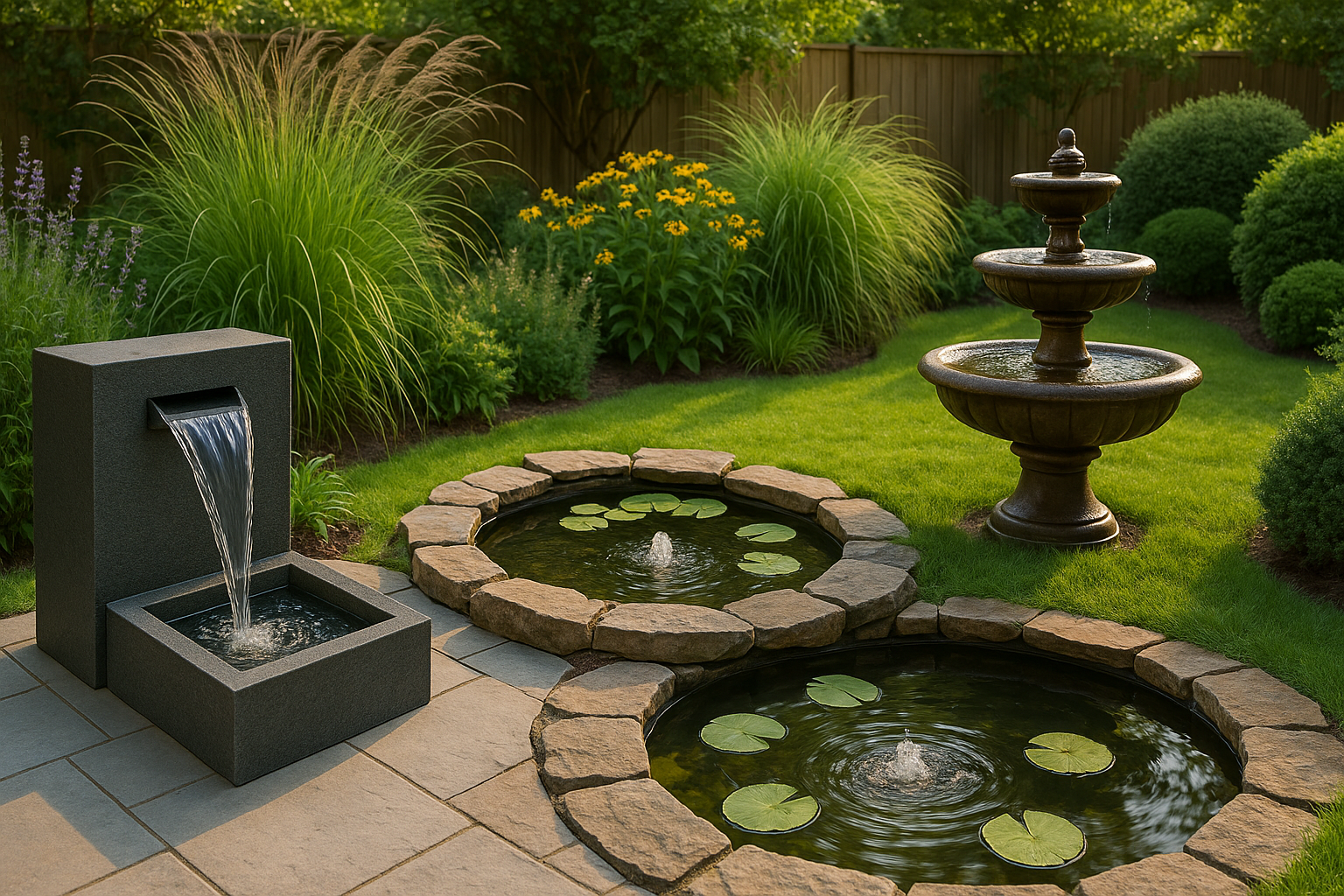
Ponds are versatile and can range from small formal basins to larger naturalized ecosystems. They offer space for fish and aquatic plants and create a habitat for frogs, dragonflies, and birds. Consider liners, filtration, and safe edges if children visit the yard.
Fountains
Fountains are perfect for patios or entryways. They can be as simple as a freestanding bubbler or as elaborate as a tiered stone fountain. Fountains are typically low-profile, easier to maintain than ponds, and still provide the relaxing sound of water.
Waterfalls and Cascades
Waterfalls add drama and movement. They work well as a feature feeding a pond or as a stand-alone wall cascade. The sight and sound of falling water can mask neighborhood noise and become the focal point of your landscape design.
Streams and Rills
Meandering streams or rills can connect different areas of the yard, creating a journey through the landscape. These features are ideal for larger properties where you can create naturalistic banks and stepping stones.
Bubbling Rocks and Birdbaths
For compact spaces, bubbling rocks or birdbaths offer the benefits of water without the footprint of a pond. They’re excellent for attracting birds and adding a tactile element that invites closer interaction.
Planning and Design Considerations
Size and Scale
Match the water feature’s size to your yard and house. A tiny fountain can feel lost in a large garden, while an oversized pond can overwhelm a small courtyard. Aim for proportion so the feature feels integrated rather than an afterthought.
Location and Visibility
Place the feature where you’ll enjoy it most—near seating areas, visible from inside the house, or along a garden path. Consider sunlight and shade: some aquatic plants and fish need specific light conditions.
Budget and Maintenance
Decide how much time and money you’ll spend on upkeep. Ponds with fish require filtration, occasional cleaning, and winter care in colder climates. Fountains and bubbling features are generally lower maintenance but still need pumps and winterizing.
Safety and Local Regulations
Check local building codes and homeowner association rules. If you have a pool or deep pond, incorporate fencing or barriers to protect small children and pets. Electrical work for pumps should meet safety standards and be installed by a qualified electrician when necessary.
Installation Options: DIY vs. Professional
DIY Tips
Smaller features like container ponds, birdbaths, or pre-formed fountains are often DIY-friendly. Basic steps include selecting a level site, installing a liner or pre-formed basin, adding a pump and tubing, and finishing with stones and plants. Good planning and the right tools will keep costs down.
When to Hire a Pro
Hire a landscape contractor for large ponds, complicated water circulation systems, or features that require excavation, electrical work, or permits. Pros can help with waterproofing, filtration design, and integrating the feature into the overall landscape for long-term reliability.
Maintenance Basics
Regular maintenance keeps water features healthy and attractive. Key tasks include checking pumps and filters, removing debris, trimming aquatic plants, monitoring water chemistry if you keep fish, and winterizing systems in freezing climates. A simple maintenance schedule—monthly checks and seasonal cleanings—prevents problems before they grow.
Wildlife and Planting Around Water Features
Choose native plants to create a balanced ecosystem. Marginal plants like iris, rushes, and water lilies support wildlife and help filter water naturally. Avoid invasive species, and design plantings to provide shade and shelter for birds and beneficial insects. A healthy planting plan enhances biodiversity and reduces maintenance.
Sustainable and Low-Maintenance Ideas
Consider solar-powered pumps, recirculating systems, and rainwater capture to reduce energy and water use. Natural filtration—using wetland plants and biological filters—reduces chemical needs. For low-maintenance options, choose simple bubbling rocks, small sealed fountains, or container water gardens that are easier to clean and winterize.
Conclusion
Backyard water features offer beauty, sound, and a peaceful connection to nature. Whether you install a modest bubbler, a bird-attracting pond, or a dramatic waterfall, careful planning and appropriate maintenance will ensure your feature becomes a cherished part of your outdoor living space. Start small if you’re unsure, and grow your water garden as you learn what works best for your yard and lifestyle.