
How to Fix Yard Drainage Issues: Practical Solutions for a Dry, Healthy Lawn
Identify the problem first
Common signs of poor drainage
If your lawn has soggy patches, standing water after rain, moss growth, sinking areas, or foundation seepage, you have a drainage issue. Note where water pools and how long it takes to disappear — that will guide your next steps.
What’s causing it?
Drainage problems usually come from one or a combination of: poor slope or grading, compacted clay soil, clogged gutters/downspouts, surface runoff from hardscapes, high water table, or blocked underground pipes. Mapping the source — roof runoff, neighboring slopes, or low spots — makes the fix much easier.
Quick fixes you can try this weekend
1. Clean and extend gutters and downspouts
Leaves and debris reduce flow. Clean gutters and attach downspout extenders or splash blocks to move water at least 6–10 feet away from your foundation. This simple step often solves minor pooling near the house.
2. Use temporary fill and grading
For small depressions, add topsoil and re-seed. Make sure you slope the soil away from buildings (aim for at least a 2% slope, or about a 1/4 inch per foot). This is an inexpensive stopgap while you plan permanent solutions.
3. Repair localized compaction
Aerate compacted lawn areas to improve infiltration. A spike or plug aerator can break up compaction and help water soak in faster.
Permanent solutions that really work
1. Regrade your yard
Regrading reshapes the land so water flows away from problem areas and structures. This may involve bringing in fill dirt and forming new slopes. It’s effective for large, systemic issues but can be labor-intensive or require a contractor.
2. Install a French drain
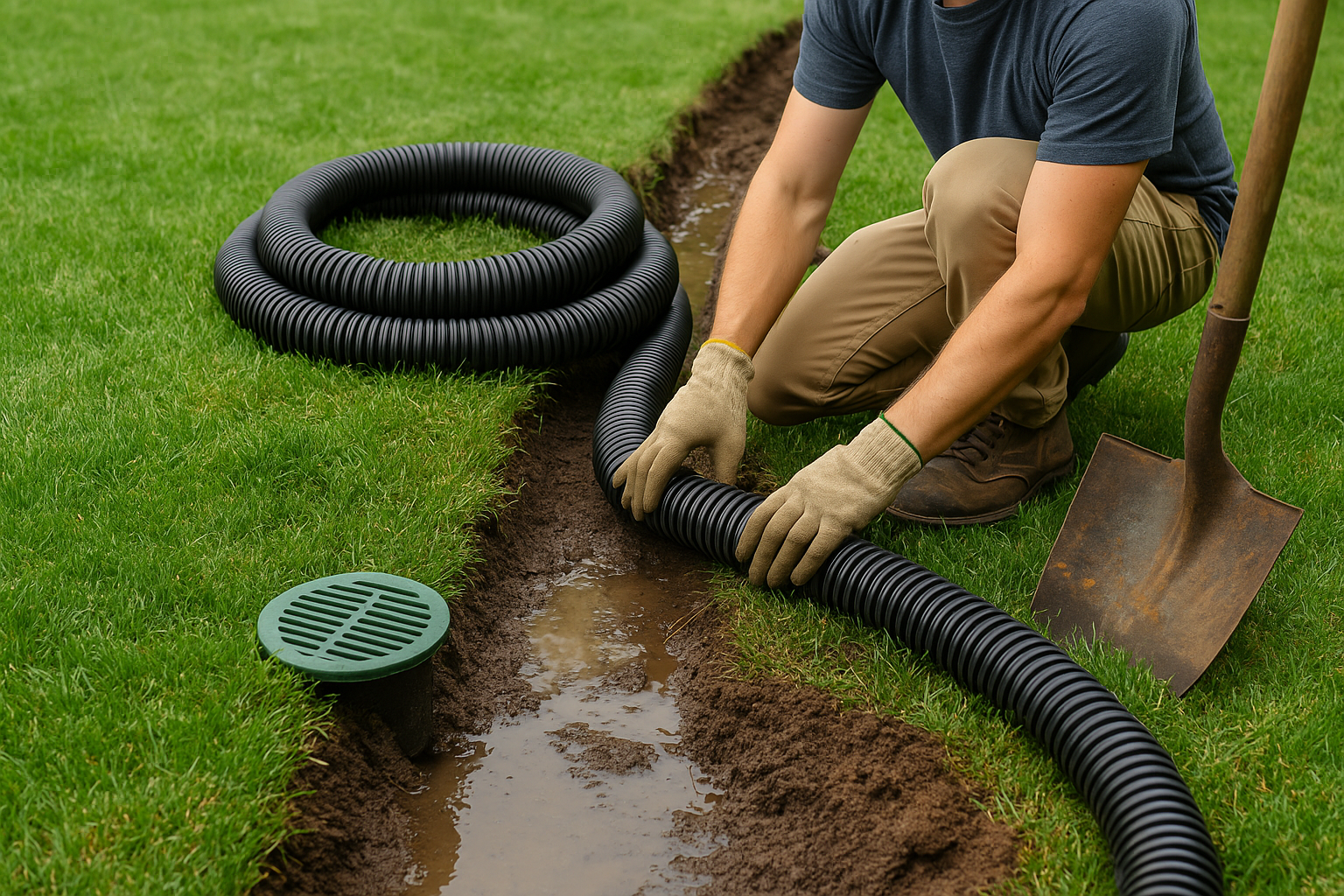
French drains are gravel-filled trenches with a perforated pipe that collects and redirects subsurface water. They’re ideal for linear problems (like along a foundation or behind a retaining wall). Install at a slight slope to carry water to a safe discharge point.
3. Build a dry creek bed or swale
Dry creek beds and swales are attractive, low-maintenance landscape features that direct surface water. They use stone, gravel, and native plants to move and slow water, reducing erosion while improving curb appeal.
4. Install catch basins and a connected drainage system
Catch basins collect surface water and feed it to underground pipes. This is a practical option for patios, driveways, and low spots. Make sure there’s a legal discharge point — a storm drain, detention basin, or a permeable area away from neighbors.
5. Consider a sump pump for extreme cases
Where groundwater or a high water table is the issue, a sump pump in a sump pit can actively move water to a safe location. This is common in basements or yards that collect subsurface water.
Soil and planting strategies
Soil amendments and aeration
Clay-heavy soils hold water. Mix in organic matter (compost) and sand in moderation to improve structure and drainage. Regular aeration and topdressing can also help water penetrate rather than pool.
Choose plants that help manage water
Use moisture-loving native plants in low areas and switch to drought-tolerant species on higher, better-drained slopes. Deep-rooted plants and native grasses increase infiltration and stabilize soil.
Maintenance to prevent future problems
Inspect gutters twice a year, re-seed low spots, and keep drainage paths clear of debris. After heavy storms, walk the property to confirm water flows as intended. Seasonal maintenance extends the life of your drainage solutions.
When to call a professional
Complex or recurring problems
If water is reaching your foundation, causing structural damage, or if fixes haven’t worked, call a landscape contractor or civil engineer. Professionals can evaluate grading, local codes, and stormwater management options.
Costs and permits
Small fixes (gutters, extenders, spot grading) are inexpensive. French drains, regrading, and piping can range from a few hundred to several thousand dollars depending on scope. Check local rules — large drainage work or connections to municipal systems may require a permit.
Conclusion
Fixing yard drainage issues starts with carefully identifying where water is coming from and choosing a solution that fits the scale of the problem. From simple gutter maintenance and aeration to French drains and regrading, the right approach will protect your lawn, landscape, and home. Small preventative steps and regular maintenance go a long way — and if problems persist, don’t hesitate to bring in a pro.