
The Essential Guide to Water Features Maintenance: Keep Your Pond, Fountain, or Waterfall Pristine
Why Regular Water Features Maintenance Matters
Water features—ponds, fountains, and waterfalls—add soothing beauty and value to any outdoor space. But without regular maintenance they can quickly become murky, clogged, and unattractive. Routine care protects pumps and filters, preserves water quality for plants and fish, prevents costly repairs, and keeps your feature looking its best year-round.
Weekly Maintenance Tasks
Small, frequent tasks prevent bigger problems. Spend 15–30 minutes each week to keep your water feature healthy.
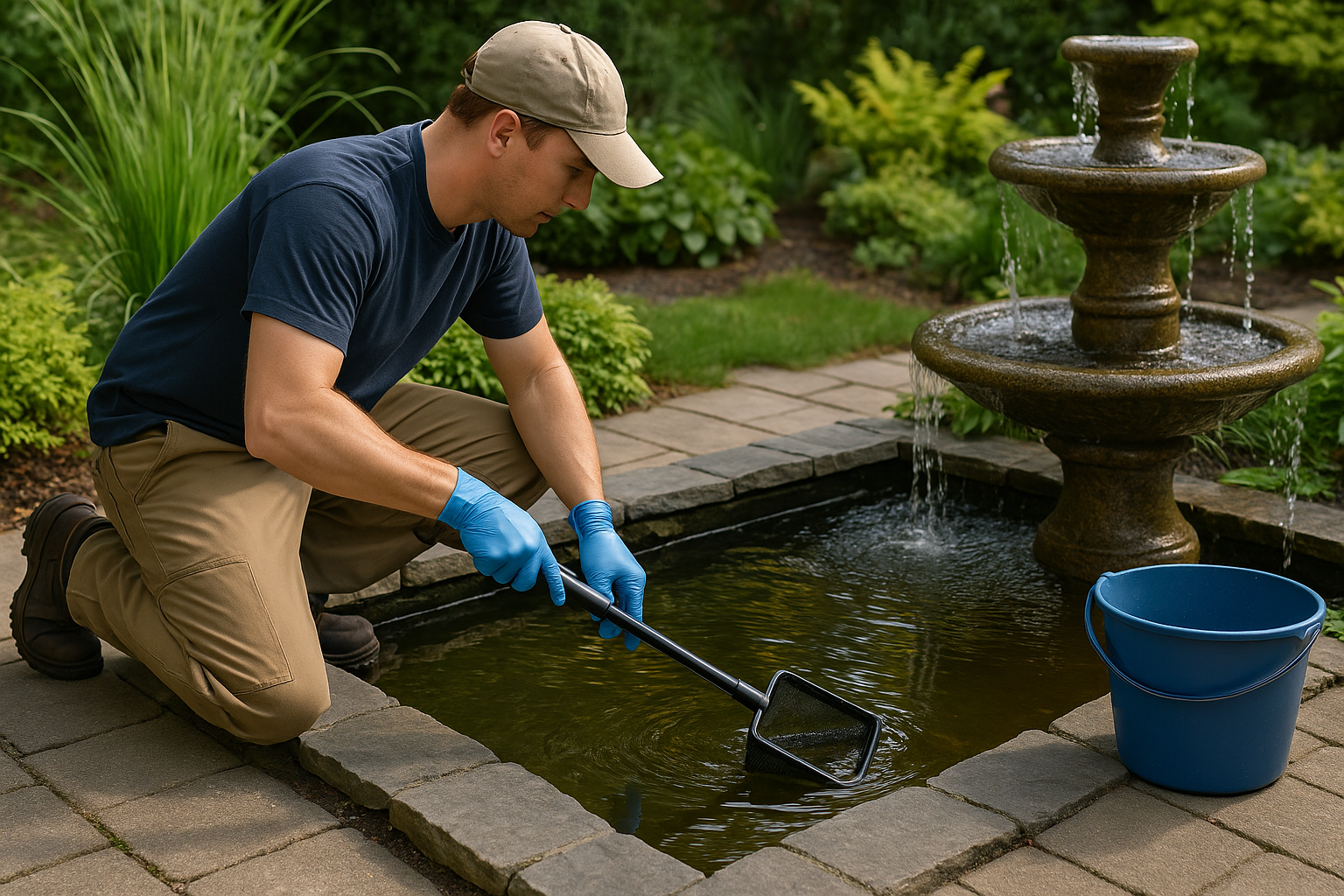
- Skim debris: Remove leaves, twigs, and floating dirt with a net to reduce organic buildup.
- Check the pump: Ensure water flow is steady and listen for unusual noises that could indicate a clog or failing motor.
- Inspect water level: Top up evaporated water to maintain proper pump operation and avoid running dry.
- Spot-clean surfaces: Wipe down fountain nozzles, waterfall rocks, or visible algae patches.
Monthly Maintenance Tasks
Each month, perform deeper checks and cleanings to maintain system efficiency.
Filter and Pump Cleaning
Turn off and unplug equipment before cleaning. Remove debris from skimmer baskets and clean mechanical filters with fresh water. Inspect pump intakes and impellers for blockages; gently clean with a brush if needed.
Water Chemistry and Conditioning
Test pH, ammonia, nitrite, and nitrate levels if you keep fish. Aim for a stable pH (commonly 6.5–8.0 depending on species) and low ammonia/nitrite. Add dechlorinator when topping up tap water and consider beneficial bacteria treatments to support biological filtration.
Seasonal Care: Spring, Summer, Fall, Winter
Spring
- Do a thorough spring clean: Partial water change (20–30%), clean gravel or liners, prune dead plant material.
- Restart equipment: Inspect hoses, seals, and electrical connections before restarting pumps.
Summer
- Manage algae: Increase aeration, add shade plants, and use UV clarifiers or algaecides only as needed.
- Monitor evaporation: Check water level more frequently and top up early in the morning.
Fall
- Leaf control: Install mesh covers or nets if many trees shed nearby.
- Prepare plants and fish: Trim pond plants and feed fish until temperatures drop consistently.
Winter
- Partial winterizing: In mild climates, maintain circulation to prevent freezing around pumps; in cold climates, remove pumps to indoor storage.
- Use de-icers or aerators: Keep a small opening in the ice for gas exchange to protect fish.
Common Problems and Quick Fixes
Algae Overgrowth
Causes include excess nutrients, too much sunlight, and poor circulation. Remedies: manual removal, reduce feeding, add floating shade plants, bolster filtration, and use a UV clarifier for persistent issues.
Cloudy Water
Cloudiness can be caused by suspended particles or bacterial blooms. Run mechanical filtration, perform partial water changes, and introduce beneficial bacteria to speed clarification.
Pump Failure or Reduced Flow
First check for blockages and clean the impeller. If the pump is old, corrosion or worn bearings may require replacement. Keeping a spare pump on hand is good preventive planning.
Leaks
Inspect liners, fittings, and seals. Small liner punctures can be patched with pond liner repair kits. For persistent leaks around plumbing, check unions and replace worn gaskets.
Equipment Maintenance Tips
- Choose the right pump size for your feature and clean it regularly.
- Replace filter media as recommended and rinse biological media only in feature water to retain beneficial bacteria.
- Consider a UV clarifier to reduce green water; position it after the mechanical filter for best results.
- Protect electrical components with GFCI outlets and weatherproof connections.
Plants and Fish: Care That Supports Maintenance
Simple plant and fish choices make maintenance easier. Use hardy marginal plants and floating plants to absorb excess nutrients and provide shade. Avoid overstocking fish and overfeeding; uneaten food quickly degrades water quality. Regularly prune plants and remove decaying organic matter.
Safety, Costs, and Eco-Friendly Practices
Always unplug equipment before servicing, and be cautious when working near water with electrical devices. Save money by scheduling regular small tasks to avoid expensive repairs; swapping worn seals and pre-filtering debris are low-cost, high-impact steps. Favor natural methods—plants, biological filtration, and UV—over chemical dependence when possible.
Quick Water Feature Maintenance Checklist
- Weekly: Skim debris, check pump, top-up water
- Monthly: Clean filters, test water, inspect equipment
- Seasonal: Spring clean, summer algae control, fall leaf management, winterize if needed
Conclusion
Consistent, simple maintenance keeps your water feature beautiful and functional for years. With weekly attention, monthly tune-ups, and seasonal preparation, you’ll spend less time troubleshooting and more time enjoying the relaxing ambiance your pond, fountain, or waterfall provides.