
Pergola vs Arbor: Which Garden Structure Is Right for Your Yard?
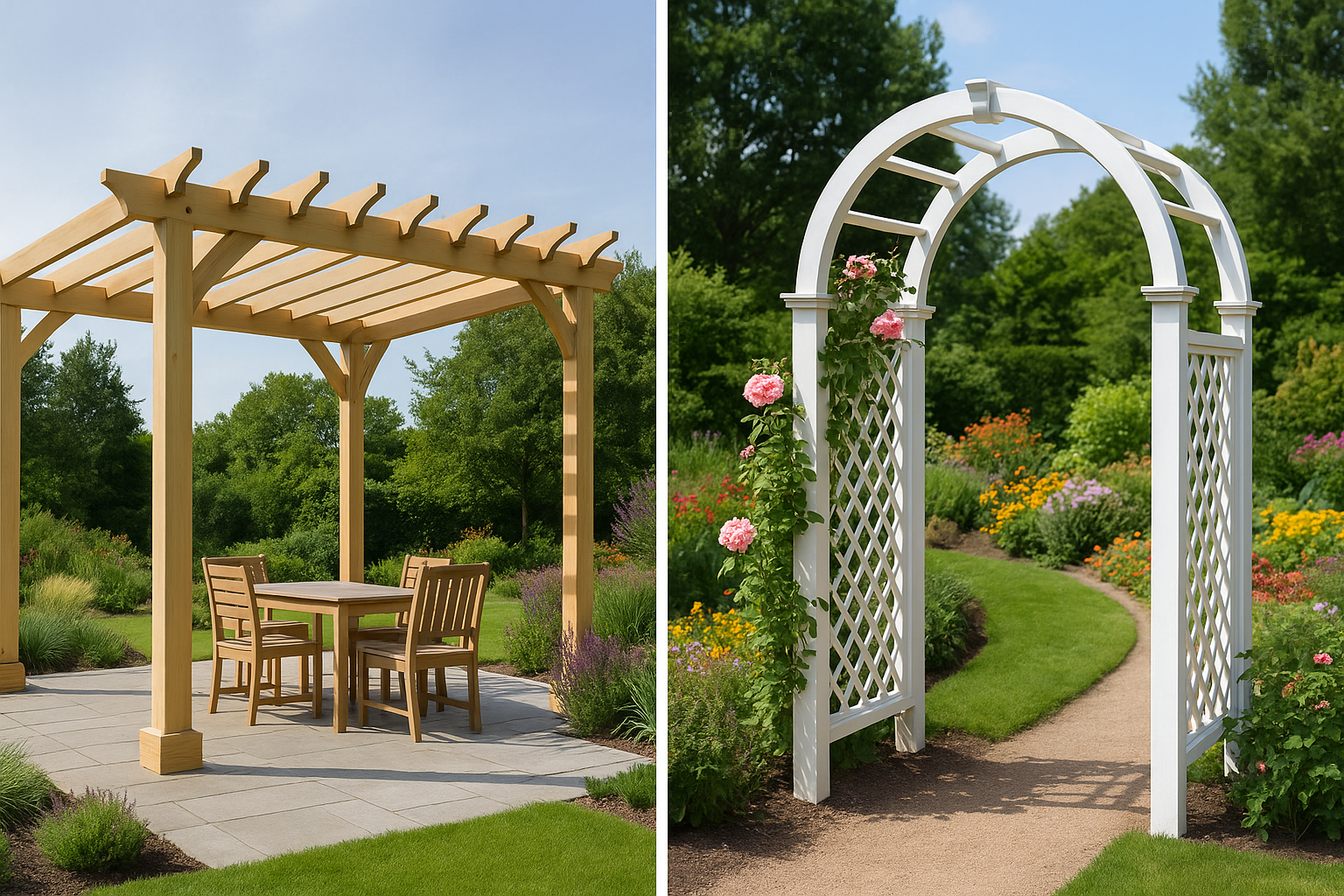
Pergola vs Arbor: Quick Overview
When planning an outdoor living space, pergolas and arbors are two popular choices that often get confused. Both add structure, charm, and opportunities for shade and climbing plants—but they serve different purposes and suit different spaces. This guide walks through the key differences, design considerations, and practical tips to help you choose the best option for your backyard.
Key Differences Between a Pergola and an Arbor
Size & Structure
At a glance, the most obvious difference is scale. A pergola is typically a larger, free-standing or attached structure with several posts and a roof framework made of rafters or crossbeams. It creates a defined outdoor room for dining, lounging, or entertaining. An arbor, by contrast, is smaller and more intimate—often a single overhead arch or gateway made of two posts and a curved top. Arbors are usually used as entryways or accents within a garden.
Function & Use
Pergolas are designed to define space and offer partial shelter. They can provide dappled shade, support for lighting, and a sense of enclosure without fully blocking the sky. Arbors are mostly decorative: they mark transitions (like a path entrance), support climbing vines, and create focal points. If you want a seating area or outdoor dining room, a pergola is the more functional choice. If you want a charming gateway or a spot for roses and clematis, consider an arbor.
Materials & Styles
Both structures can be made from wood, vinyl, metal, or composite materials. Wood (cedar, redwood, pressure-treated pine) offers a traditional, natural look but needs maintenance. Vinyl and composites are low-maintenance options that resist rot and insects. Metal (steel or aluminum) can be slim and modern or ornate. Style-wise, pergolas range from rustic to contemporary and can be freestanding or attached to a house. Arbors often have lattice sides, curved tops, or decorative scrollwork.
Cost & Installation
Pergolas generally cost more than arbors due to size, materials, and structural requirements. Installation may require footings or professional help to ensure stability and code compliance—especially for larger, freestanding pergolas or ones attached to a building. Arbors are typically less expensive and easier to install as DIY projects, though elaborate metal or custom-built arbors will increase the price.
Shade, Privacy & Planting
Both structures support climbing plants, but a pergola provides more surface area for vines and hanging planters, making it better for creating a shaded retreat. An arbor creates vertical interest and frames views, perfect for a flowering climber that draws the eye. If you prioritize privacy, pergolas can be outfitted with curtains, screens, or lattice walls; arbors are rarely used for privacy alone.
Which One Should You Choose?
Choose a Pergola If…
- You want a defined outdoor living area for dining, lounging, or entertaining.
- You need partial shade and the ability to hang lights, fans, or curtains.
- Your yard has space for a larger installation and you don’t mind a bigger investment.
Choose an Arbor If…
- You want to mark an entrance, pathway, or garden transition with a decorative feature.
- You’re working with a small yard or prefer a modest structure that highlights climbing plants.
- You want a relatively inexpensive, easy-to-install focal point.
Design Tips and Considerations
Placement and Proportion
Place structures where they complement sightlines and traffic flow. A pergola should be proportionate to the size of your outdoor space and any adjoining structures—too small and it looks cramped; too large and it overwhelms the yard. An arbor should be sized to the path or gate it frames; consider clearances for people and garden equipment.
Plant Choices
Choose climbers suited to your structure and climate. Fast-growing vines like wisteria, honeysuckle, and bougainvillea can quickly cover a pergola, while romantic roses, clematis, and jasmine work beautifully on arbors. Be mindful of weight—mature vines can get heavy and may require stronger supports.
Maintenance & Longevity
Regular maintenance extends lifespan. Wooden pergolas and arbors need sealing or staining every few years to resist moisture and UV damage. Vinyl and metal options require less upkeep. Inspect connections and footings periodically, especially after storms.
Conclusion
Both pergolas and arbors add beauty and character to a landscape, but they serve distinct roles. Choose a pergola when you want a functional outdoor room with shade and versatility. Choose an arbor when you want an elegant garden accent or gateway for climbing plants. Consider scale, materials, maintenance, and how you plan to use the space to make the best choice for your yard.