
Natural Stone Patio Installation: A Beautiful, Lasting Upgrade for Outdoor Living
Why Choose Natural Stone for Your Patio?
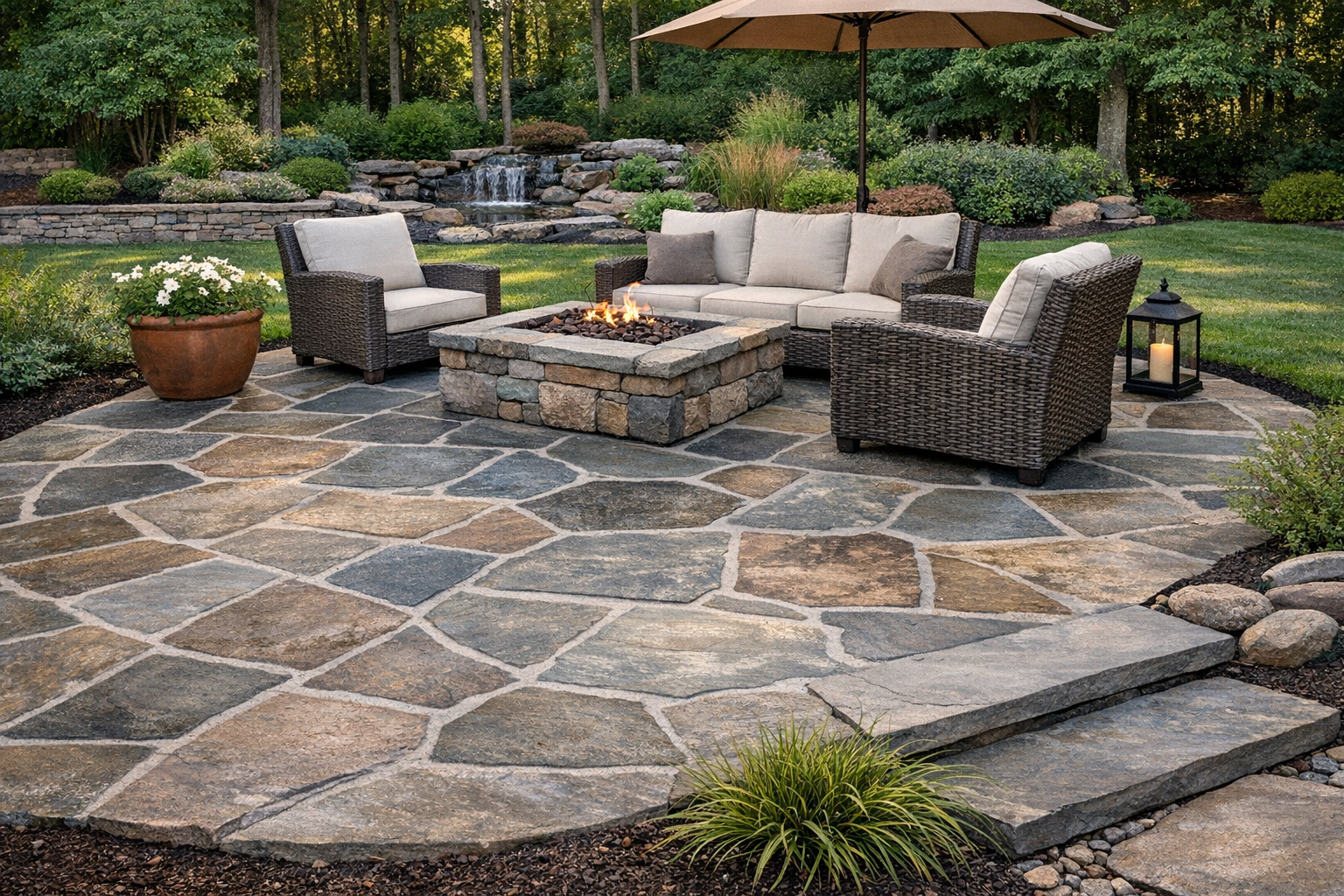
Natural stone has a timeless look that instantly elevates any outdoor space. Whether you prefer the rustic charm of flagstone, the refined look of bluestone, or the warm tones of slate, a stone patio creates a high-end finish that blends beautifully with the landscape. Unlike many man-made materials, natural stone offers unique color variation and texture, so no two patios look exactly alike.
Beyond appearance, natural stone is known for durability. When installed correctly, it can stand up to heavy foot traffic, changing weather, and years of outdoor use. It also adds real value to your property by improving curb appeal and creating a functional space for relaxing, dining, and entertaining.
Planning Your Natural Stone Patio Installation
Good planning is the foundation of a successful patio project. Before any digging begins, think carefully about how you want to use the space. Will it hold a dining set, a fire pit, or a seating area? The size, shape, and location of the patio should support your lifestyle and complement the layout of your yard.
It is also important to consider drainage, sun exposure, and access from the home. A patio that sits in a low-lying area may collect water, while one placed too far from the house may feel disconnected from the rest of the property. Taking time to map out the project helps avoid costly changes later.
Choosing the Right Stone
The best stone for your patio depends on your style, budget, and climate. Popular options include flagstone, bluestone, slate, limestone, and granite. Each material has its own look and performance characteristics.
For example, bluestone is prized for its rich color and clean lines, while flagstone offers a more relaxed, organic appearance. In colder climates, it is wise to choose stone that handles freeze-thaw cycles well. You will also want to think about surface texture, since some stones provide better slip resistance than others.
Preparing the Site
Site preparation is one of the most important steps in natural stone patio installation. The area must be excavated to the proper depth, usually enough to accommodate a solid base, setting bed, and the thickness of the stone itself. A stable base helps prevent shifting, sinking, and uneven surfaces over time.
After excavation, the ground is compacted and graded to encourage drainage. A layer of crushed stone or gravel is often added and compacted in stages. This creates a firm foundation that supports the patio and helps water move away from the surface rather than pooling underneath.
The Natural Stone Patio Installation Process
Once the base is ready, the installation can begin. While every project is a little different, the general process follows a few key steps. Precision matters here, because small mistakes in leveling or spacing can affect the finished look and long-term performance.
Laying the Base
The base layer is built with compacted aggregate, typically followed by a bedding layer of sand, stone dust, or mortar depending on the installation method. This layer helps create a smooth, level surface for placing the stone. Proper compaction is essential, since a weak base can lead to settling and uneven stones later.
Setting the Stone
Each stone is carefully placed according to the design layout. Because natural stone pieces vary in size and shape, installers often dry-lay the stones first to test the arrangement. This helps create a balanced pattern and ensures the joints look natural and consistent.
As the stones are set, they are tapped into place and checked for level. Depending on the style of patio, joints may be left slightly wider for a rustic appearance or kept tighter for a more polished finish. The goal is to create a stable surface that also feels visually pleasing.
Filling the Joints
After the stone is installed, the joints are filled with polymeric sand, fine gravel, or mortar depending on the project design. Joint material helps lock the stones in place and reduces weed growth and shifting. If mortar is used, the installer must make sure it is applied cleanly for a neat, long-lasting finish.
Some patios are designed with open joints and groundcover for a softer, more natural look. This can be attractive, but it requires thoughtful planning and a material choice that matches the desired level of maintenance.
Design Tips for a Better Finished Look
A well-installed patio should do more than function well. It should also feel inviting and visually connected to the rest of the yard. Choosing a stone color that complements your home exterior is a great place to start. Warm, earthy tones can soften a landscape, while cool grays and blues often create a more modern look.
Border details can also make a big difference. A contrasting edge or patterned layout can define the space and give it a custom appearance. If you want the patio to feel more complete, consider adding landscape lighting, built-in seating, or nearby planters to soften hard edges and enhance the atmosphere.
Common Mistakes to Avoid
Natural stone patio installation is a project where careful workmanship truly matters. One common mistake is skipping proper drainage planning. Without it, water can collect under the patio and cause movement or damage. Another issue is using the wrong base materials or failing to compact them properly, which can lead to settling.
It is also important not to rush the layout. Since natural stone varies in shape and thickness, installers need to take time to fit each piece correctly. Poor edge restraint, uneven joints, or inadequate sealing can also affect the patio’s durability and appearance over time.
Maintenance and Long-Term Care
One of the advantages of natural stone is that it is relatively easy to maintain. Regular sweeping keeps dirt and debris from building up, while occasional washing helps the surface stay clean. Depending on the type of stone, sealing may be recommended to protect against stains and moisture.
It is a good idea to inspect the patio seasonally for loose stones, joint loss, or shifting areas. Addressing small issues early can prevent larger repairs later. With the right care, a natural stone patio can remain attractive and functional for many years.
Conclusion
Natural stone patio installation is one of the best ways to create a stylish, durable outdoor living space. With careful planning, the right materials, and proper installation, your patio can become a beautiful extension of your home that stands the test of time.