
Metal Garden Arbor: How to Choose, Install, and Style One
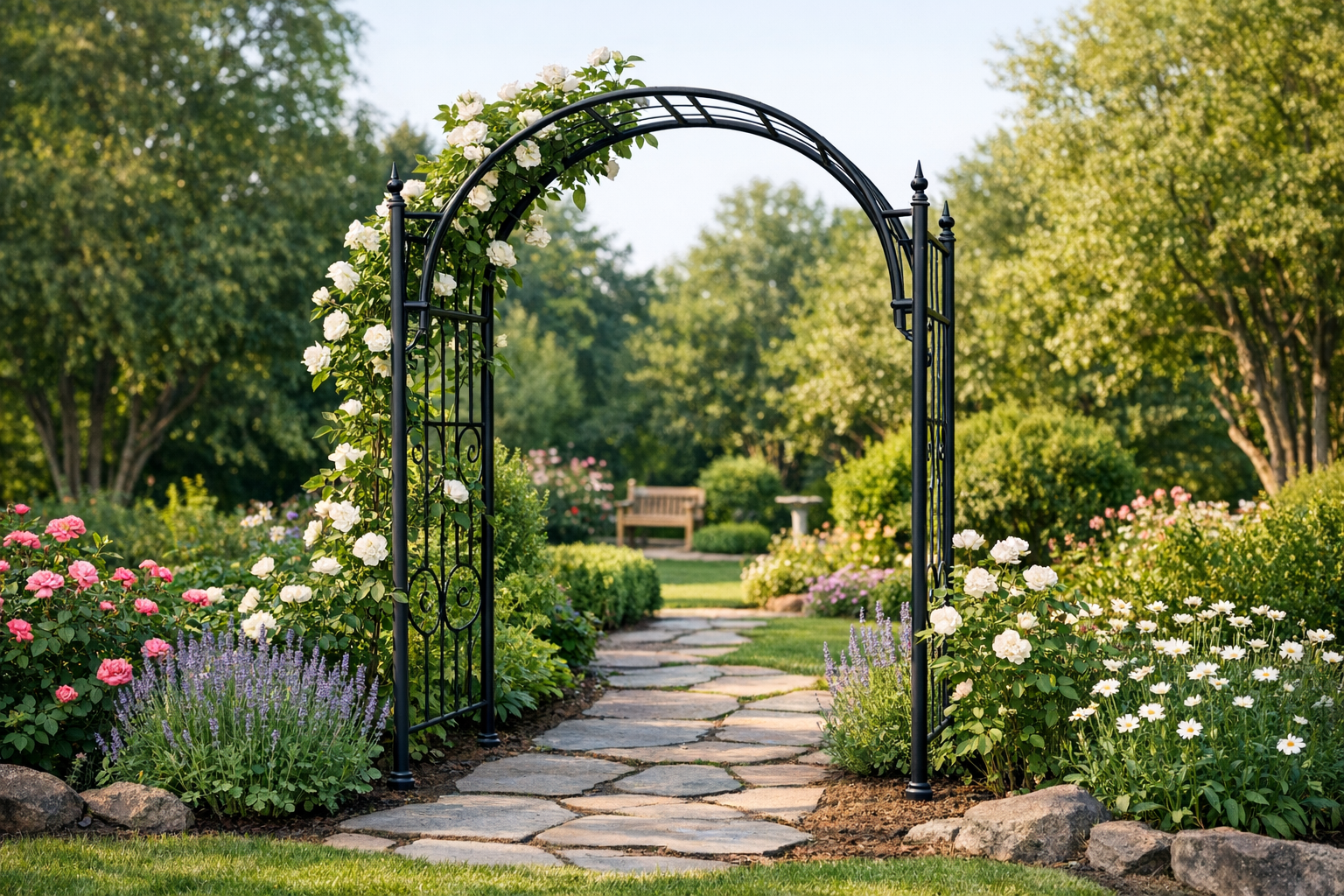
A metal garden arbor can turn an ordinary path or garden entrance into a welcoming focal point. It adds height and structure, frames views, and gives climbing plants a place to grow. Whether your outdoor space is a compact courtyard or a large backyard, the right arbor can combine lasting function with a style that suits your home.
Before choosing a design, consider where the arbor will go, what you want it to do, and how much upkeep you’re willing to take on. These details will help you find a piece that looks at home in your garden and stands up to the weather.
What Is a Metal Garden Arbor?
A garden arbor is a freestanding structure, typically made with two sides and an arched or flat top. Metal garden arbors are commonly constructed from steel, wrought iron, or aluminum. Their open framework lets light and air pass through while creating a defined entrance, a shaded walkway, or support for climbing plants.
Unlike a solid pergola or garden shed, an arbor has a relatively light visual footprint. It can create a sense of enclosure without blocking the view of the garden beyond.
Benefits of a Metal Garden Arbor
Durable garden structure
Metal is a practical choice for a structure that stays outdoors throughout the seasons. Powder-coated steel and properly finished iron resist rust and weather damage, while aluminum naturally resists corrosion and is easy to move. Durability still depends on the material, finish, climate, and quality of construction, so check product details before buying.
Support for climbing plants
The sides and top of an arbor provide a framework for climbing roses, clematis, jasmine, and other suitable plants. As the plants grow, they can soften the metal lines and create a leafy entrance or a little shade. Choose plants based on your climate, available sunlight, and how much pruning you’re prepared to do.
Style without a major renovation
An arbor can make a garden feel more finished without extensive construction. Place one over a path, at a gate, or between two outdoor areas to suggest a transition. A simple black metal design suits many traditional and contemporary gardens, while ornate ironwork brings a more decorative look.
Choosing the Right Metal Garden Arbor
Measure the location first
Measure the path or opening where the arbor will stand, including its width, height, and available space around the legs. Leave enough room for people to pass comfortably, even when plants are mature. If the arbor will sit near a gate or wall, check that it won’t interfere with doors, walkways, or other garden features.
Compare materials and finishes
Steel is strong and widely available, but it needs a protective finish to help prevent rust. Wrought iron is often heavier and may feature detailed decorative work; inspect its coating and plan to touch up chips as needed. Aluminum is lightweight and rust-resistant, making it useful in damp areas or where easier handling matters, though it may not feel as substantial as heavier metal.
Look for a finish designed for outdoor use. If you live near the coast or in a region with frequent rain or snow, prioritize corrosion resistance and check the manufacturer’s care guidance.
Match the design to your garden
Consider the shape of the top, the spacing of the side bars, and the overall level of decoration. A narrow, minimal arbor can suit a small garden, while a wider or more ornamental model may work as a feature at the end of a long path. For climbing plants, look for sturdy crossbars and enough open space to tie in stems as they grow.
How to Install a Metal Garden Arbor
Many arbors arrive as kits that require assembly. Read the instructions before you begin and check that all parts are included. Assemble the structure on a level surface, tightening fasteners according to the manufacturer’s directions. Avoid forcing connections, which can damage the finish or affect alignment.
Choose firm, level ground and position the arbor where its legs can be secured. Depending on the design and surface, anchoring options may include ground stakes, screws, or suitable masonry fixings. Use the method recommended for the product and the site. A tall arbor can catch wind, especially before plants grow through it, so anchoring is important for stability.
Before adding climbing plants, gently test that the arbor is steady. If the ground is soft or exposed to strong winds, consider whether the structure needs more secure anchoring or a more sheltered position.
Plants That Grow Well on an Arbor
Choose plants that suit the arbor’s light conditions and your local climate. Climbing roses can create a classic, colorful entrance, while clematis offers a range of flower shapes and colors. Honeysuckle and jasmine may add fragrance where conditions are suitable. For a productive garden, some gardeners train grapes or other appropriate climbing crops across a sturdy structure.
Check the plant’s mature size before planting. A vigorous climber can become heavy and may need regular pruning, while a slower-growing variety can be easier to manage on a smaller arbor. Tie stems loosely to the framework with soft garden ties, and avoid wrapping them so tightly that they restrict growth.
Care and Maintenance
Clean the arbor occasionally with water and a soft cloth or brush to remove dirt and plant debris. Inspect joints, fasteners, and the protective finish at least once a year. If you spot a chip or early rust on coated steel or iron, follow the manufacturer’s instructions for cleaning and repair before the damage spreads.
Keep plants from becoming so dense that they trap moisture against the metal. Prune them as needed, and remove dead leaves from the base of the structure. If the arbor is designed to be removable, check its condition before winter and follow the care advice for your specific model.
Conclusion
A metal garden arbor offers an easy way to add structure, support climbing plants, and make a garden entrance feel special. Measure carefully, choose a durable finish, and anchor the arbor securely. With a design and planting plan suited to your space, it can become a useful and beautiful feature for years to come.