
June Landscaping Tips: Keep Your Yard Healthy All Summer
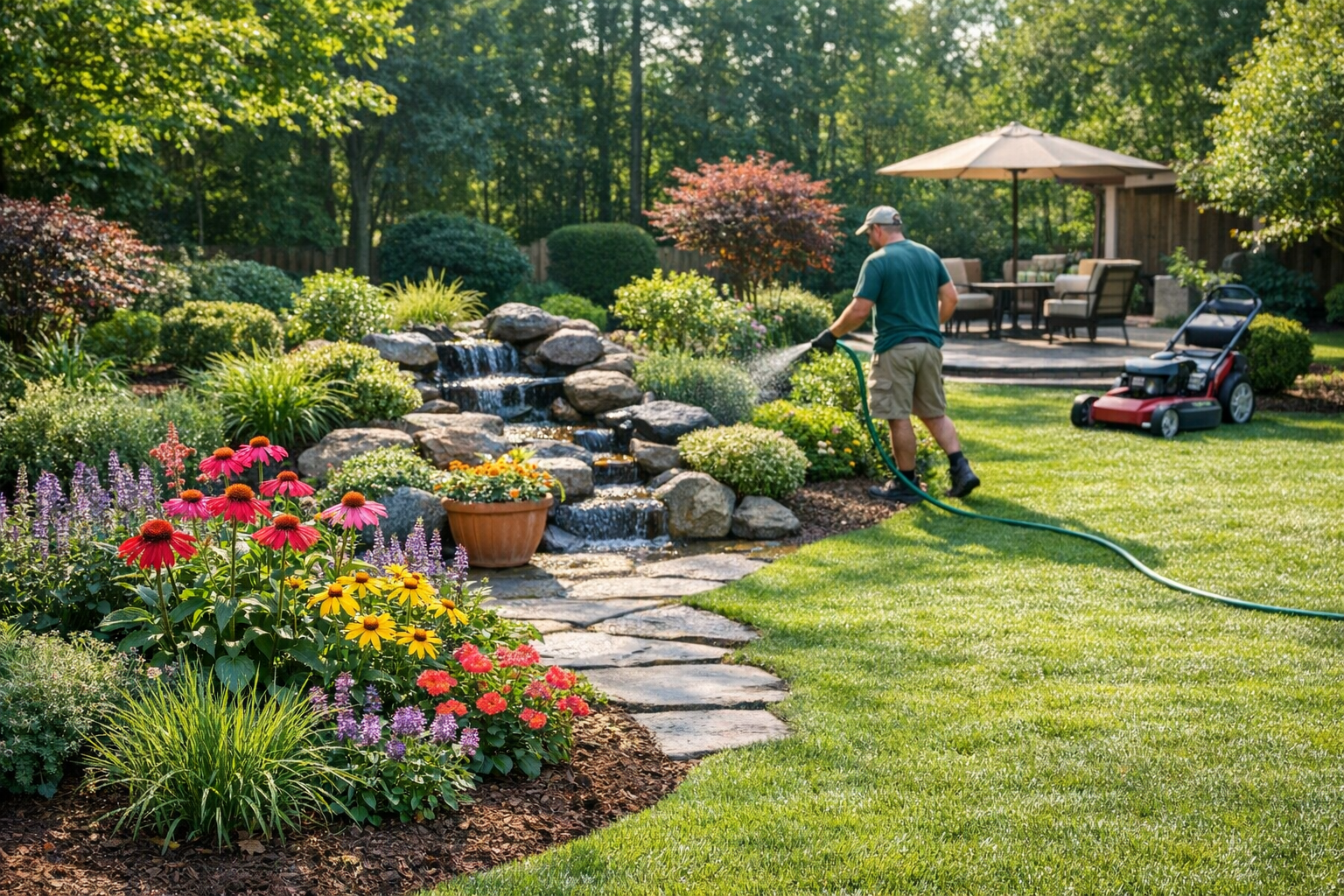
June brings longer days, warmer weather, and plenty of opportunity to enjoy your outdoor spaces. It’s also a busy month for landscaping: plants are growing quickly, lawns may need more attention, and summer heat can put new stress on gardens. A few timely tasks can help your yard look its best while making it easier to maintain through the season.
Conditions vary by region, so use local weather and the needs of your plants as a guide. These June landscaping tips cover lawn care, watering, garden beds, pruning, and outdoor living areas.
1. Water Deeply and Adjust for the Weather
As temperatures rise, pay attention to how quickly your soil dries. Rather than watering a little every day, most established lawns and garden plants benefit from less frequent, deeper watering. This encourages roots to grow farther into the soil, where moisture lasts longer. The right schedule depends on your soil, rainfall, plant types, and local restrictions.
Water at the Right Time
Water early in the morning when possible. Cooler temperatures and lighter winds help reduce water loss, and foliage has time to dry during the day. Check the soil before turning on sprinklers: if it is still damp a few inches down, you may be able to wait. Rain gauges and smart irrigation controllers can help you avoid watering more than your landscape needs.
Make Every Drop Count
Look for leaks, blocked sprinkler heads, and overspray onto sidewalks or driveways. Direct drip lines and soaker hoses toward plant roots, and group plants with similar watering needs together. A layer of mulch can also slow evaporation and help keep soil temperatures more stable.
2. Mow Smart to Support a Healthy Lawn
June is often a fast-growing month for grass, but mowing too short can leave a lawn vulnerable to heat and weeds. Set mower blades to the recommended height for your grass type, and avoid removing more than one-third of the grass blade at a time. Taller grass can shade the soil, helping it retain moisture.
Keep mower blades sharp for a clean cut, and leave clippings on the lawn when they are short and evenly spread. They break down quickly and return nutrients to the soil. If the grass is wet, wait to mow if you can; cutting soggy turf can create an uneven finish and compact the soil.
3. Refresh Garden Beds With Mulch
June is a good time to inspect flower beds, trees, and shrubs for thin or displaced mulch. Add a fresh layer where needed to conserve moisture, limit weeds, and give planting areas a tidy appearance. Organic options such as shredded bark, leaf compost, or wood chips can improve soil as they break down.
Keep mulch a few inches away from tree trunks and shrub stems. Piling it against bark can trap moisture and encourage damage. Before spreading new mulch, pull visible weeds and water the soil if it is dry. A moderate layer is usually more useful than a very thick one, which may keep water and air from reaching roots.
4. Stay Ahead of Weeds and Garden Pests
Weeds are easier to remove when they are young and the soil is slightly moist. Pull or hoe them before they flower and set seed, taking care to remove as much of the root as practical. Keep pathways and bed edges tidy, too, since neglected corners can become a source of new weeds.
As you work, check leaves for holes, discoloration, sticky residue, or unusual webbing. Identify the cause before treating the plant: insects, disease, drought, and nutrient problems can look similar at first. Whenever possible, start with low-impact measures such as hand-picking pests, pruning affected foliage, or rinsing leaves with water. Follow product labels and local guidance if a treatment is necessary.
5. Plant Summer Color and Give New Plants a Good Start
In areas where frost has passed, June can be a suitable time to plant warm-season annuals, herbs, and vegetables. Choose plants that match your sun exposure and soil conditions, and read plant labels for spacing and watering needs. Before planting, loosen compacted soil and mix in organic matter when appropriate.
New plants need closer attention than established ones, especially during hot, dry spells. Water them thoroughly after planting and check their soil often while roots settle in. Consider planting on a cooler or overcast day to reduce stress, and add mulch around—but not directly against—the stems.
6. Prune With Care and Check Your Trees
Remove dead, damaged, or diseased branches from shrubs and small trees when it is safe to do so. For flowering plants, first find out whether they bloom on old or new wood; pruning at the wrong time may remove next season’s flowers. Avoid heavy pruning during intense heat unless there is a safety concern or a specific plant-care reason.
Take a quick look at larger trees for hanging branches, cracks, or signs of decline. Do not climb or attempt work near power lines. For large limbs or uncertain problems, contact a qualified arborist.
7. Tidy Up Patios, Paths, and Outdoor Features
Landscaping includes more than plants. Sweep paths, clear leaves from drains, and check steps and paving for loose or uneven areas. Clean outdoor furniture and inspect hoses, edging, and irrigation equipment for wear. A small repair now can make the yard safer and more enjoyable during summer gatherings.
Make June Landscaping Manageable
Focus on the tasks that matter most in your yard: consistent watering, sensible mowing, fresh mulch, and early weed control. By working with your local conditions and checking plants regularly, you can keep your landscape healthy and inviting throughout the summer.