
DIY Landscape Design: Plan and Create a Beautiful Yard
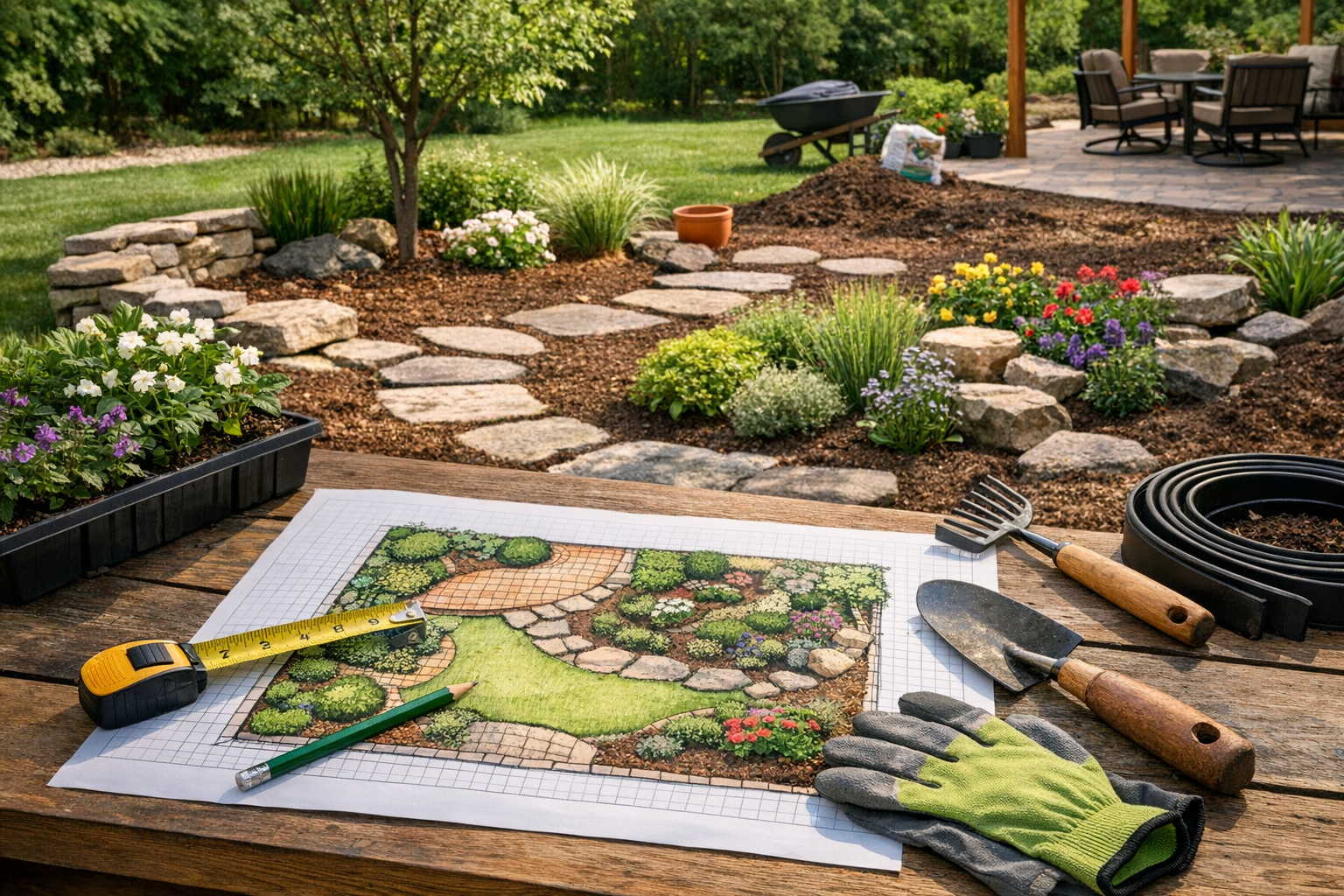
A well-designed yard can make your home more inviting, create space to relax, and support local wildlife. You don’t need to hire a designer to get started. With a little planning and a clear understanding of your site, DIY landscape design can turn an ordinary outdoor space into a garden that looks good and works for your everyday life.
Start with Your Yard and Your Goals
Before buying plants or moving soil, take time to understand your yard. A landscape plan should respond to the conditions you have, not just the look you hope to create. Walk around the property at different times of day and note what you see.
Assess Sun, Soil, and Drainage
Record which areas get full sun, partial shade, or mostly shade. Notice where rainwater collects, where the ground dries quickly, and whether slopes direct water toward the house. If you’re unsure about your soil, a simple soil test can reveal its pH and nutrient levels. These details help you choose plants that are more likely to thrive.
Decide How You’ll Use the Space
List what you want your yard to do. You might need a comfortable patio, a safe play area, a vegetable garden, or a low-maintenance planting bed. Consider who will use the space and how much time you want to spend caring for it. Clear priorities make it easier to choose a practical layout and avoid spending money on features you won’t use.
Make a Simple Landscape Plan
A drawing, even a basic one, can prevent costly changes later. Sketch your property from above and include the house, paths, fences, large trees, doors, windows, and existing features you want to keep. Add approximate measurements so you can judge whether a patio or garden bed will fit comfortably.
Organize the Yard into Zones
Think of your yard as a set of connected outdoor rooms. For example, you could create a dining area near the back door, a quiet seating spot in a shady corner, and a planting area along the fence. Use paths, changes in surface, or groups of plants to define each zone without making the space feel divided.
Plan for movement between areas. Paths should connect useful places, such as the driveway, entry, patio, and garden gate. Make them wide enough for comfortable walking and, where needed, moving a wheelbarrow or outdoor furniture.
Keep the Design Balanced
Choose a simple visual theme, such as relaxed cottage planting, clean modern lines, or a natural, wildlife-friendly garden. Repeat a few colors, materials, or plant shapes throughout the yard to create a sense of unity. Repetition doesn’t mean every bed needs to look the same; it simply gives the eye a few familiar details to follow.
Choose Plants That Suit Your Conditions
Good plant choices are at the heart of successful DIY landscape design. Look for plants suited to your local climate and the light, soil, and moisture conditions in each area. Native plants are often a useful starting point because many are adapted to local weather and can provide food or shelter for wildlife.
Build planting beds with a mix of heights and forms. Place taller shrubs or ornamental grasses toward the back of a bed and shorter plants near the front, while keeping sightlines clear near windows, paths, and entrances. Combine trees, shrubs, perennials, and ground covers for layers of interest that change through the seasons.
Check the mature size of each plant before buying it. A small shrub at the garden center may eventually cover a path or crowd a window. Leaving enough room for plants to grow reduces pruning and gives the garden a more natural look.
Add Hardscape and Useful Details
Hardscape includes the durable features of a yard, such as patios, paths, steps, walls, and edging. These elements shape how you use the space and can give planting beds a tidy outline. Choose materials that suit your home and climate, and consider how they feel underfoot and how much upkeep they need.
For a DIY project, start with a manageable feature, such as a small gravel path or a simple seating area. Larger projects involving retaining walls, drainage, electrical work, or major grading may require a professional. Before digging, check local rules and contact your utility-marking service to identify buried lines.
Small details can also improve comfort. A bench, outdoor lighting, a rain barrel, or a trellis may add useful function without requiring a complete redesign. Plan lighting for safe routes and gathering areas, and choose fixtures rated for outdoor use.
Install the Landscape in Phases
You don’t have to finish the entire yard in one season. Begin with essential work, such as correcting drainage problems, preparing the soil, and establishing paths. Then add the largest plants and structural features before filling in smaller planting areas. Working in phases helps spread out costs and gives you time to learn what works.
Prepare beds by removing weeds and loosening compacted soil. Add compost or other soil amendments based on what your soil actually needs. After planting, water deeply and apply a suitable layer of mulch, keeping it away from plant stems and tree trunks. Follow the watering and care instructions for each plant, especially during its first growing season.
Keep Your DIY Landscape Design Manageable
A beautiful garden should fit your available time. Choose plants with similar watering needs in the same bed, use mulch to help conserve moisture, and avoid adding more lawn or planting space than you want to maintain. A simple seasonal checklist can help you stay on top of pruning, weeding, and irrigation without making yard care feel overwhelming.
As the landscape grows, observe how you use it. You may discover that a path needs adjusting or that a sunny spot would make a better place for a chair. Small changes are part of the process. A flexible plan lets your yard improve over time instead of locking you into choices that don’t suit your life.
Conclusion
DIY landscape design starts with observing your yard, setting practical goals, and making a simple plan. Choose plants that fit your conditions, build useful features at a comfortable pace, and leave room to adjust as the garden grows. With thoughtful choices and steady effort, you can create an outdoor space that feels personal, welcoming, and easier to care for.