
Low Voltage Landscape Lighting: A Complete Guide to Planning, Installation, and Maintenance
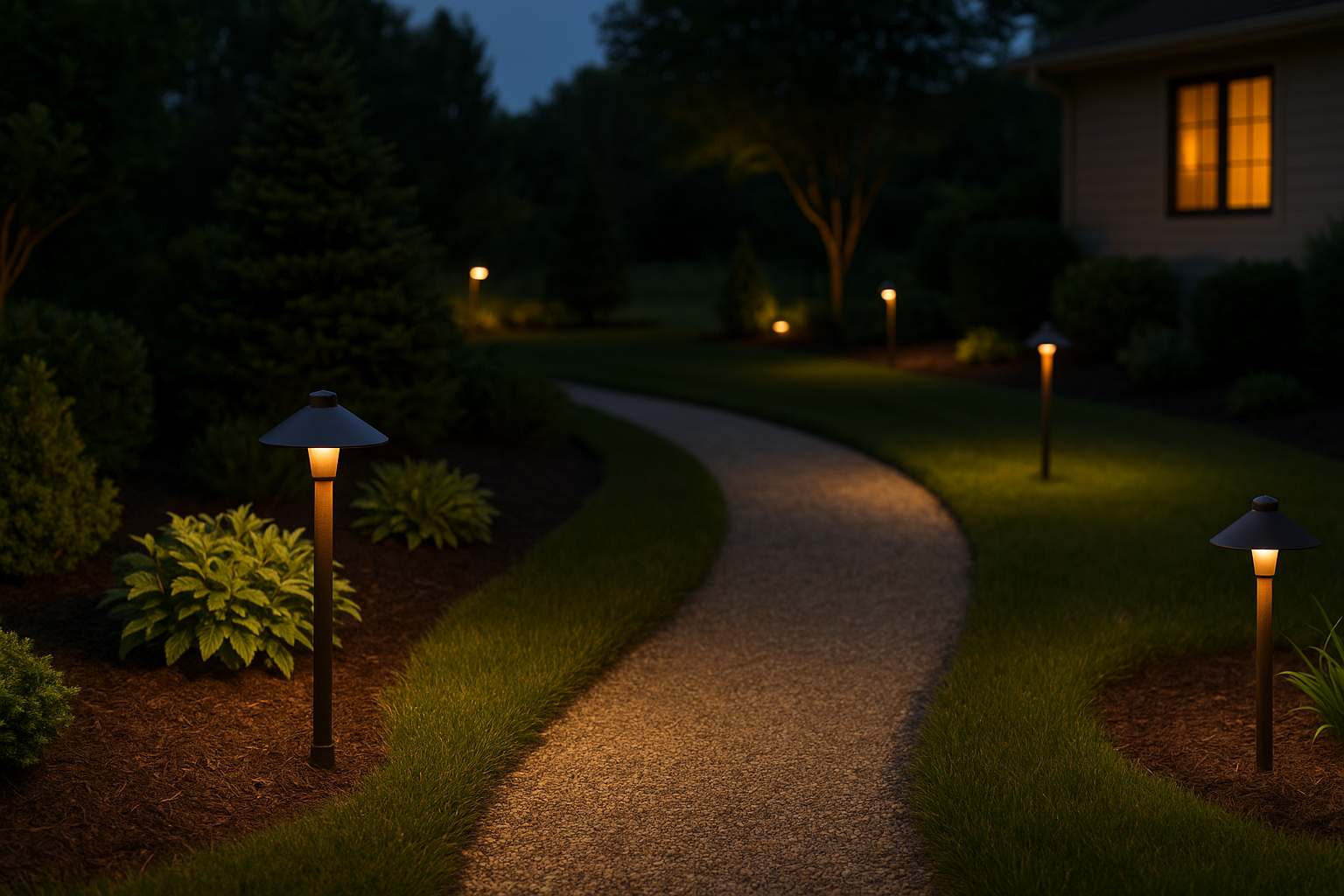
What Is Low Voltage Landscape Lighting?
Low voltage landscape lighting uses 12-volt fixtures powered by a transformer that steps down standard household current (120V) to a safer, more energy-efficient voltage. It’s a popular choice for illuminating pathways, gardens, trees, and architectural features because it’s safe, flexible, and relatively simple to install.
How It Works
A transformer connects to your home’s electrical supply and reduces the voltage to 12 volts. Low-voltage cable runs from the transformer to individual fixtures. Modern systems often use LED bulbs, which draw very little power, extend lamp life, and provide consistent illumination.
Key Benefits
- Energy efficiency—especially when paired with LED fixtures.
- Safer to install and maintain because of the lower voltage.
- Flexible layout—easy to add or relocate fixtures.
- Cost-effective upfront compared with some hardwired systems.
- Improved curb appeal, safety, and nighttime usability.
Types of Fixtures
Choosing the right fixtures shapes the overall look and function of your nighttime landscape.
Path Lights
Path lights line walkways and driveways to provide safe footing and a welcoming look. They typically sit 12–24 inches off the ground and cast a soft, downward glow.
Spotlights and Uplights
Spotlights are used to highlight trees, statues, or architectural features. Uplights placed at the base of a tree or wall create dramatic vertical emphasis.
Well Lights
Recessed into the ground or a hardscape surface, well lights are great for discreet uplighting of walls, steps, or trees without an exposed fixture.
Deck and Step Lights
These fixtures integrate with decking and stairs to improve safety and mood lighting for outdoor living spaces.
Planning and Design
A thoughtful plan delivers beautiful results and prevents headaches during installation.
Layout Tips
- Start with a nighttime walkthrough or photos taken after dark to identify focal points and safety zones.
- Sketch your yard, noting existing power sources, major plants, and hardscapes.
- Use fewer fixtures with more purposeful placement—light accents create depth better than flooding everything evenly.
- Create layers: path lighting for safety, uplighting for focal points, and wash lighting for background areas.
Choosing Color Temperature and Beam Angle
Warm white (2700K–3000K) is most flattering for plants and homes. Cool whites can look harsh. Beam angles control spread: narrow beams (10°–25°) for accents, medium beams (25°–45°) for small beds, and wide beams (45°+) for general illumination.
Installation Basics
While many homeowners can install low-voltage systems themselves, be mindful of electrical safety and local codes.
Transformer and Wire Sizing
Select a transformer that can handle the total wattage of your fixtures plus a 20–25% buffer. Wire gauge depends on run length and load—longer runs may need thicker wire to avoid voltage drop. Typical kits include 12–14 gauge wire for most installations.
Placement and Mounting
Mount fixtures on stakes for flexibility or use hardscape mounts for permanence. Keep fixtures a few feet from plant trunks to avoid heat stress (though LEDs emit little heat). Bury cable 2–6 inches deep or secure it under mulch to keep it tidy and protected.
Maintenance and Troubleshooting
Low-voltage systems require minimal upkeep but benefit from seasonal checks.
Common Issues
- Dim or flickering lights—often caused by voltage drop, loose connections, or overloaded transformers.
- Burned-out bulbs—switch to LEDs for longer life and consistent light output.
- Damaged cable—fix by cutting back to undamaged wire and using waterproof connectors.
Seasonal Care
Clear debris and trim plants that block light. In cold climates, protect the transformer from moisture and extreme temperatures, and consider removing bulbs during heavy snow seasons if fixtures are at risk.
Energy Efficiency and Smart Options
LEDs plus timers, photocells, and smart controllers can dramatically reduce energy consumption and automate your lighting. Smart systems allow scheduling, dimming, and remote control—perfect for security and energy savings.
Cost Considerations
Initial costs vary based on fixture quality, LED vs halogen, and system complexity. Expect mid-range systems to be cost-effective over time thanks to low energy use and reduced maintenance. Professional installation adds labor, but DIY kits can save money if you’re comfortable with basic wiring and landscaping.
Safety and Local Codes
Always follow local electrical codes. Some municipalities require permits for outdoor electrical work. If in doubt, hire a licensed electrician—especially for transformer wiring to the main panel.
Conclusion
Low voltage landscape lighting is a practical, attractive way to extend your outdoor living space into the evening hours. With modern LED fixtures, thoughtful design, and basic maintenance, you can create a safe, energy-efficient landscape that highlights your home’s best features. Plan carefully, choose quality components, and don’t hesitate to get professional help for electrical work you’re unsure about—your evenings (and curb appeal) will thank you.