
Lawn Drainage Systems: How to Fix a Soggy Yard
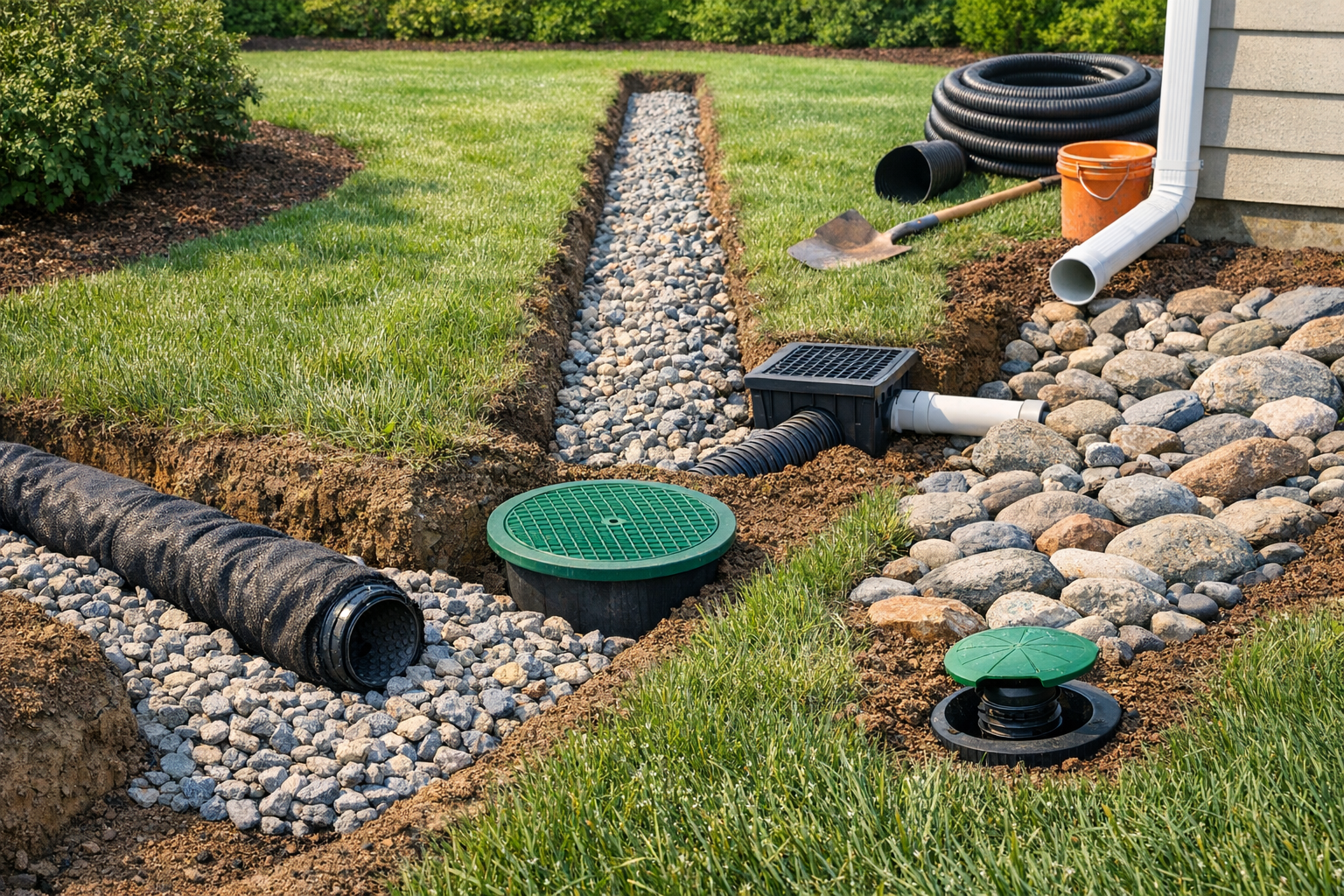
A waterlogged lawn is more than an eyesore. Standing water can damage grass, encourage pests, create muddy paths, and put pressure on your home’s foundation. The right drainage system helps water move away from problem areas and soak into the ground where it belongs. The best solution depends on why water is collecting, how your yard is shaped, and the type of soil you have.
Why Lawn Drainage Matters
Some moisture is healthy for a lawn, but water that remains for hours or days can deprive grass roots of oxygen. Over time, this can lead to thinning turf, bare patches, moss, and increased disease. Persistent runoff may also wash away soil and mulch or flow toward a house, shed, or patio.
Common signs of a drainage problem include puddles after rain, soft or muddy ground, water stains near the foundation, and areas where grass grows poorly despite regular care. If these problems keep returning, improving drainage is usually more effective than simply reseeding the lawn.
Common Causes of Poor Lawn Drainage
Compacted or clay-heavy soil
Compacted soil has fewer spaces for water and air to pass through. Clay soil can also drain slowly, especially when it is dense or poorly amended. Heavy foot traffic, machinery, and construction can make compaction worse.
Low spots and uneven grading
Water naturally flows downhill and collects in dips. If the lawn slopes toward the house or a paved area, runoff may pool there or reach places where it can cause damage.
Too much runoff or a high water table
Roof downspouts, driveways, patios, and neighboring properties can send more water onto a lawn than the soil can absorb. In some locations, a naturally high water table may also keep the ground saturated.
Lawn Drainage Systems and Solutions
Improve the soil and reduce compaction
For minor drainage issues, start with the soil. Core aeration removes small plugs of earth, creating channels that allow water and air to reach the roots. It can be particularly useful in compacted lawns. Adding a thin layer of compost after aerating may improve soil structure over time. Avoid covering grass with a thick layer of soil or sand, which can create a new barrier or smother the lawn.
Good lawn care can help, too. Choose grass suited to your climate and soil, and avoid watering when the ground is already wet. If you irrigate, water deeply but less often rather than applying frequent, shallow amounts.
Regrade the lawn
Regrading changes the surface slope so water flows away from buildings and toward an appropriate drainage area. This can help with puddles caused by shallow low spots or poor grading. The work may involve adding or removing soil, then restoring the lawn with seed or sod.
Grading needs careful planning. Do not direct runoff onto a neighbor’s property, a public sidewalk, or a place where it can create erosion. If water is collecting close to your home, consult a qualified landscaper or drainage professional before changing the slope.
Install a French drain
A French drain is a gravel-filled trench that contains a perforated pipe. Water enters through the gravel and pipe, then moves to a suitable outlet, such as a dry well or approved discharge point. French drains are often used to collect water from persistently wet areas or along slopes.
The pipe needs the right depth and slope to work properly, and the trench should be designed to prevent soil from clogging the gravel. Before installation, check for underground utilities and confirm local rules about where collected water can go.
Use a catch basin or channel drain
A catch basin collects surface water through a grated opening and directs it into an underground pipe. It can be a practical choice for a defined low spot where puddles form. Channel drains, which are long grated channels, are often installed beside driveways, patios, or other paved surfaces to intercept runoff before it reaches the lawn.
Build a dry well or rain garden
A dry well temporarily stores runoff underground, allowing it to soak into the surrounding soil. A rain garden is a planted depression designed to capture and absorb water from roofs or hard surfaces. Both options can help manage runoff, but they are not suitable everywhere. Soil infiltration, groundwater levels, space, and local requirements should be assessed first.
How to Choose the Right Drainage System
Start by observing where water comes from and where it goes. Note how long puddles remain after rain, whether water flows from a downspout or hard surface, and whether the wet area changes with the season. A simple drainage fix may be enough if the issue is limited to compaction or one small dip. Widespread or recurring flooding may need a professionally designed system.
- For compacted soil: Try core aeration and improve the soil gradually.
- For a shallow puddle: Consider correcting the grade or installing a catch basin.
- For water moving through a slope: A French drain may intercept subsurface flow.
- For roof runoff: Check downspout extensions and consider a rain garden or dry well where appropriate.
Before digging, contact your local utility-marking service. For drainage near foundations, steep slopes, or large areas, seek expert advice to avoid shifting the problem or causing erosion.
Keeping Your Lawn Drainage Working
Inspect drains and grates regularly, especially after storms. Clear leaves, grass, and sediment so water can enter freely. Keep downspout outlets unobstructed, and watch for new puddles that may indicate a blockage or a change in the yard. Aerate compacted areas when needed and maintain a healthy lawn that can absorb rainfall.
Conclusion
A reliable lawn drainage system protects your grass, reduces muddy areas, and helps direct water away from your home. Identify the source of the problem first, then choose a solution that fits your soil, yard layout, and local drainage rules. With the right fix and routine maintenance, a soggy lawn can become a healthier, more usable outdoor space.