
Landscape Grading for Drainage: A Practical Guide to a Drier Yard
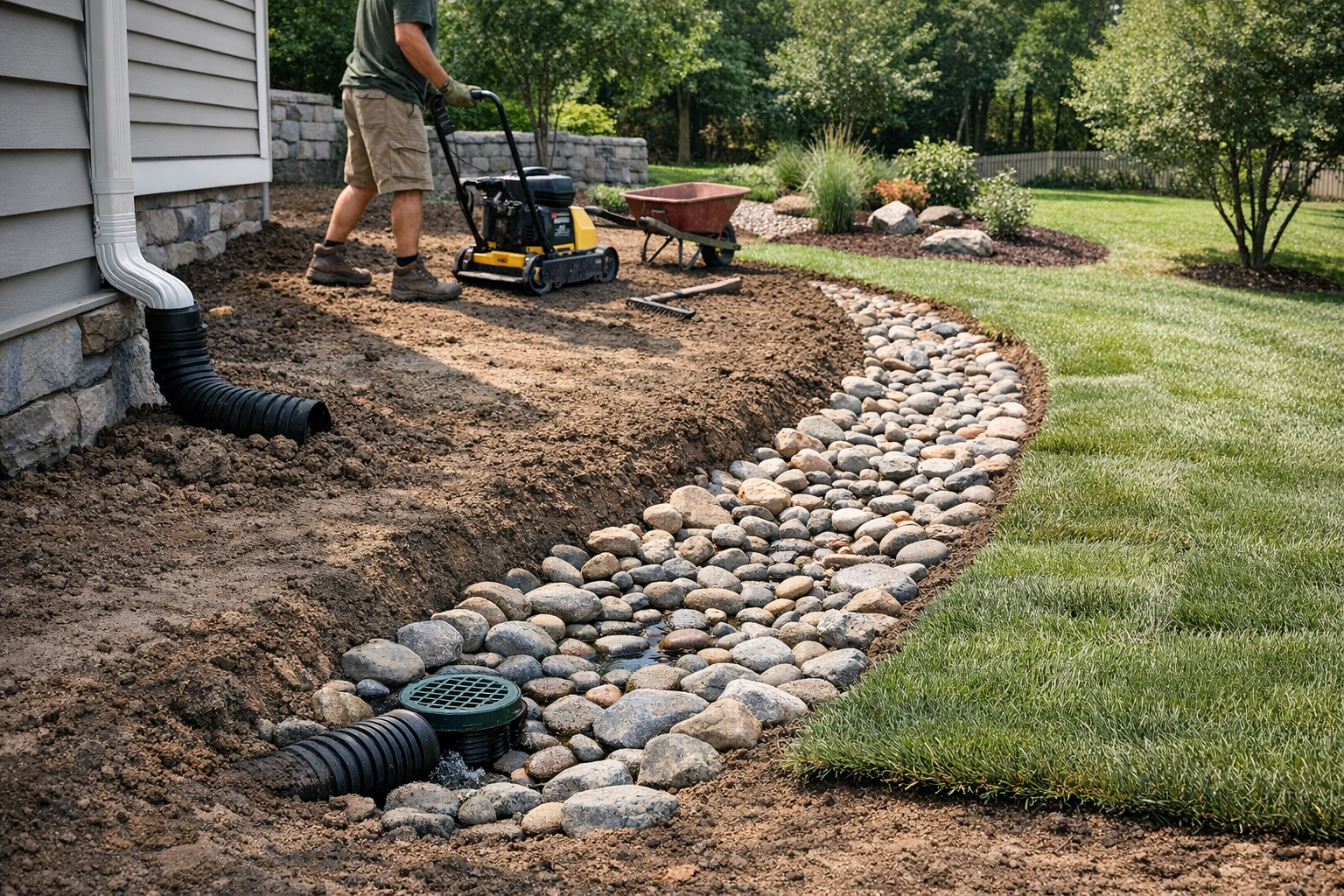
When rainwater collects near your home, turns the lawn into a muddy patch, or flows toward a neighbor’s property, the problem may be the shape of the land. Landscape grading for drainage adjusts the ground’s slope so water moves away from structures and toward an appropriate drainage area. Done thoughtfully, grading can help protect your foundation, improve the usability of your yard, and reduce erosion.
Before moving soil, it helps to understand how water travels across your property and what may be causing it to pool. The right solution might involve a small change in slope, better downspout drainage, or a combination of improvements.
What Is Landscape Grading for Drainage?
Landscape grading means shaping or leveling the ground to guide water in a desired direction. For drainage, the goal is generally to direct runoff away from the house and other vulnerable areas without sending it somewhere it will cause a new problem.
Grading can be subtle. A gentle slope, a shallow swale, or a raised planting bed may be enough to move water. It is not simply a matter of making every part of the yard perfectly flat; flat areas can actually hold water if there is no clear route for runoff to follow.
Signs Your Yard May Need Better Grading
Some drainage problems are obvious after a storm, while others develop gradually. Look for these common clues:
- Water pooling near the foundation, patio, driveway, or walkway
- Persistent muddy or soggy areas in the lawn
- Soil erosion, exposed roots, or channels formed by runoff
- Water entering a basement or crawl space after heavy rain
- Mulch washing out of garden beds
- Downspouts releasing water into low spots close to the house
Observe the yard during and after rainfall if it is safe to do so. Note where water starts, where it travels, and where it stops. This can reveal whether the issue is poor slope, a blocked outlet, compacted soil, or a drainage system that is not working properly.
How to Plan a Yard Grading Project
Check the Slope Around Your Home
Ground next to the house should generally slope away from the foundation. A commonly used starting guideline is a drop of about 6 inches over the first 10 feet, where space and local requirements allow. Site conditions vary, so this is not a substitute for local building codes or professional advice. Measure the existing slope before changing it, and consider how the proposed grade will meet sidewalks, decks, fences, and neighboring properties.
Find a Suitable Destination for Runoff
Water needs somewhere appropriate to go. Depending on the property, that may be a designated drainage swale, a stormwater system, a rain garden, or another approved area. Do not direct runoff onto a neighbor’s land, a public sidewalk, or a location where it could damage a building or create a hazard. Local rules may limit where stormwater can be discharged.
Look for More Than a Slope Problem
Compacted soil, heavy clay, clogged drains, leaking irrigation, and poorly placed downspouts can all contribute to standing water. Adding soil without identifying the cause may only move the puddle to another spot. Check gutters and downspout outlets, and make sure existing drain openings are clear before starting a grading project.
Common Grading and Drainage Solutions
Regrade the Ground Near the Foundation
Adding and shaping soil close to the home can restore a positive slope away from the foundation. Use suitable, compactable soil and keep siding, vents, and other openings safely above the finished grade. Avoid burying building materials or blocking access points. A professional can help determine the right soil and finished height for your home.
Create a Swale
A swale is a shallow, gently sloped channel that carries runoff across a yard. It can be planted with grass or other suitable vegetation to slow water and reduce erosion. Swales need a continuous route to an appropriate outlet; a low spot with no outlet may simply become a longer puddle.
Manage Downspout Discharge
Downspouts should release water far enough from the house to prevent it from soaking the soil beside the foundation. Extensions or approved underground drain lines may help, provided they discharge to a suitable location and do not create a new problem. Keep outlets clear of leaves and debris.
Use a Rain Garden or Other Planting Area
Where site conditions allow, a rain garden can collect and absorb runoff from roofs or paved surfaces. Choose plants suited to periods of both wet and dry soil. A rain garden should not be placed where water could seep toward a foundation, and some properties may require a soil or drainage assessment first.
DIY Grading Tips and When to Call a Professional
Small corrections may be manageable for a homeowner, but careful preparation matters. Before digging, contact your local utility-marking service to locate buried lines. Check municipal rules, property boundaries, and any drainage easements. Work gradually, protect established trees and plants, and avoid piling soil against the house or changing runoff patterns at the property line.
Consider hiring a landscape or drainage professional if water regularly enters the basement, the yard has a steep slope, retaining walls are involved, or runoff affects neighboring properties. A professional can assess elevations, soil conditions, and possible drainage routes before recommending a solution. If the problem continues after basic grading and gutter maintenance, an inspection can help prevent repeated repairs.
Maintain Your Yard’s Drainage
Grading is not always a one-time fix. Soil can settle, planting beds can build up, and roots or debris can interfere with water flow. After major storms, check for new pooling, erosion, or clogged outlets. Keep gutters clean, maintain vegetation on swales, and repair small low spots before they become larger problems.
Conclusion
Effective landscape grading for drainage starts with understanding where water comes from, how it moves, and where it can safely go. A well-planned slope, clear downspouts, and suitable drainage features can help protect your home and make your yard more enjoyable. For complex or recurring water problems, professional guidance is a worthwhile next step.