
Irrigation Planning for Landscapes: A Practical Guide to Healthy, Water-Efficient Gardens
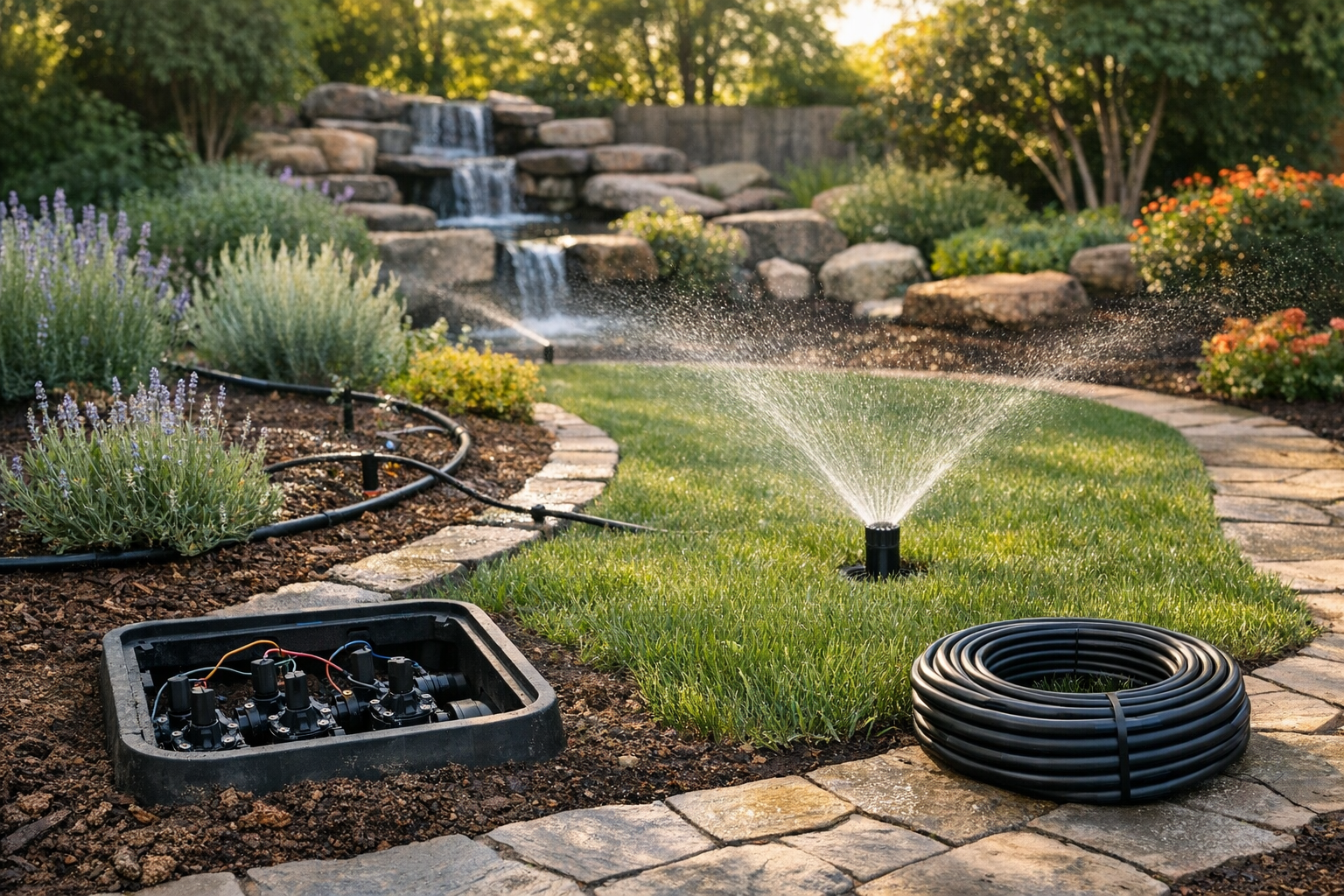
A well-planned irrigation system does more than keep a landscape green. It delivers the right amount of water to the right plants, helps prevent runoff and disease, and can save time and money throughout the year. Whether you are designing a new garden or improving an existing yard, thoughtful irrigation planning starts with understanding your site and the needs of the plants that grow there.
Start with a Landscape and Water Assessment
Before choosing sprinklers or laying drip tubing, take time to study your property. A simple site assessment helps you design a system that works with the landscape instead of against it.
Map sun, slope, soil, and existing plants
Sketch the yard and note sunny and shaded areas, slopes, paved surfaces, trees, planting beds, and lawn. Sun exposure affects how quickly soil dries, while slopes can send water downhill before it has time to soak in. Identify the soil type, too. Sandy soils drain quickly and may need more frequent, shorter watering. Clay soils hold water longer and are more prone to runoff, so slow application is often best. If you are unsure, a basic soil test can offer helpful guidance.
Look for existing water sources and note the location of faucets, irrigation lines, and any backflow prevention device. Check your household water pressure and flow rate before planning the layout. A system that demands more water than the supply can provide may deliver uneven coverage.
Group Plants into Watering Zones
One of the most important principles of irrigation planning is to group plants according to their water needs. A lawn, a bed of drought-tolerant shrubs, and a vegetable garden should not usually share the same schedule. When plants with different needs are connected to one zone, some may receive too much water while others remain thirsty.
Match each zone to plant type and conditions
Create separate zones for areas such as turf, trees and shrubs, perennial beds, and containers. Consider sun exposure and soil as well as plant type: a sunny border may dry faster than a shaded bed, even if they contain similar plants. Newly planted trees and shrubs also need more frequent attention while their roots establish than they will later.
Keep zones manageable in size and check that every plant within a zone can thrive with the same watering frequency and duration. This makes it easier to adjust schedules as weather changes or the landscape matures.
Choose an Irrigation Method That Fits the Area
Different parts of a landscape benefit from different delivery methods. Choosing equipment to suit each zone improves efficiency and helps water reach plant roots.
Use drip irrigation for beds and individual plants
Drip lines and emitters deliver water slowly near the soil surface, making them useful for vegetable gardens, planting beds, hedges, and trees. Because water is applied close to roots, less may be lost to wind or evaporation than with overhead watering. Drip systems also allow you to tailor emitter placement to plant spacing. Keep tubing accessible so you can inspect it, flush it, or reposition it as plants grow.
Select sprinklers for lawns and broad areas
Sprinklers are often practical for turf and larger open spaces. Choose heads that match the shape and size of the area, and arrange them to provide even coverage. Avoid spraying driveways, walls, or sidewalks. A simple coverage test using shallow containers can reveal dry patches or areas receiving too much water. Drip and sprinkler equipment generally should not share a zone because they apply water at different rates.
Design for Efficient Watering
Good equipment is only part of an efficient system. Thoughtful placement and controls help prevent waste and protect plants.
Plan for even coverage and manageable pressure
Lay out sprinkler heads according to the manufacturer’s spacing guidance, often with spray patterns reaching neighboring heads. This overlap helps compensate for uneven distribution. Check that the number of heads on each zone is compatible with the available flow and pressure. If pressure varies, a regulator or a revised zone layout may improve performance.
Install a filter where needed, especially for drip irrigation, since small particles can clog emitters. Include shutoff valves in accessible locations and consider a rain sensor or soil-moisture sensor to pause watering when the landscape does not need it. Local regulations may require specific equipment, including backflow prevention, so confirm requirements before installation.
Set a Watering Schedule Based on Plant Needs
There is no single schedule that works for every landscape. Water needs change with temperature, rainfall, wind, soil, plant maturity, and season. Use your irrigation controller as a starting point, then adjust it based on conditions in the yard.
In general, deeper and less frequent watering encourages roots to grow farther into the soil, where moisture is more reliable. However, the right interval depends on the plant and soil. Newly planted material may need more frequent watering until established, while drought-tolerant plants often prefer the soil to dry between waterings. Follow local guidance for lawns and garden plants, and reduce irrigation after rainfall rather than running a fixed schedule regardless of weather.
Water early in the morning when possible. Lower evaporation and calmer conditions help more water reach the soil. For clay soil or sloped areas, use cycle-and-soak programming: divide the watering time into shorter cycles with breaks in between. This gives water time to infiltrate and reduces runoff.
Inspect and Adjust the System Regularly
Even a carefully designed system needs occasional attention. At the start of the watering season, run each zone and look for clogged emitters, broken heads, leaks, and blocked spray patterns. Straighten tilted sprinkler heads and clear away grass or foliage that interferes with coverage. Check that drip tubing has not shifted and that water is reaching the root zones.
Review the schedule as plants grow and the weather changes. Watch for signs of overwatering, such as persistently soggy soil, yellowing leaves, or fungal problems, and for underwatering, such as wilting or dry soil. A small soil check can be more useful than relying on a controller’s calendar alone.
Conclusion
Effective irrigation planning begins with the landscape itself: its soil, sun, slope, and plants. By creating suitable watering zones, choosing the right delivery methods, and adjusting schedules as conditions change, you can support healthy growth while using water more responsibly. A little planning up front makes ongoing care simpler and more reliable.