
Drainage Systems for Lawns: How to Fix a Soggy Yard and Protect Your Landscape
Why Lawn Drainage Matters
A healthy lawn needs more than sun and fertilizer — it needs proper drainage. Poor drainage leads to puddles, compacted soil, root rot, and uneven growth. It can also damage patios, driveways, and home foundations if water repeatedly pools near structures. Investing time in the right drainage system improves turf health, reduces mosquito breeding areas, and protects your property value.
Common Drainage Problems
Soggy Spots and Standing Water
Localized low spots that hold water after rain are the most obvious sign that your lawn needs attention. These areas often have poor soil structure or bad grading.
Slow-Slow Soak and Surface Runoff
Water that soaks slowly indicates compacted soil or a high clay content. Conversely, excessive surface runoff—water racing across the yard—signals poor contouring or hard surfaces directing flow into the lawn.
Basement or Foundation Moisture
If water collects near your foundation or you notice a damp basement, your landscape’s drainage is affecting the home. That requires prompt, often professional, action.
Types of Lawn Drainage Systems
French Drains
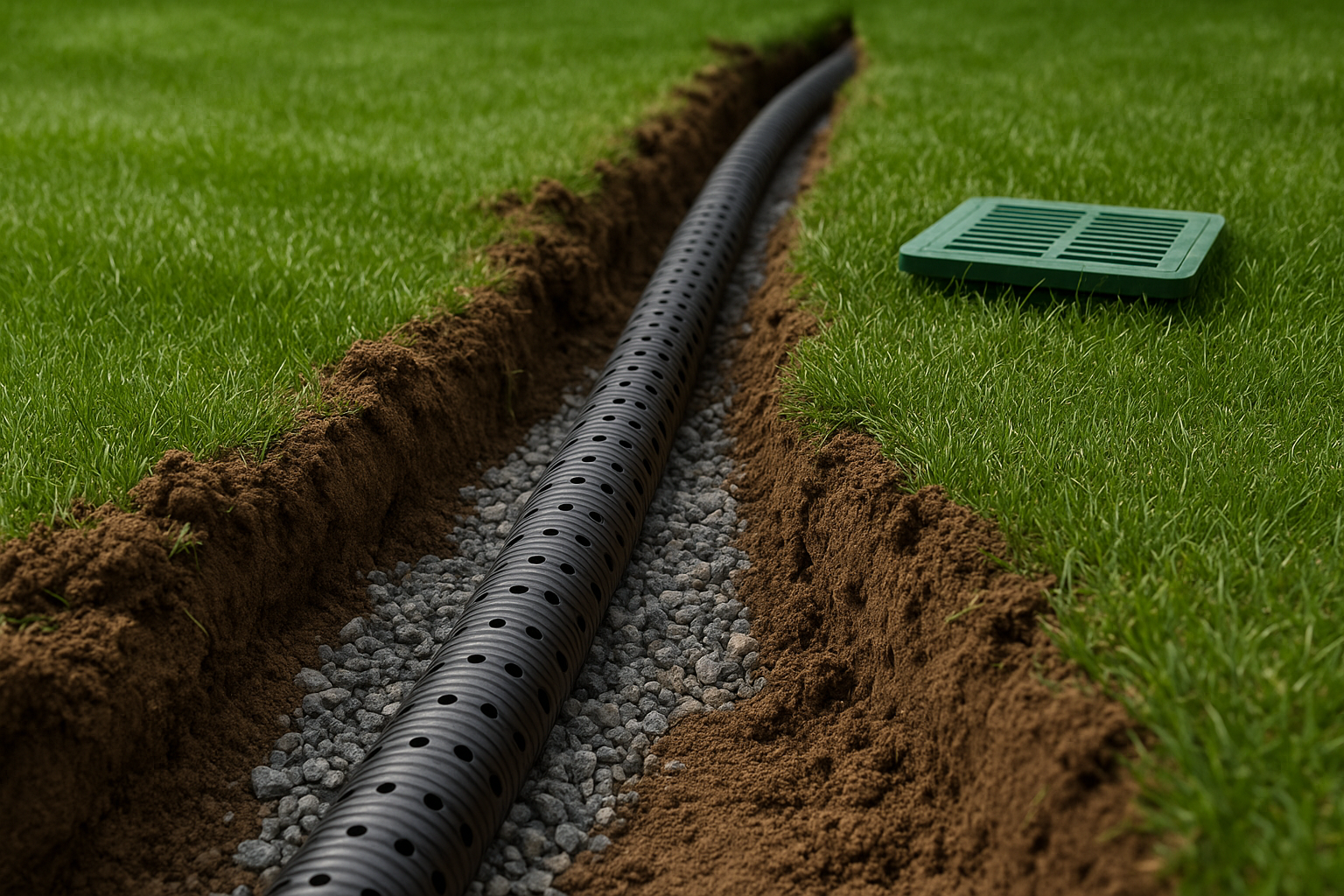
French drains are trenches filled with gravel and a perforated pipe that directs water away from problem areas. They’re excellent for intercepting subsurface water and are a popular option for redirecting water downhill or to a dry well.
Surface Drains and Channel Drains
These systems collect water on the surface. Surface drains (catch basins) and channel drains are ideal for patios, driveways, or flat lawns where water pools. They connect to underground piping to move water to an outlet.
Dry Wells and Soakaways
Dry wells collect runoff through piping and allow it to percolate into the surrounding soil. They work well where soil percolation rates are adequate and you want to manage water on-site without sending it to storm sewers.
Grading and Recontouring
Sometimes the simplest fix is to regrade the yard so water flows away from foundations and low spots. Proper grading is often combined with other drainage elements for best results.
Rain Gardens and Bioswales
Green solutions like rain gardens and bioswales use plants and engineered soil to capture and absorb runoff. They improve aesthetics and support pollinators while addressing drainage naturally.
How to Choose the Right System
Start by diagnosing the problem: is it surface water, subsurface water, or runoff directed toward your home? Consider these steps:
- Inspect after a rain to map where water collects or flows.
- Check soil type—sandy soils drain quickly; clay holds water.
- Look at grade and slope—water should move away from structures at a gentle slope (typically 1-2% away from foundations).
- Decide whether you want water redirected off-site or managed on-site (e.g., dry well or rain garden).
For minor issues, grading or a few surface drains may suffice. For persistent subsurface water, a French drain or a combination solution is often best.
DIY vs. Professional Installation
DIY is doable for small projects: installing a single French drain or a few catch basins can save money if you’re handy. However, professionals bring expertise for complex problems involving foundation protection, municipal regulations, or large-scale grading. They can also perform soil tests and ensure proper outlet permits where required.
Maintenance Tips to Keep Your Drainage Working
- Keep gutters and downspouts clean and direct downspouts at least 3–4 feet away from the foundation or into a drainage system.
- Inspect and remove debris from catch basins and surface drains seasonally.
- Monitor and maintain proper grading—settling can create new low spots over time.
- Break up compacted soil with aeration, and amend soil with organic matter to improve infiltration.
- Trim plants in bioswales or rain gardens and remove silt buildup from dry wells as needed.
Cost Considerations
Costs vary widely depending on system type, yard size, soil conditions, and whether you hire professionals. Surface drains and grading are typically less expensive than extensive subsurface systems. Expect to pay more for complex solutions that require heavy machinery, deep excavation, or permits. Get multiple quotes and ask for a detailed scope of work.
Final Checklist Before Installing
- Map water flow and problem areas after a rain.
- Test soil drainage with a percolation test for dry wells or rain gardens.
- Confirm local codes and utility lines before digging.
- Decide on a maintenance plan and long-term outlet for water.
Conclusion
Proper drainage systems for lawns protect your landscape and home while creating healthier turf and fewer headaches. Whether you choose grading, a French drain, surface drains, or a green solution like a rain garden, start with a careful assessment and plan for maintenance. Small fixes can make a big difference—ask for professional help when the scope or stakes are high.