
Landscape Planning and Design: A Practical Guide to Beautiful, Functional Outdoor Spaces
Introduction to Landscape Planning and Design
Landscape planning and design transforms outdoor areas into functional, beautiful spaces that reflect how you live, local ecology, and your budget. Good design balances form and function: it considers aesthetics, circulation, microclimate, maintenance, and sustainability from the first sketch to the last plant. Whether you’re redesigning a small yard or creating a public park, a thoughtful process helps avoid costly mistakes and delivers lasting value.
Core Principles of Good Landscape Design
1. Site Context and Analysis
Start by observing the site: sun and shade patterns, wind exposure, soil type, drainage, views, and existing vegetation. Mapping these factors clarifies opportunities and constraints so your design responds to reality, not assumptions.
2. Function and Flow
Define how the space will be used—entertaining, play, vegetable gardening, quiet retreat—and design circulation routes that feel natural. Paths, patios, and planting beds should guide movement while creating comfortable, connected zones.
3. Focal Points and Balance
Use focal points like a specimen tree, water feature, or sculpture to anchor views. Balance mass and void with plantings and hardscape so the composition feels intentional, whether symmetrical or asymmetrical.
4. Scale, Proportion, and Texture
Choose plants and materials scaled to the site and architecture. Mix textures and colors to create interest throughout the seasons. Think about how elements will look at maturity—not just when newly planted.
The Landscape Design Process: Step by Step
1. Brief and Program
Clarify goals, priorities, budget, and timeline. A concise brief saves time and aligns expectations between homeowner and designer.
2. Concept Design
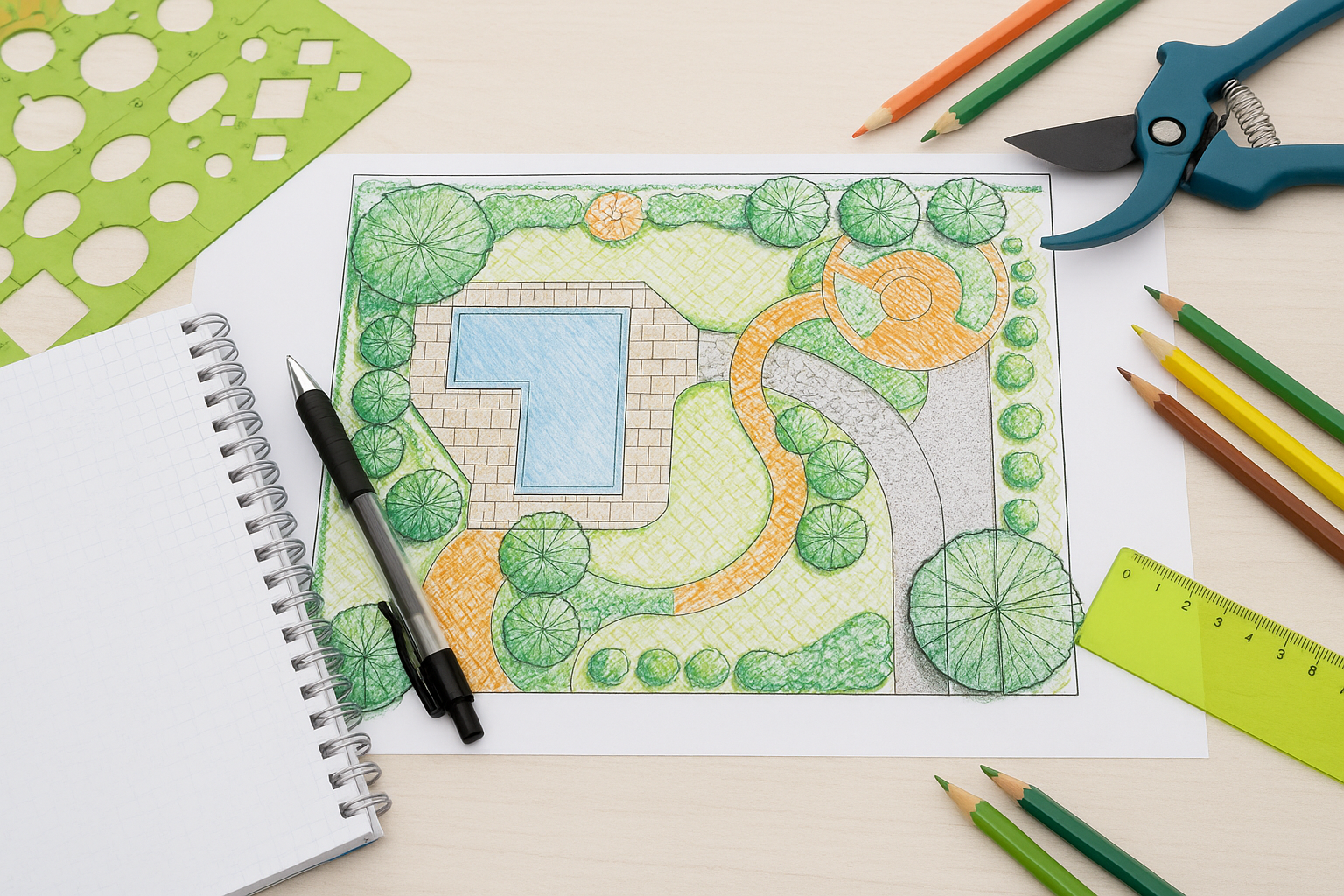
Create rough plans that explore layout options, circulation, and major elements. Use sketches or simple CAD plans to evaluate alternatives before refining details.
3. Design Development
Refine plant palettes, materials, lighting, irrigation, and hardscape details. This phase produces a clearer, buildable plan and a realistic cost estimate.
4. Construction Documentation
Provide detailed drawings and specifications for contractors: grading plans, planting schedules, material lists, and installation notes. Good documentation reduces surprises during construction.
5. Installation and Maintenance Planning
Coordinate contractors and monitor installation. Create a maintenance plan outlining pruning, watering, fertilizing, and seasonal tasks to help the landscape thrive after installation.
Sustainable Practices in Landscape Design
Sustainability reduces long-term costs and environmental impact. Key strategies include:
- Choosing native and drought-tolerant plants to reduce water use and support local wildlife.
- Designing efficient irrigation systems, including drip irrigation and smart controllers.
- Using permeable paving and rain gardens to manage stormwater and reduce runoff.
- Composting and mulching to improve soil health and reduce fertilizer needs.
Plant Selection and Hardscape Materials
Pick plants based on microclimate, soil, and maintenance capacity. Layer plants by height and season to ensure year-round interest. For hardscapes, choose durable materials that complement the home and site—natural stone, concrete pavers, timber, or recycled materials can all work well when detailed correctly.
Common Mistakes to Avoid
- Ignoring mature size of plants and overcrowding beds.
- Underestimating drainage issues—poor grading leads to long-term problems.
- Choosing low-quality materials that fail prematurely.
- Neglecting a maintenance plan, leaving beautiful designs to decline.
Budgeting and Phasing Your Project
Set priorities and phase the work if the full budget isn’t available. Start with infrastructure (drainage, irrigation, grading), then hardscapes, and finally planting. Phasing keeps costs predictable and allows you to live with the design while finishing details later.
Working with Professionals
Designers, landscape architects, and contractors each bring expertise. Hire based on scope—landscape architects for larger or complex projects, designers for residential spaces, and experienced contractors for reliable installation. Clear contracts and good communication are essential for a smooth build.
Conclusion
Landscape planning and design is both art and science. By analyzing the site, prioritizing function, choosing appropriate plants and materials, and planning for sustainability and maintenance, you can create outdoor spaces that are beautiful, useful, and resilient. Thoughtful planning upfront saves time and money and gives you a landscape that grows more valuable with age.