
Downspout Drainage Solutions: Keep Water Away from Your Foundation
Why Downspout Drainage Matters
Effective downspout drainage protects your home from water damage, foundation settling, and basement flooding. When rainwater isn’t directed away from the house, it soaks into soil around the foundation, increases hydrostatic pressure, and can lead to cracks or mold. A simple, well-designed downspout system gives you peace of mind and prevents costly repairs.
Common Downspout Problems
Before choosing a solution, it helps to recognize common problems:
- Puddling near foundation: Water pools near the house after rain.
- Soil erosion: Fast-moving water washes away mulch and soil.
- Basement dampness: Moisture or water stains in the basement.
- Clogging and overflow: Debris in gutters causes water to spill from the roofline.
Downspout Drainage Solutions
There are several effective ways to move water away from your home. Choose based on property layout, budget, and aesthetic preference.
1. Downspout Extenders
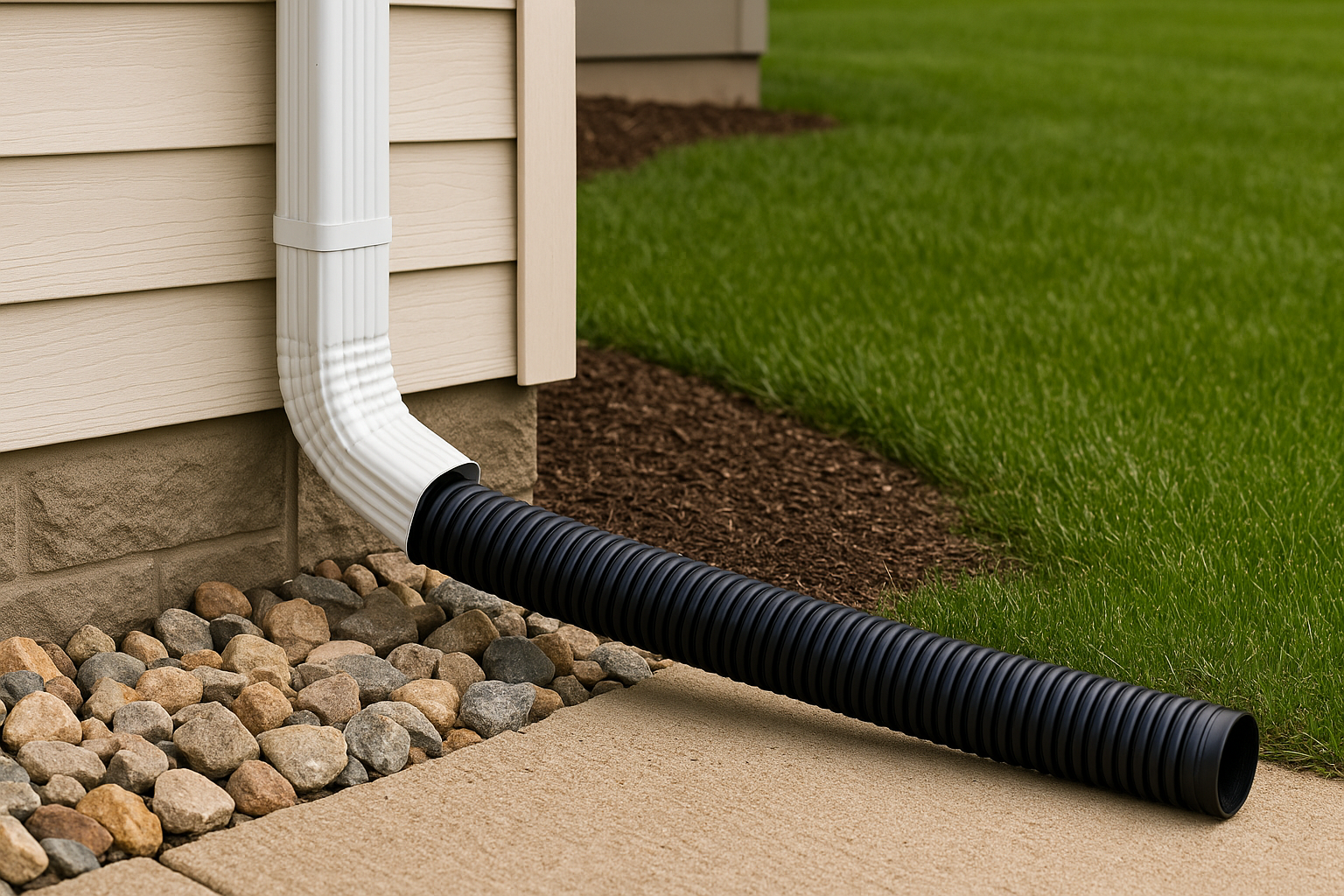
Downspout extenders are the quickest and cheapest fix. These flexible or rigid pieces attach to the end of the downspout and direct water several feet away from the foundation.
- Pros: Affordable, DIY-friendly, immediate results.
- Cons: Can be displaced by lawn mowers or foot traffic; may look temporary.
- Tip: Aim to extend at least 3–6 feet from the foundation, depending on slope.
2. Splash Blocks and Concrete Aprons
Splash blocks sit under the downspout to disperse water flow and prevent erosion. Concrete aprons are larger and more durable, creating a sloped surface to carry water away.
- Pros: Low cost, easy to install, prevents immediate erosion.
- Cons: Limited reach; not ideal for heavy storms or flat yards.
3. Underground Channel Drains and PVC Piping
For a cleaner look and longer reach, bury pipe that connects to the downspout and routes water to a safe discharge point (street, dry well, or storm drain).
- Pros: Invisible, effective for high-volume runoff, reliable.
- Cons: Higher initial cost and more labor; must maintain to avoid clogs.
- Installation note: Use 3–4 inch diameter rigid pipe (PVC or corrugated), and slope pipe at 1–2% for proper flow.
4. Dry Wells and Infiltration Trenches
Dry wells are underground pits filled with gravel or a prefabricated chamber that collect and slowly disperse water into the surrounding soil. Infiltration trenches are elongated versions that hold water temporarily.
- Pros: Great for managing large volumes on-site, reduces runoff.
- Cons: Require good soil permeability; not suitable where groundwater is high.
- Tip: Have soils tested for infiltration before investing.
5. Rain Barrels and Cisterns
Collecting roof runoff in barrels or tanks reduces the volume leaving your property and provides water for gardening. You can plumb overflow to an underground drain for heavy storms.
- Pros: Conserves water, reduces runoff, low to moderate cost.
- Cons: Limited capacity; requires occasional maintenance and mosquito-proofing.
6. French Drains
A French drain consists of a trench filled with gravel and a perforated pipe that redirects water away from problem areas. It’s a robust solution for yards with poor surface drainage.
- Pros: Very effective for persistent water problems, versatile.
- Cons: More costly and invasive to install; needs proper grading.
Installation and Maintenance Tips
- Clean gutters regularly: Remove leaves and debris at least twice a year to prevent overflows.
- Check downspout attachments: Ensure elbows and fasteners are secure and leak-free.
- Maintain slope: Grade soil to slope away from the foundation (minimum 5% grade for the first 10 feet is recommended where possible).
- Install guards and strainers: Gutter guards and downspout strainers reduce clogging from debris.
- Inspect after storms: Look for new erosion, standing water, or cellar dampness and address early.
When to Call a Professional
DIY fixes cover most scenarios, but contact a pro if you notice: foundation cracks, persistent basement flooding, complicated grading issues, or when you need permits for major excavation. A landscape contractor or drainage specialist can design a system tailored to your property and local codes.
Conclusion
Choosing the right downspout drainage solution depends on your property, budget, and how much runoff you need to manage. Start with simple improvements—like extenders or splash blocks—and scale to underground piping, dry wells, or French drains where needed. Regular maintenance keeps any system working well and protects your home from water damage for years to come.