
Landscape Lighting for Trees: Plan, Install, and Illuminate for Maximum Impact
Why Landscape Lighting for Trees Matters
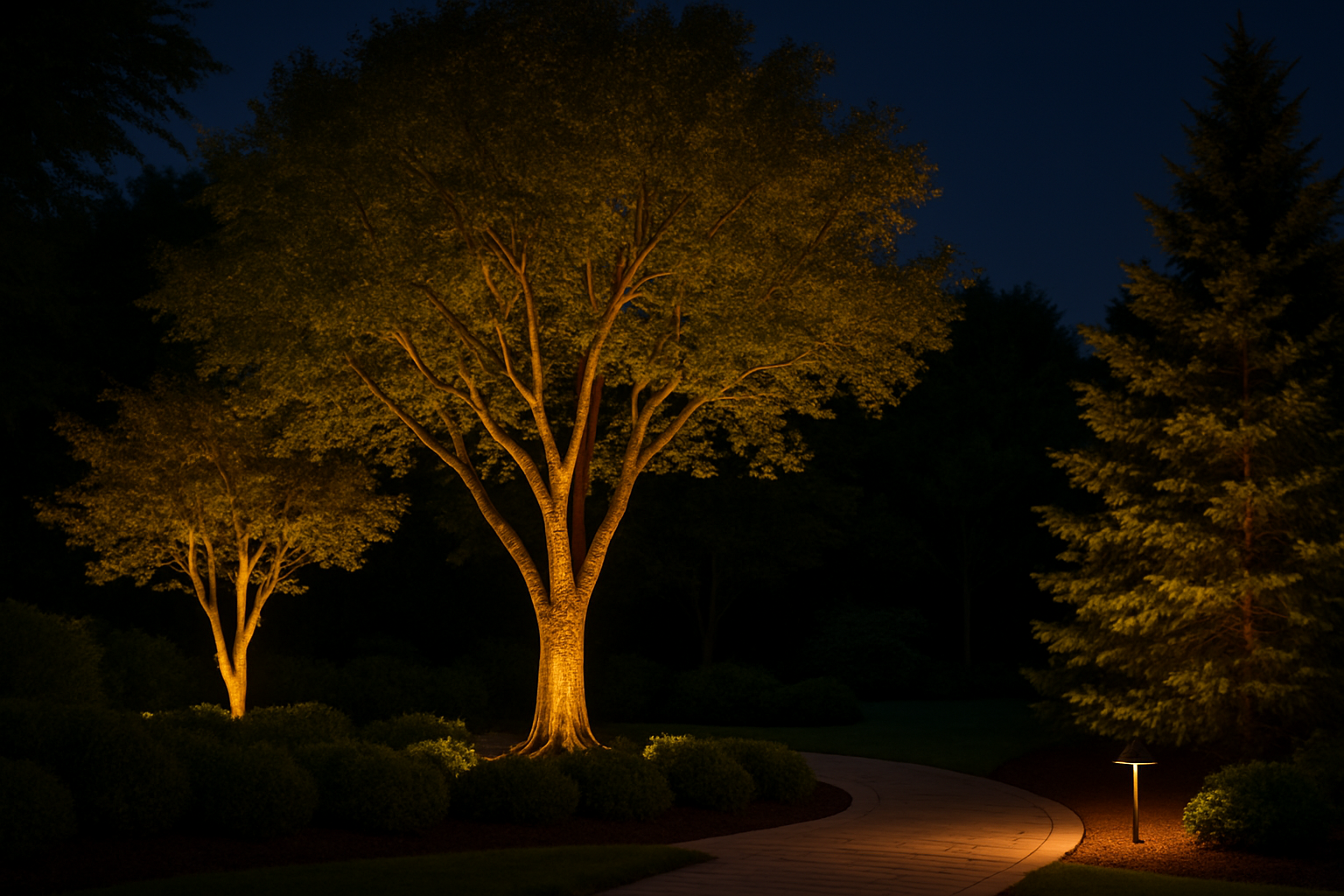
Trees are the backbone of a yard’s character. Adding landscape lighting for trees transforms them from daytime scenery into evening focal points, increasing curb appeal, improving safety, and extending the usability of outdoor spaces. The right lighting makes trunks, branches, and textured bark come alive after dark, creating depth and ambiance that ordinary yard lights can’t match.
Benefits of Illuminating Trees
- Enhanced beauty: Highlight architectural forms, colors, and seasonal interest.
- Added security: Lighted trees reduce dark hiding spots and deter intruders.
- Functional outdoor time: Well-lit yards extend evening gatherings and pathways.
- Increased property value: Thoughtfully designed lighting boosts curb appeal.
Planning and Design
Good tree lighting starts with a plan. Walk your property at night with a flashlight to identify the trees you want to highlight and how they relate to walkways, seating areas, and the home’s facade. Consider:
- Which trees have interesting shapes, bark, or branching patterns?
- How will lighting complement the architecture and landscape features?
- What mood do you want—dramatic, subtle, or layered?
Scale and Proportion
Match fixture size and brightness to the tree. Large specimen trees need more powerful fixtures and multiple angles, while smaller trees benefit from softer, lower-intensity lights. Avoid overpowering delicate trees with oversized luminaires.
Layering Lights
Create depth by combining techniques—some lights aimed up at trunks, others filtering through the canopy, and a few low-level path lights to lead the eye. Layering adds dimension and reduces the flat look that single-source lighting can create.
Lighting Techniques for Trees
Up-lighting
Placed at the base of a tree and aimed upward, up-lighting emphasizes trunk texture and dramatic branching. This is ideal for specimen trees and those near the house.
Down-lighting (Moonlighting)
Mounted high in a tree and angled down, this mimics natural moonlight with soft, dappled shadows—perfect over seating areas or paths. It provides gentle illumination without glare.
Silhouetting and Shadowing
Position a light behind a tree to create a striking silhouette against a wall or fence. Conversely, placing a light in front and angling it toward a surface creates textured shadows from branches, adding artistic interest.
Grazing
For trees with interesting bark, place fixtures close to the trunk and aim upward to accentuate texture and depth.
Fixture Types and Choosing the Right Equipment
Select fixtures designed for outdoor, wet locations. Common options include:
- Spotlights: Focused beams for trunks and focal points.
- Floodlights: Broader wash for canopies or groupings.
- Deck or path lights: Low-level accents near seating or walkways.
- Well lights: In-ground fixtures for flush-mount up-lighting.
LED vs. Halogen
LEDs are the preferred choice for tree lighting: energy-efficient, long-lasting, and cooler-running (which helps protect tree roots and fixtures). Choose high-quality LED fixtures with good color rendering (CRI 80+).
Color Temperature
For a natural look, use warm white (2700K–3000K). Cooler temperatures can feel harsh on foliage and clash with warm exterior finishes.
Placement, Wiring, and Safety
Consider placement carefully: hide fixtures in mulch beds or behind shrubs and aim away from neighbors’ windows. Use low-voltage (12V) systems for safety and ease of installation; they also pair well with LED fixtures.
- Run wiring in buried conduit or approved landscape-rated cable at proper depths.
- Use a transformer sized for current load with built-in protections.
- Include timers, photocells, or a smart controller to automate schedules and save energy.
Maintenance and Seasonal Considerations
Check fixtures annually for corrosion, cracked lenses, or vegetation overgrowth. Trim tree limbs that obscure beams and adjust aiming after seasons of growth. Clean lenses and remove debris to maintain light quality. Replace bulbs and test the control system before heavy use seasons.
Common Mistakes to Avoid
- Using too many fixtures—less can be more when focused strategically.
- Aiming lights directly at neighboring windows or roads—mindful angling prevents glare complaints.
- Ignoring light pollution—choose shields and proper angles to minimize spill.
Final Tips
- Start small: light one or two specimen trees first and expand as you refine the look.
- Test fixtures with temporary setups before permanent installation.
- Work with a landscape lighting pro for complex properties or electrical work beyond your comfort level.
Conclusion
Landscape lighting for trees is a powerful, relatively simple way to elevate your outdoor space. With thoughtful planning, the right fixtures, and careful placement, you can create a warm, safe, and visually striking nighttime landscape that highlights the unique beauty of your trees year-round.