
Arbors Made from Branches: A Rustic DIY Guide for Your Garden
Introduction
Arbors made from branches bring a warm, organic touch to any garden. They’re affordable, eco-friendly, and can be assembled with simple tools and a little creativity. Whether you want a cozy entrance, a shaded sitting nook, or a living support for climbing vines, a branch arbor blends into natural landscapes in a way manufactured structures rarely do.
Why Choose Arbors Made from Branches
Natural Aesthetic
Branch arbors offer an instantly rustic look. The irregular shapes and textures of branches add character and a handmade charm that suits cottage, woodland, and native-plant gardens.
Affordable and Sustainable
Using locally sourced or recycled branches reduces cost and environmental impact. Instead of buying treated lumber or metal, you can repurpose fallen limbs or pruneings—keeping material out of the landfill.
Customization and Flexibility
Every branch is different, so each arbor becomes one-of-a-kind. Branch arbors are easy to modify: extend the span, adjust the height, or add a rail or lattice as your garden evolves.
Types of Branches to Use
Hardwoods
Species like oak, maple, and hawthorn are dense and durable. They make sturdy frameworks but can be heavier and harder to work with.
Softwoods
Pine, willow, and alder are easier to bend and nail into place. They may weather faster, so consider additional treatments or frequent maintenance.
Living Branch Arbors
Some gardeners weave living branches—young, pliable shoots—into arbors that root and grow into living structures. This approach requires planning and patience but results in a dynamic, evolving feature.
Design Ideas and Styles
Rustic Twig Arch
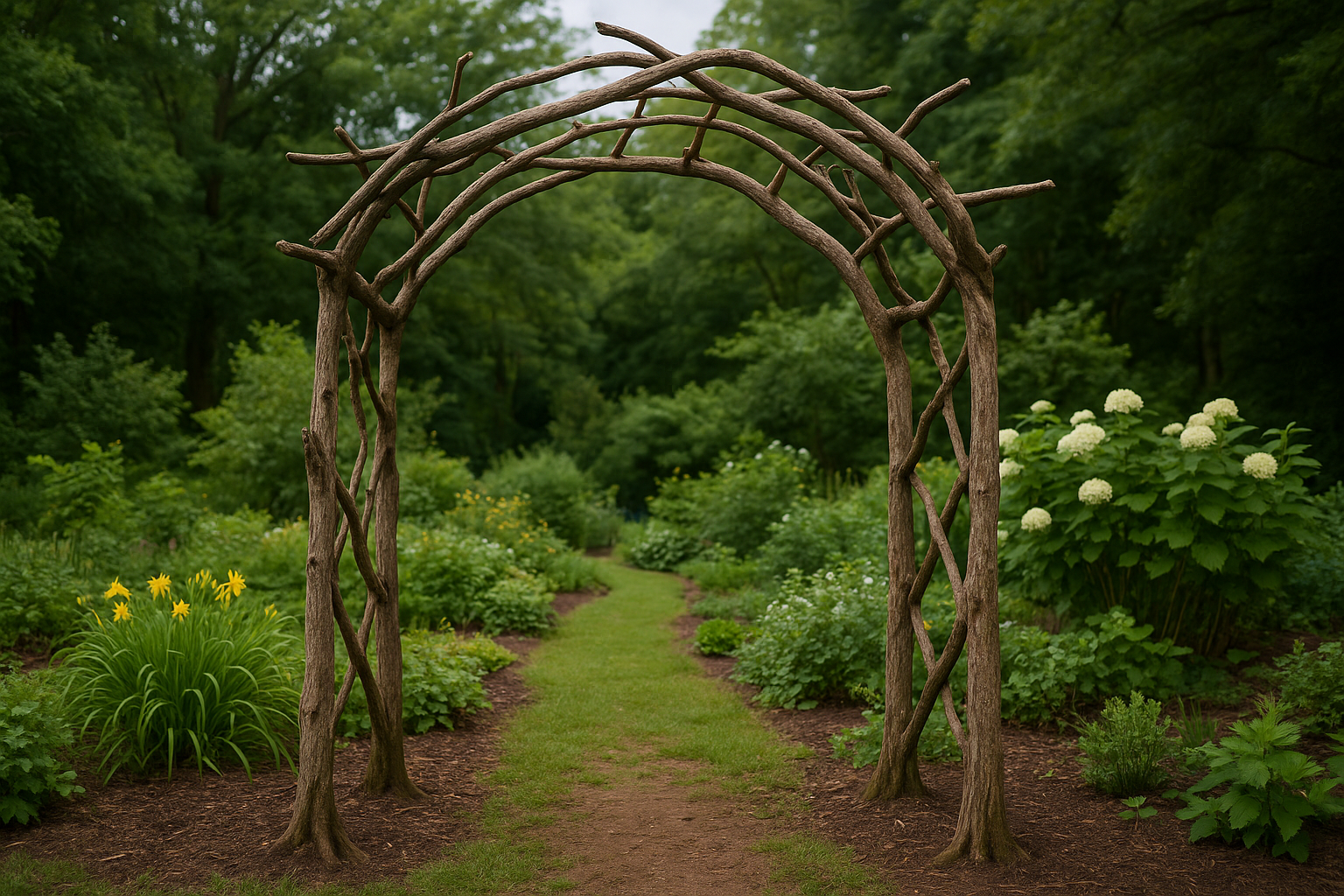
A simple arch made from two paired trunk posts and crisscrossed branches provides a woodland gateway. Keep connections loose and organic for a charming look.
Woven or Lattice Arbor
Thin branches can be woven horizontally between vertical supports to form a denser screen. This style is excellent for privacy and as a support for lighter climbers.
Minimalist Lean-to
Lean a sturdy branch across two posts for a minimalist, low-profile arbor. Perfect over small seating areas or along narrow pathways.
How to Build an Arbor from Branches
Materials & Tools
- Sturdy branches for posts (2–4 inches diameter recommended)
- Flexible branches for crosspieces and weaving
- Galvanized screws, stainless nails, or natural binding materials (bailing twine, jute, or wire)
- Post hole digger or shovel
- Hand saw or pruning saw, hammer, drill
- Optional: gravel, concrete, or stone for anchoring posts
Step-by-Step Instructions
- Plan and measure the spot. Mark where posts will sit and test the visual proportion with temporarily placed branches.
- Prepare posts. Choose the straightest, strongest branches for the vertical supports and trim the base for a flat ground-bearing surface.
- Set posts. Dig holes at least 18–24 inches deep (deeper in cold climates). Backfill with tamped soil, gravel, or concrete for stability.
- Add crosspieces. Attach horizontal branches across the posts, fastening with screws or natural bindings. Use overlapping joints and triangulation for strength.
- Finish with accents. Weave thinner branches, add a cap rail, or secure climbing plant ties.
Tips for Stability and Safety
Always use strong anchors for load-bearing parts. Where possible, bury the ends of main posts and use metal post anchors for longevity. Avoid using rotted or insect-damaged wood on key supports.
Maintenance and Longevity
Weatherproofing
Natural branch arbors will weather to a silver-gray finish, which many gardeners find attractive. To slow decay, apply a non-toxic wood preservative or linseed oil to cut ends and base areas.
Pruning and Repair
Check connections annually and replace any weakened branches. Prune vines and surrounding plants to prevent excessive weight that could stress the structure.
Planting Vines and Climbers
Best Climbers
Choose plants suited to your climate and the arbor’s strength: clematis, climbing roses, honeysuckle, jasmine, and hardy kiwi are popular. Lightweight annuals like morning glory or sweet peas work well on finer woven arbors.
Training and Care
Tie young vines loosely to the arbor to encourage even coverage. Avoid letting heavy, woody climbers attach directly to fragile branch sections without additional support.
Where to Place Your Arbor
Focal Points and Pathways
Arbors make excellent entrances to garden rooms, frame seating areas, and add vertical interest along walkways. Consider sightlines and how the arbor will look from different vantage points.
Over Seating or Garden Beds
Place a smaller arbor over a bench for shade and intimacy, or use a larger structure as a backdrop to perennial beds and borders.
Conclusion
Arbors made from branches are a delightful blend of craft and nature. With a little planning, basic tools, and seasonal upkeep, you can create a unique garden feature that grows more beautiful with time. Whether you aim for a simple arch or a living woven tunnel, a branch arbor invites the outdoors in and celebrates the imperfect beauty of natural materials.