
Landscape Grading for Drainage: A Practical Guide to Protect Your Home
Introduction
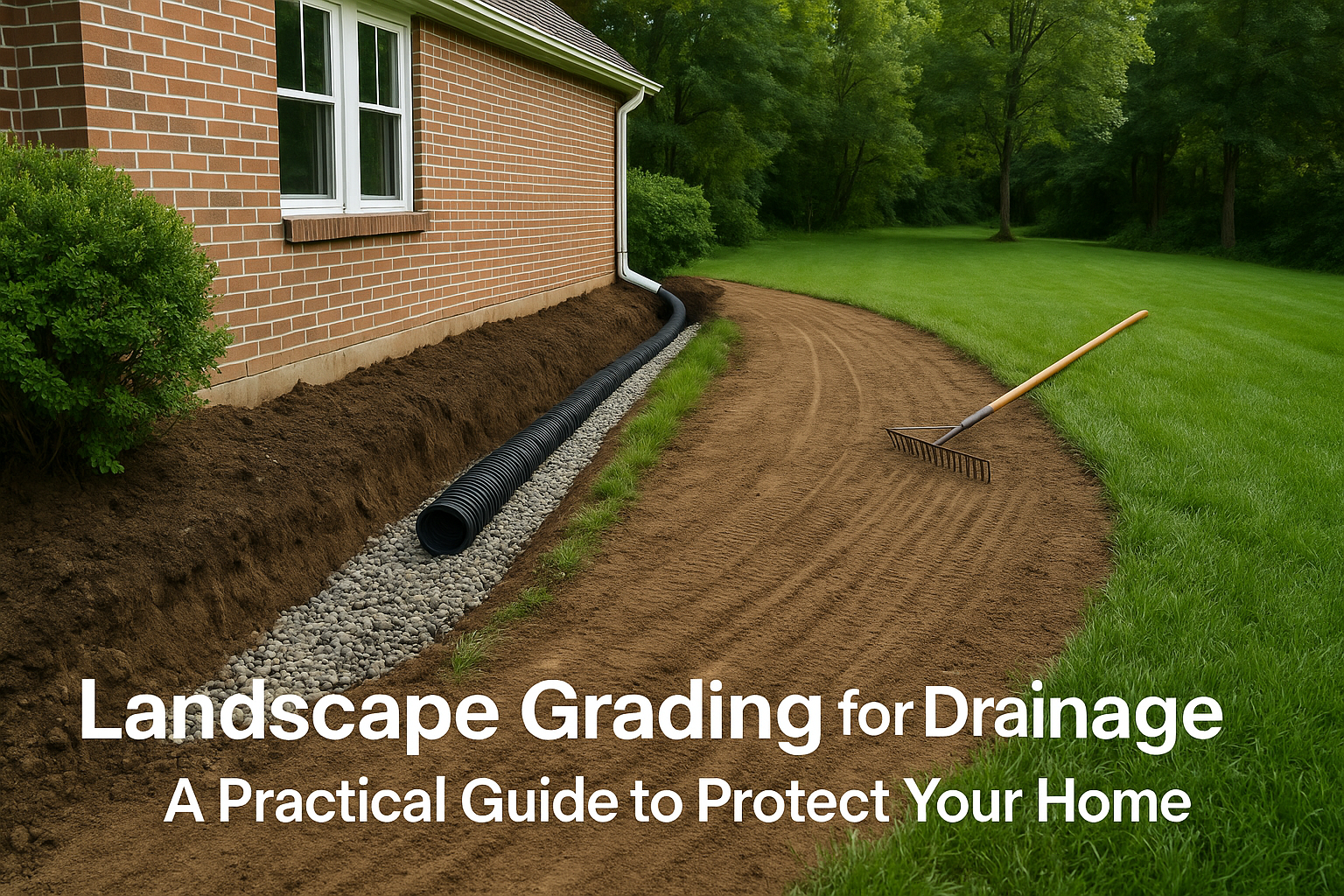
Proper landscape grading for drainage is one of the most important—but often overlooked—steps in protecting your home and yard from water damage. Good grading directs water away from foundations, prevents standing water, and reduces erosion. This guide walks through why grading matters, how to evaluate your property, practical grading techniques, and tips for long-term maintenance.
Why Proper Grading Matters
Risks of Poor Grading
Poor grading can cause a range of problems: water pooling in the yard, basement and crawlspace leaks, damaged foundations, soggy lawns, and increased pest activity. Over time these issues lead to expensive repairs and a decline in property value.
Benefits of Correct Grading
When grading is done right, rainwater is directed safely away from structures and toward appropriate drainage outlets. Benefits include reduced erosion, healthier landscaping, lower risk of structural damage, and better enjoyment of outdoor spaces.
How to Assess Your Current Drainage
Signs Your Yard Needs Regrading
- Water puddles after rain for more than 24 hours
- Basement or foundation dampness and seepage
- Soil erosion or bare spots on slopes
- Downspouts discharging too close to the foundation
Tools and Measurements
Start with simple observations, then use tools to measure slope. A string level and stakes can check grade visually. For more accuracy use a line level and tape measure or a laser level. Record how water flows across your yard—note low spots, hard surfaces, and where runoff currently drains.
Grading Guidelines and Best Practices
Slope Recommendations
As a general rule, the ground should slope away from a building at least 1/4 inch per foot (about 2%) for the first 6–10 feet. That means a drop of roughly 6 inches over 24 feet. Steeper slopes (3–5%) may be used where heavy runoff or poor soil drainage exists, but slopes greater than 15% require erosion control measures.
Steps to Grade a Yard
- Plan: Map existing elevations, roof runoff points, and desired drainage paths. Identify where water can safely go (street drains, swales, dry wells).
- Mark grades: Use stakes and strings or spray paint to mark the finished elevations and slopes.
- Move soil: For small projects, hand tools may work. For larger areas, rent equipment such as a skid steer or hire a contractor.
- Compact and finish: Lightly compact soil and finish with topsoil where you will plant grass or beds. Avoid over-compacting in planting areas—roots need loose soil.
- Install feature drains when needed: French drains, catch basins, dry wells, and downspout extensions can handle concentrated flows.
Common Drainage Features
- French drains: Perforated pipe in a gravel trench to move subsurface water.
- Swales: Shallow, vegetated channels that convey surface runoff.
- Berms: Raised soil used to divert water around sensitive areas.
- Dry creek beds: Decorative rock channels that safely carry runoff.
- Catch basins and storm drains: Useful for large volumes or paved surfaces.
Permits, Safety, and Common Mistakes
Check Local Codes and Utilities
Before major grading, check local permitting requirements and call utility locators. Altering drainage patterns can affect neighboring properties and may require approval. Protect underground utilities and be mindful of stormwater regulations.
Common Mistakes to Avoid
- Directing water toward a neighbor’s yard or public sidewalk—this creates liability and disputes.
- Ignoring downspouts—extend them at least 6–10 feet away from the foundation or into a drain.
- Over-compacting planting areas—roots need loose, aerated soil to grow.
- Failing to handle concentrated flows—use drains or swales where water funnels off roofs and paved areas.
When to Hire a Professional
Hire a landscape contractor or civil engineer if you have a large property, complex grading, persistent drainage problems, significant elevation changes, or signs of foundation damage. Professionals provide accurate grading plans, heavy equipment, and long-term solutions.
Maintenance Tips for Long-Term Performance
- Keep gutters clean and extend downspouts away from the foundation.
- Inspect swales and drains after storms and remove debris.
- Maintain vegetation on slopes to reduce erosion—use native grasses or groundcovers.
- Regrade low spots and add topsoil as needed to maintain proper slope.
Conclusion
Landscape grading for drainage is a smart investment that protects your home, improves your yard, and prevents long-term headaches. With a clear plan, the right slope, and a few practical drainage features, you can keep water moving away from structures and keep your landscape healthy. If in doubt, consult a professional to ensure the job is done safely and effectively.