
Irrigation System Installation: A Complete Guide to Planning, Installing, and Maintaining Your System
Introduction
Installing an irrigation system can transform a thirsty landscape into a healthy, efficient one. Whether you’re installing a lawn sprinkler system or a drip irrigation setup for garden beds, a thoughtful approach saves water, time, and money. This guide walks you through planning, choosing the right system, step-by-step installation basics, and ongoing maintenance.
Planning and Site Assessment
Understand Your Water Source and Pressure
Start by checking the water source, pipe size, and water pressure. Many irrigation problems originate from inadequate flow or pressure. Measure available flow (gallons per minute) and note any existing valves or meters.
Map Your Landscape and Create Zones
Sketch a simple map of your yard showing lawn areas, flower beds, trees, slopes, and sun exposure. Group plants with similar water needs into irrigation zones. Dividing zones correctly ensures even coverage and prevents overwatering.
Check Local Codes and Permits
Some municipalities require permits or backflow prevention devices. Contact your local water authority to confirm regulations before you dig.
Choosing the Right System
Sprinkler Systems
Sprinklers are ideal for lawns and larger turf areas. They come in rotary, spray, and impact types. Sprinkler systems can cover broad areas but may waste water through evaporation and overspray if not planned carefully.
Drip Irrigation
Drip systems deliver water directly to the root zone and are perfect for flower beds, vegetables, shrubs, and trees. They’re highly efficient, reducing runoff and evaporation.
Hybrid Systems
Many landscapes benefit from a hybrid approach: sprinklers for turf and drip lines for planting beds. This combination maximizes efficiency while keeping plants healthy.
Materials and Components
Key components you’ll need include:
- Controller/timer (consider smart controllers for weather-based adjustments)
- Backflow preventer (often required by code)
- Valves and manifold
- Mainline and lateral pipes (PVC or polyethylene)
- Emitters, drip lines, and sprinkler heads
- Pressure regulators, filters (for drip systems), and fittings
- Trenching tools or a trenching machine
Step-by-Step Installation
Design and Layout
Transfer your yard map to full scale if possible. Mark valve locations, controller placement, and pipe runs. Use spray paint or flags to mark trenches and heads.
Trenching and Pipe Installation
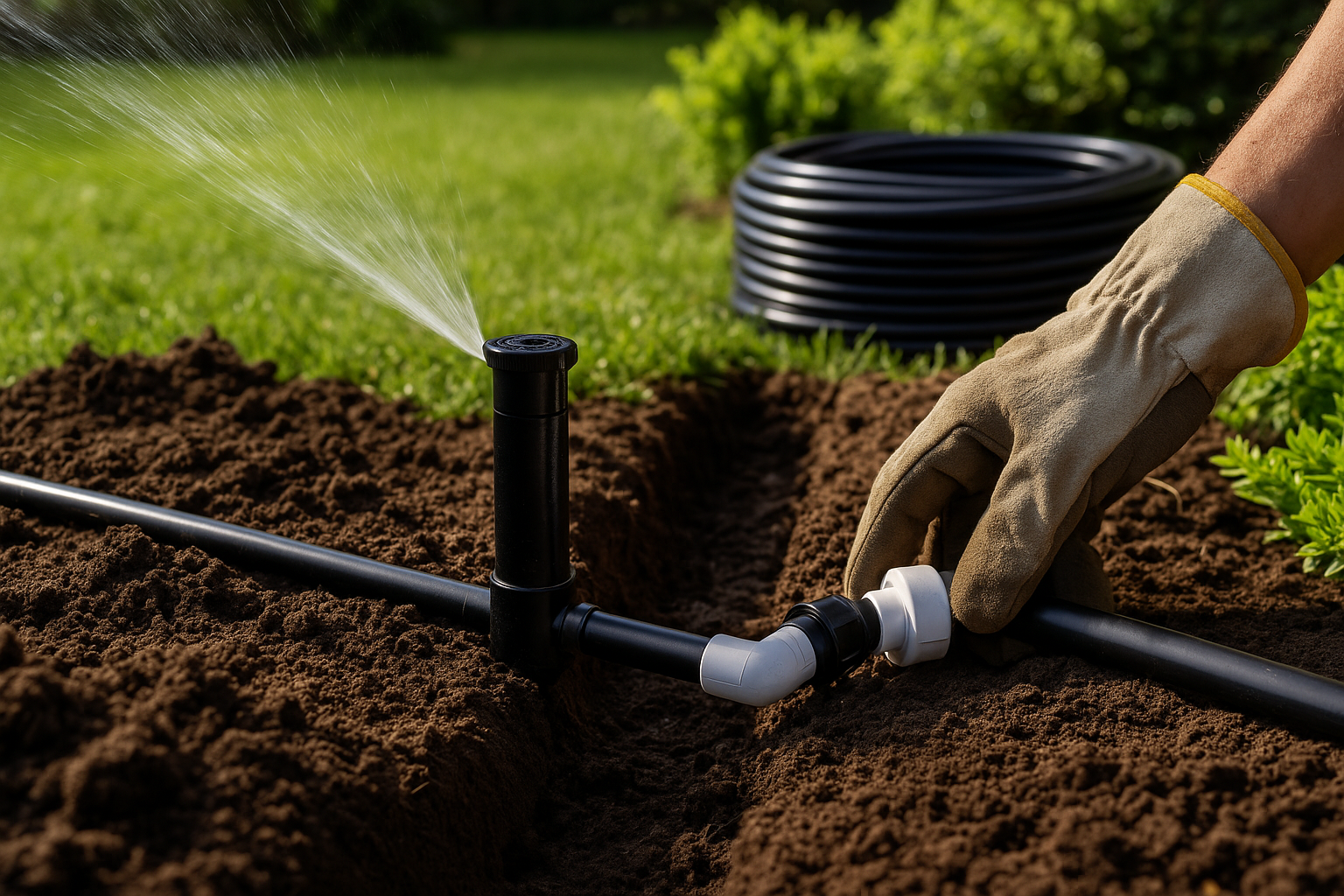
Dig trenches deep enough to protect pipes from damage and freezing (depth depends on local frost line). Lay the mainline, connect valves, and run lateral lines to each zone. Secure fittings and test for leaks before backfilling.
Install Valves, Controller, and Backflow Preventer
Mount the controller in an accessible, weather-protected location. Connect zone valves to the controller and the main water supply. Install a backflow preventer per local code to protect drinking water.
Add Sprinkler Heads or Drip Emitters
Install sprinkler heads at the correct height and spacing to achieve head-to-head coverage. For drip, lay tubing next to plants and place emitters at root zones. Use pressure regulators and filters on drip lines to prevent clogging.
Testing and Adjustments
Run each zone individually, checking for proper coverage, leaks, and pressure. Adjust head angles, emitter output, and timer schedules. Look for puddling, runoff, or dry spots and correct them by repositioning heads or changing nozzle types.
Maintenance and Winterization
Regular Maintenance
Inspect heads and emitters seasonally, clean filters, and replace damaged parts. Keep the controller updated with seasonal watering schedules and adjust for rain events.
Winterization
In climates with freezing temperatures, blow out the system with compressed air or drain it to prevent pipe damage. Follow manufacturer recommendations for pressure levels and procedures.
Costs and When to Hire a Professional
Costs vary widely based on system type, yard size, and regional labor rates. DIY installations can save money but require time, planning, and some plumbing skills. Hire a licensed irrigation professional if your project needs complex grading, permits, or if you prefer a warranty on workmanship.
Water-Saving Tips
- Use smart controllers that adjust for weather and soil moisture.
- Group plants by water needs and use drip for beds.
- Install rain sensors or soil moisture sensors to avoid unnecessary watering.
- Water early in the morning to reduce evaporation.
Conclusion
Proper irrigation system installation begins with planning and ends with regular maintenance. Whether you choose sprinklers, drip, or a hybrid solution, the right design and components will keep your landscape healthy while conserving water. If in doubt, consult a professional to ensure your system is efficient, legal, and built to last.