
Backyard Drainage Systems: Solutions to Fix a Soggy Yard
Why backyard drainage matters
A wet, muddy yard isn’t just unpleasant — it can damage your lawn, erode soil, harm plants, and even threaten your home’s foundation. Proper backyard drainage directs water away from problem areas, protects landscaping investments, and keeps outdoor spaces usable after rain. This guide explains common issues, practical solutions, and how to decide between a DIY fix or professional installation.
Common drainage problems
Pooling and soggy lawns
Standing water after storms is the most obvious sign of poor drainage. It kills grass, attracts pests like mosquitoes, and can create muddy patches that never fully recover.
Erosion and sediment loss
Fast-moving water down a slope can carry soil away, damage garden beds, and expose tree roots. Over time this destabilizes landscaping and can require expensive repairs.
Basement and foundation risk
Water pooling near your home’s perimeter increases hydrostatic pressure on foundation walls. That can lead to leaks, cracks, or even structural damage if left unaddressed.
How to assess your yard
High-risk indicators
- Areas that stay wet more than 24–48 hours after rain
- Downspouts that empty close to your foundation
- Visible soil erosion, bare patches, or exposed roots
- Low spots where water naturally collects
Simple tests you can do
To map problem areas, watch your yard during a moderate rain or do a sprinkler test — run a hose for 20–30 minutes and observe where water pools or flows. Also check the slope: a 1–2% grade (about 1–2 feet drop over 100 feet) away from the house is recommended.
Solutions and systems
There’s no one-size-fits-all fix. The right solution depends on soil type, slope, the amount of water, and how you use the yard.
Grading and slope correction
Adjusting the yard’s grade so it slopes away from structures is the most fundamental solution. This can be simple regrading for small problems or adding topsoil and re-seeding for larger areas.
French drains
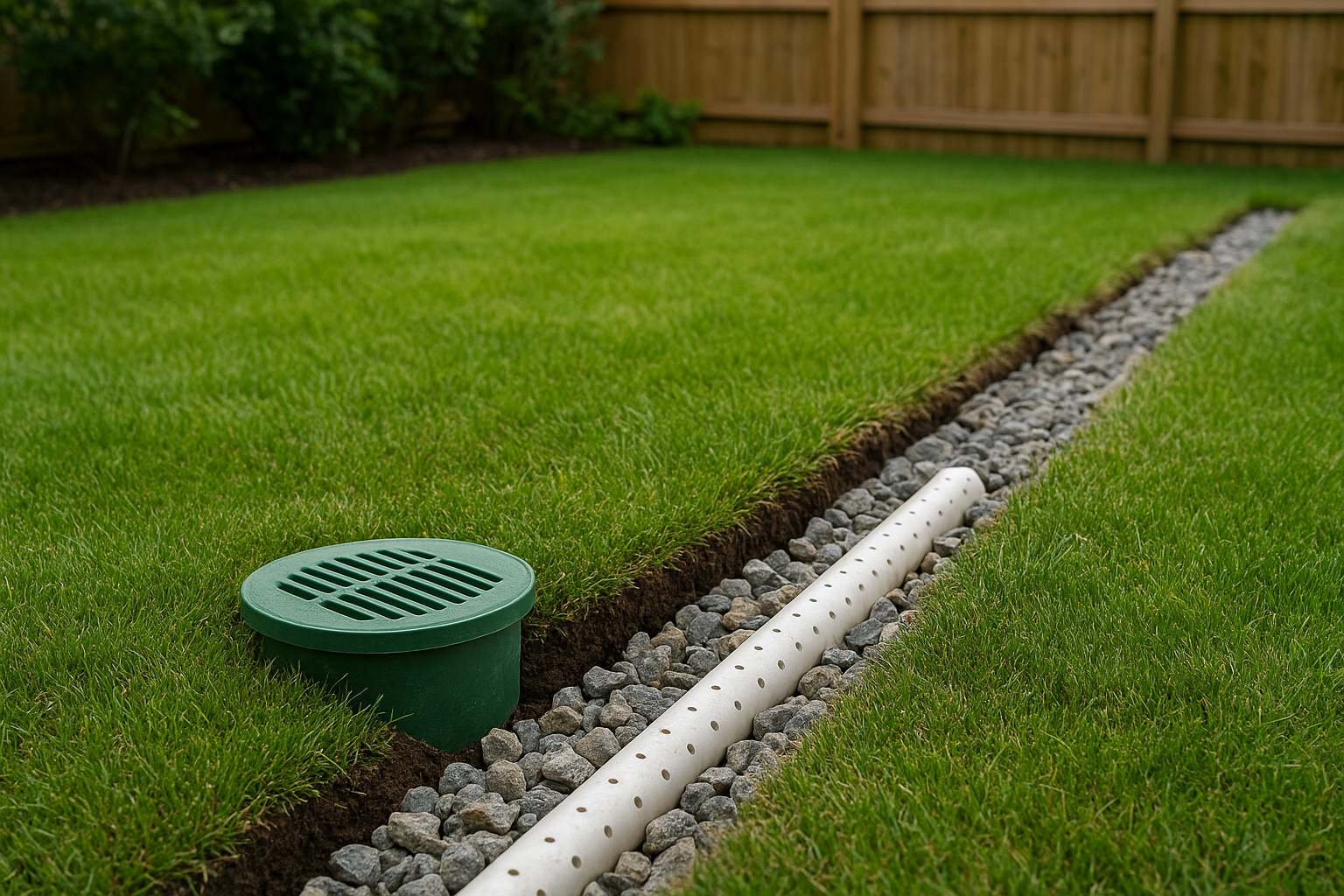
A French drain uses a perforated pipe surrounded by gravel in a trench to collect and divert subsurface water. It’s excellent for soggy spots and areas with poor soil drainage. French drains work quietly and can be routed to a dry well, storm drain, or lower area of the property.
Channel drains and trench drains
Installed at surface level, channel drains capture flowing water across paved areas like patios or driveways. They’re ideal where you need a clean, visible solution for surface runoff.
Dry wells and catch basins
Dry wells allow collected water to percolate into the ground slowly. Catch basins trap debris and connect to underground pipes that transport water away from problem zones.
Swales and rain gardens
Swales are shallow, vegetated channels that slow and direct runoff. Rain gardens use deep-rooted native plants to absorb and filter stormwater. Both are attractive, eco-friendly options that improve infiltration and reduce erosion.
Gutter extensions and downspout solutions
Often the simplest fix: extend downspouts away from the foundation, add splash blocks, or connect to underground piping to prevent concentrated water at the house perimeter.
Sump pumps
When water collects in a low point that can’t drain naturally, a sump pump can actively remove it to a safe discharge location. Sumps are common for basements but are also used outdoors for problem depressions.
DIY vs. professional installation
When DIY works
Small grading jobs, gutter extensions, simple trenching for gravel drains, and planting a rain garden are often reasonable DIY projects if you’re comfortable with tools and basic landscaping.
When to call a pro
Hire a professional if you have foundation concerns, need complex piping, face permitting or HOA requirements, or when the project requires heavy excavation and precise grading. Pros can handle drainage design, ensure proper permits, and avoid unintended consequences.
Maintenance and seasonal tips
- Keep gutters and downspouts clear of debris to prevent overflow.
- Inspect and clean catch basins and channel drains each season.
- Top up gravel in French drains and check for settling annually.
- Monitor slopes and regrade if you notice new pooling or erosion.
Cost considerations and permits
Costs vary widely: do-it-yourself fixes can be low-cost, while professional systems like extensive French drains or grading can run into thousands of dollars. Check local codes before altering drainage patterns — some municipalities restrict where you can discharge stormwater or require permits for major work.
Landscaping-friendly drainage practices
Use native, deep-rooted plants in rain gardens and swales to improve infiltration. Mulch and groundcovers reduce splash erosion, while retaining walls combined with proper drainage can stabilize sloped areas without trapping water against structures.
Conclusion
Good backyard drainage protects your home, preserves landscaping, and keeps your outdoor space enjoyable year-round. Start by assessing problem areas, choose solutions that fit your yard and budget, and stay on top of maintenance. When in doubt, consult a professional to ensure the job is done safely and effectively.