
Irrigation Planning for Landscapes: A Practical Guide to Efficient, Healthy Gardens
Why irrigation planning matters
A well-planned irrigation system keeps plants healthy, reduces water waste, and lowers long-term maintenance costs. Whether you’re installing irrigation for a small home garden or a larger landscape, smart planning ensures water reaches the right plants at the right time—saving money and protecting the environment.
Assess your landscape
Understand your site
Start by mapping your property and noting sun exposure, slopes, soil types, and existing vegetation. These factors determine water needs and how quickly water infiltrates the soil. For example, sandy soil drains fast and needs more frequent watering than clay soil, which holds moisture longer.
Group plants by water needs
Separate plants into hydrozones: high, medium, and low water needs. Grouping similar plants together prevents overwatering drought-tolerant species and underwatering thirsty plants. Typical hydrozones: lawn areas, flower beds, shrubs, trees, and native/drought-tolerant zones.
Choose the right irrigation system
Sprinkler systems
Sprinklers are ideal for lawns and large groundcover areas. Use rotary or spray heads depending on the area size. Consider matched precipitation rates so overlapping heads apply water evenly. Sprinklers are less efficient for planting beds and can encourage disease in some plants due to wet foliage.
Drip irrigation
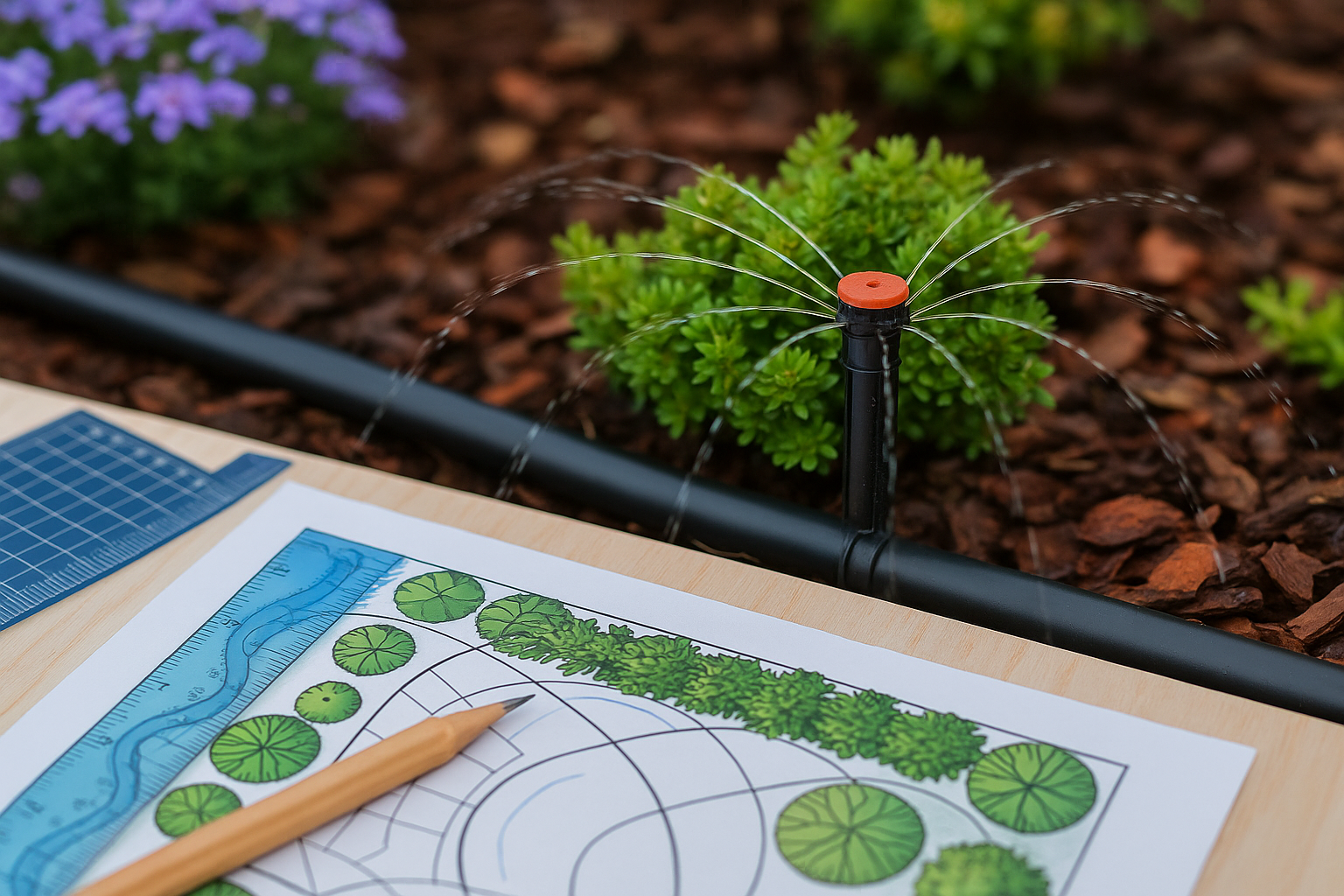
Drip systems deliver water slowly and directly to the root zone, making them the most water-efficient option for beds, shrubs, and trees. Drip lines and emitters reduce runoff and evaporation and are especially useful for mixed planting beds and sloped terrain.
Soaker hoses and micro-sprays
Soaker hoses provide a low-cost option for narrow beds and vegetable gardens. Micro-sprays are useful where a little foliage wetting is acceptable, offering a balance between coverage and efficiency.
Designing the irrigation plan
Create irrigation zones
Divide the landscape into zones based on plant water requirements, sun exposure, and layout. Each zone should have a compatible irrigation method and runtime. Large lawns, flower beds, and tree groups often require separate controllers so each receives the correct amount of water.
Determine water pressure and flow
Measure available water pressure and flow rate at the point of connection. These values influence what type and how many heads or emitters your system can run at once. If pressure is too high, use pressure regulators and consider pressure-compensating emitters for consistent output.
Plan piping and layout
Place valves and controllers in accessible spots. Minimize long mainline runs and use appropriate pipe sizes to maintain pressure. Keep drip lines on separate manifolds from sprinkler lines to avoid mismatched flow requirements.
Installation and maintenance
Follow best practices during installation
Install backflow prevention devices where required, and bury mainlines to protect them from damage. Label valves and include easy access for future repairs. Consider professional installation for complex systems or when local codes require certified installers.
Ongoing maintenance
Inspect the system seasonally. Check for clogged emitters, misaligned heads, broken lines, and leaks. Flush drip lines each season and adjust run times as plants mature or seasons change. Winterize the system in cold climates to prevent freeze damage.
Water conservation strategies
Smart controllers and sensors
Use weather-based or soil-moisture controllers to adjust watering automatically based on rainfall, temperature, or soil conditions. Rain sensors and freeze sensors are inexpensive add-ons that prevent unnecessary watering.
Mulching and plant selection
Mulch reduces evaporation and moderates soil temperature. Choosing native and drought-tolerant plants reduces overall irrigation needs and creates a resilient landscape that thrives with less water.
Budgeting and permits
Estimate costs
Budget for equipment, installation, permits, and ongoing operation. Drip systems often have higher upfront emitter costs but save money long-term through reduced water use. Get multiple quotes if hiring a contractor to compare options.
Check local regulations
Some municipalities require permits, backflow prevention, or limit irrigation times. Check local codes before installing to avoid fines and ensure your system meets safety and conservation standards.
Conclusion
Thoughtful irrigation planning balances plant health, water efficiency, and long-term maintenance. By assessing your site, choosing appropriate systems, designing compatible zones, and adopting conservation strategies, you create a landscape that looks great and uses water responsibly. Start small, monitor performance, and adjust as your garden matures—your landscape will reward you with beauty and resilience.