
Landscape Drainage Solutions: Protect Your Yard from Water Damage
Why Landscape Drainage Matters
Too much water sitting in your yard doesn’t just make it messy — it can harm plants, damage foundations, attract pests, and ruin outdoor living spaces. Good landscape drainage protects property value, keeps gardens healthy, and prevents headaches after heavy rain. Below are practical, real-world solutions you can use whether you’re tackling small low spots or designing a full-yard drainage plan.
Common Drainage Problems and Their Causes
Poor Grading
When soil slopes toward the house or flat spots collect runoff, water pools where it shouldn’t. Grading fixes are often the first step in many solutions.
Compacted Soils and Clay
Compaction and clay-heavy soils reduce infiltration. Water runs off the surface instead of soaking in, making puddles and erosion likely.
Inefficient Gutters and Downspouts
Overflowing gutters or downspouts that empty near the foundation concentrate water in the wrong places and can quickly overwhelm yard drainage.
Surface Drainage Solutions
Regrading and Sloping
Often the simplest long-term fix: reshape soil so water moves away from foundations and slopes toward safe discharge areas. For best results, maintain a minimum slope of 2% away from the house for the first 5–10 feet.
Swales
Shallow, vegetated channels, or swales, guide stormwater to a designated outlet or retention area. They’re attractive, low-cost, and work well in lawns and open landscapes.
Permeable Paving
Permeable pavers or porous concrete allow water to pass through instead of running off, reducing peak flows and encouraging infiltration.
Subsurface Drainage Options
French Drains
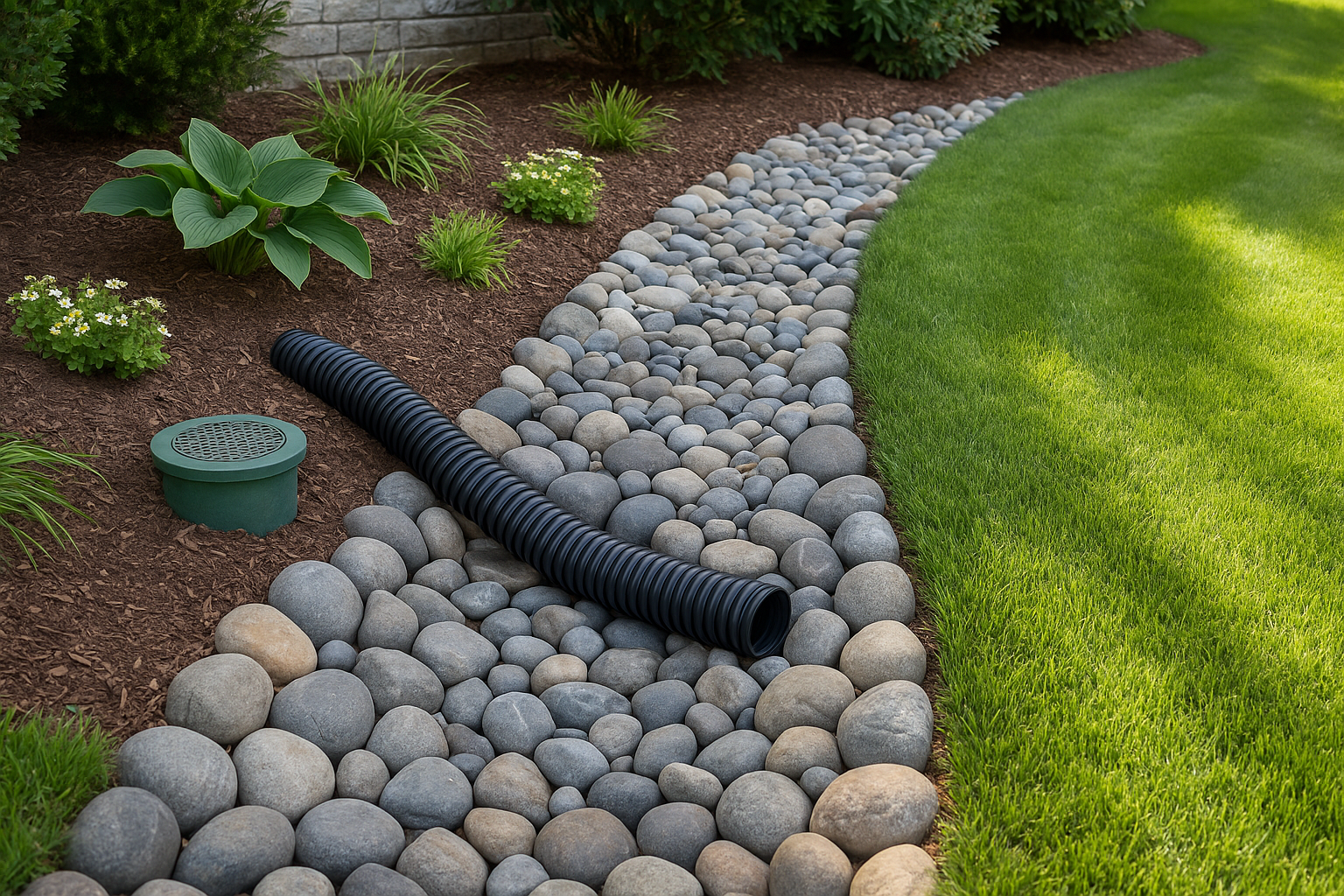
Popular and reliable, French drains are perforated pipes laid in gravel that capture subsurface water and direct it away from problem areas. They’re ideal for soggy spots near foundations, retaining walls, or along low-lying edges.
Dry Wells and Infiltration Basins
Dry wells collect runoff in an underground chamber where it slowly infiltrates into surrounding soil. They’re a good option where you can’t outlet water off-site.
Catch Basins and Channel Drains
For paved areas or concentrated flow points, catch basins and channel drains capture surface water and feed it into piping systems. They’re common on driveways and patios.
Vegetated and Natural Approaches
Rain Gardens
Rain gardens are shallow planted depressions that temporarily hold stormwater and let it soak in. Choose native, water-tolerant plants to maximize infiltration and habitat value.
Bioswales
Similar to swales but planted with deep-rooted vegetation, bioswales slow runoff, filter pollutants, and encourage infiltration—great for urban or suburban sites.
Household Drainage Upgrades
Gutters, Downspout Extensions, and Splash Blocks
Ensure gutters are clear and downspouts extend at least 6–10 feet away from the foundation. If space is limited, use extensions or splash blocks to move water to lawns or infiltration areas.
Soil Amendments and Aeration
Improve infiltration by aerating compacted areas and adding organic matter to soil. This helps water soak in rather than pool on the surface.
Maintenance Tips
- Clean gutters and downspouts twice yearly.
- Inspect grading after major landscaping or construction work.
- Keep drain inlets and grates free of debris, leaves, and sediment.
- Monitor vegetated systems and replace plants seasonally if needed.
- Check French drains and pipes for silt buildup or root intrusion every few years.
Cost Considerations and Planning
Costs vary widely. Simple fixes like downspout extensions and grading can be low-cost, while full French drain systems or major regrading require higher budgets and possibly professional help. Prioritize fixes that protect structures first, then address lawn and aesthetic concerns.
DIY vs Professional Help
If you’re comfortable with yard work and have basic tools, smaller projects—rain gardens, swales, and downspout extensions—are manageable DIY tasks. For grading near foundations, complex subsurface systems, or properties with steep slopes, consult a landscape contractor or civil engineer to ensure long-term performance and compliance with local codes.
Choosing the Right Solution for Your Yard
Start by observing how water moves during and after rain. Identify where it collects, where it should go, and whether the issue is surface or subsurface. Combine approaches—vegetated features with directed piping or permeable surfaces—to create resilient, attractive drainage systems.
Conclusion
Good landscape drainage is both practical and beautiful. By understanding the source of the problem, selecting appropriate solutions, and keeping systems maintained, you can protect your home and landscape while creating healthier, more enjoyable outdoor spaces.