
DIY Landscape Drainage: How to Fix Soggy Yards and Protect Your Home
Why Proper Landscape Drainage Matters
Soggy spots, standing water, and basement seepage are more than annoyances—they can damage plantings, erode soil, and threaten your foundation. Good landscape drainage directs water away from structures and sensitive areas, keeping your yard healthy and usable. The good news: many effective drainage fixes are DIY-friendly and cost far less than major repairs.
Plan Before You Dig
Assess the Problem
Walk your property after a rain and note where water pools and how it flows. Look for low spots, clogged downspouts, or soil that stays saturated. Measure the distance from problem areas to a safe discharge point—like a street, storm drain, or dry well.
Check Local Codes and Utilities
Call your local utility-locate service (in the U.S. dial 811) before any digging. Confirm setback requirements and whether you can discharge to a public storm system. If you’re in a floodplain or on steep slopes, you may need permits.
Common DIY Drainage Solutions
Regrading
Regrading redirects surface water by changing the slope of the soil. Aim for a slope of at least 1% away from the foundation (about 1/8 inch per foot). For small jobs, use soil, a shovel, and a rake; larger regrades may need a rented skid-steer or landscape contractor.
French Drain
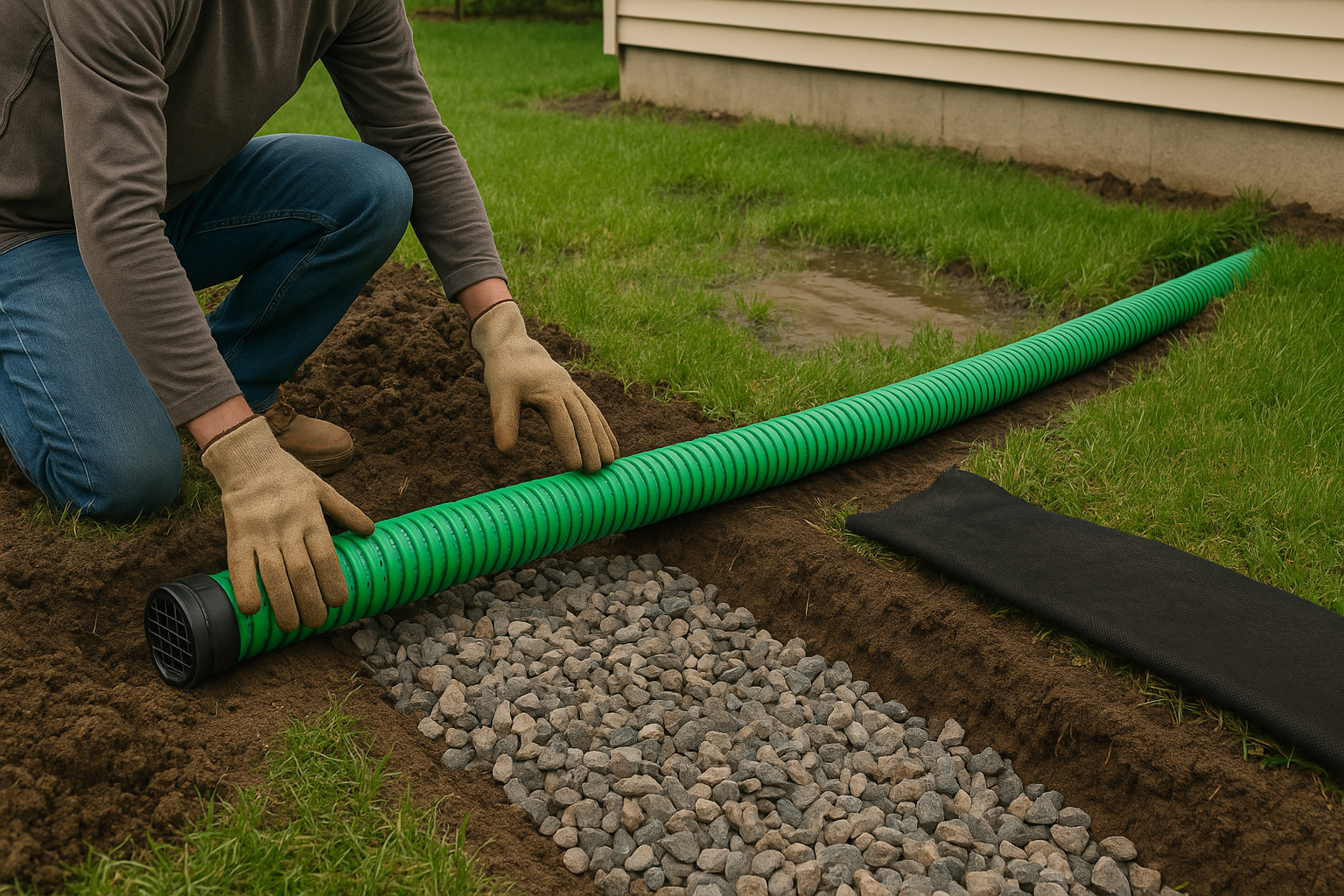
A French drain is a trench filled with gravel and a perforated pipe that collects and carries water to an outlet. It’s ideal for saturated yards or water near foundations.
- Dig a trench with a consistent slope (minimum 1% toward the outlet).
- Line the trench with landscape fabric, place a layer of gravel, then the perforated pipe (holes down).
- Cover with gravel, fold the fabric over, and top with soil or decorative stone.
Channel Drains and Catch Basins
Channel drains (also called trench drains) are great for driveway runoff. Catch basins collect concentrated flows and direct them into underground pipes—useful under downspouts or low points.
Dry Wells and Soakaways
Dry wells infiltrate water back into the ground. They’re a good outlet when you can’t discharge to a storm system. Ensure the soil is permeable enough and that the well is sized for expected flow.
Gutters and Downspout Management
Often the simplest fixes are at the roofline. Keep gutters clean, extend downspouts at least 4–6 feet from the foundation, or tie them into underground drains leading to safe discharge points.
Tools and Materials You’ll Need
- Shovel, trenching shovel, and wheelbarrow
- Perforated drainage pipe (4″ common size), solid pipe for outlet
- Landscape fabric and 3/4″ clean gravel
- Level or laser level, tape measure
- PPE: gloves, eye protection, knee pads
Step-by-Step French Drain Installation (Overview)
- Mark the trench route and verify slope with a level or string line.
- Call utility locates and then dig the trench to the required depth (commonly 12–18 inches for yard drains).
- Lay landscape fabric down, add a 2–3″ layer of gravel, then place the perforated pipe with the holes facing down.
- Backfill with gravel to within 2–3″ of the surface, fold the fabric over the gravel, and cover with soil or decorative stone.
- Test the system with water and adjust as needed to maintain flow.
Maintenance Tips
- Inspect drains annually and after heavy storms. Remove debris from surface intakes.
- Flush pipes with a garden hose to clear silt buildup.
- Repair any surface erosion and keep outlet areas free of obstructions.
- For grassy trenches, avoid compacting gravel; consider a shallow cover of decorative rock for access and filtration.
Cost Considerations and When to Call a Pro
DIY materials for a simple French drain or grading project typically range from a few hundred to a couple thousand dollars depending on length and depth. If water issues involve structural damage, steep terrain, complex permitting, or extensive plumbing, a professional drainage contractor or civil engineer is worth consulting. They’ll ensure proper capacity, erosion control, and compliance with local rules.
Safety and Environmental Notes
Always confirm underground utilities before digging. Manage runoff responsibly—don’t discharge concentrated water onto neighboring properties. Use erosion control measures like silt fences if you’re working on sloped sites.
Practical Tips from Homeowners
- Start small: fix gutters and downspouts before installing underground systems.
- Use durable piping and skip fines—coarse gravel drains best.
- Keep documentation of any drainage system you install for future selling or maintenance.
Conclusion
Effective landscape drainage protects your yard, plants, and home. With some planning, the right materials, and basic tools, many homeowners can install solutions like French drains, regrading, or downspout extensions themselves. When in doubt, get a professional assessment—properly routed water prevents costly problems down the road.