
Waterproof Outdoor Lighting: Durable, Safe, and Stylish Options for Every Yard
Why choose waterproof outdoor lighting?
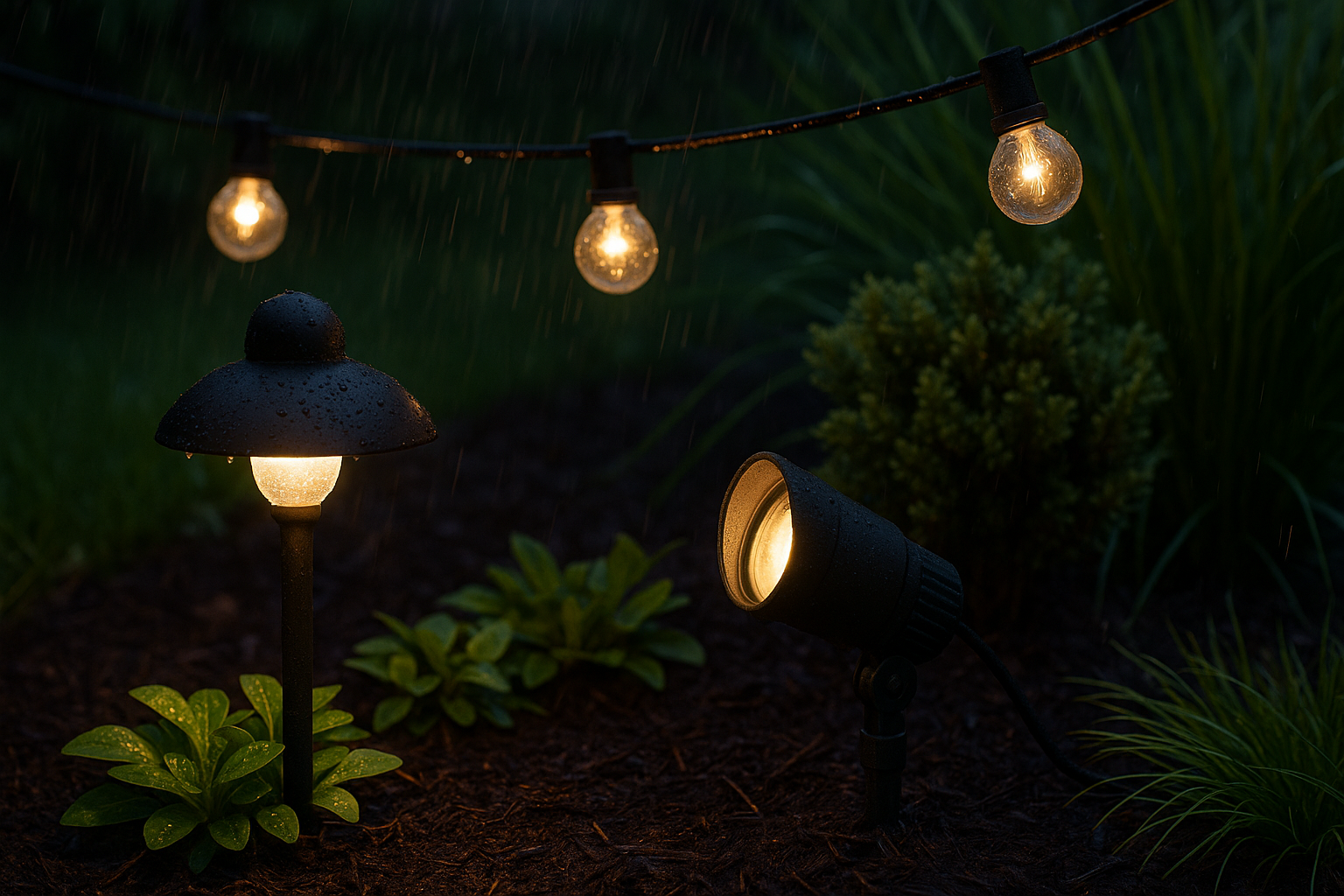
Outdoor lighting enhances safety, extends usable living space, and highlights landscaping and architecture. But outside means exposure to rain, snow, humidity, dust, and temperature swings. Waterproof outdoor lighting is built to resist those elements so fixtures stay functional and safe for years. Choosing weatherproof fixtures reduces maintenance, prevents electrical hazards, and keeps your yard looking great come storm or shine.
Understanding waterproof ratings (IP ratings)
The key spec to check is the IP (Ingress Protection) rating, usually shown as “IP” followed by two numbers. The first digit rates solid particle protection (dust), and the second digit rates water protection.
- IP44 — Protected from solid objects over 1mm and water splashes. Good for covered patios and general outdoor lighting where direct jets of water aren’t expected.
- IP65 — Dust-tight and protected from water jets. A popular choice for wall lights, spotlights, and fixtures exposed to rain.
- IP66 — Similar to IP65 but tested for more powerful water jets; ideal for harsher conditions.
- IP67 — Can be submerged temporarily; useful for fixtures near pools or in low-lying areas.
- IP68 — Suitable for continuous immersion; used in specialized underwater lights.
Match the IP rating to where the fixture will be installed: higher ratings for exposed locations or near water, and mid-range ratings for sheltered areas.
Types of waterproof outdoor lights
Spotlights and landscape lights
Used to accent trees, sculptures, or façades. Look for IP65+ fixtures with corrosion-resistant housings. Low-voltage LED landscape lights are energy-efficient and easy to install.
Wall lights and sconces
Wall-mounted fixtures light entryways, porches, and patios. Choose models with sealed gaskets and rust-proof finishes. IP54–IP65 is typical depending on exposure.
Floodlights
Floodlights provide broad, bright illumination for security and large outdoor areas. Commercial-grade LED floodlights often carry IP65–IP66 ratings and robust heat dissipation designs.
Pathway and step lights
Low-to-ground fixtures should be both waterproof and impact-resistant. Look for sealed lenses and IP65+ ratings to avoid water ingress from sprinklers or runoff.
String lights and festoon lighting
Outdoor string lights create ambiance. For permanent outdoor displays, choose waterproof cables and sockets rated IP44 or higher; plug-in ends should be protected or elevated off the ground.
Underwater and pool lights
Specialized LED fixtures designed for submersion require IP68 ratings and must meet local electrical codes. These should be installed with proper low-voltage power supplies and GFCI protection.
Materials and finishes
Durability depends on more than just the IP rating. Common materials include aluminum, stainless steel, and marine-grade plastics. Powder-coated finishes and anodized aluminum resist corrosion better than basic paints. For coastal areas, prioritize marine-grade stainless steel or specially treated finishes to withstand salt air.
Installation tips and safety
- Always follow local electrical codes and obtain permits when required.
- Use GFCI-protected circuits for all outdoor lighting to reduce shock risk.
- For DIY installations, opt for low-voltage systems (12V) which are safer and easier to wire.
- Seal all connections with outdoor-rated silicone or weatherproof junction boxes to keep moisture out.
- Keep transformers and drivers off the ground and in ventilated, dry locations.
Energy efficiency and smart features
LED technology dominates outdoor lighting because it uses less energy and lasts longer. Look for fixtures with a high CRI (Color Rendering Index) if accurate color is important. Smart controls—timers, motion sensors, dimmers, and app-based systems—improve convenience and save energy. Motion sensors are particularly useful for security lighting, while dimmable fixtures create flexible mood lighting.
Maintenance and troubleshooting
Waterproof doesn’t mean maintenance-free. Regular checks prolong lifespan:
- Inspect seals and gaskets annually and replace if cracked or brittle.
- Clean lenses and housings to remove dirt and salt buildup which can trap moisture.
- If a fixture flickers or fails, check the driver/transformer and wiring connections before replacing the fixture.
- Replace bulbs with correct type and wattage; LEDs often need compatible drivers.
Design ideas and placement
Think in layers: ambient lighting for general visibility, task lighting for steps and work areas, and accent lighting to showcase features. Use warm color temperatures (2700K–3000K) for cozy spaces and cooler tones (3500K–4000K) for security or modern aesthetics. Position lights to avoid glare—aim low for pathway lights and shield bright fixtures with hoods or frosted lenses.
Conclusion
Choosing the right waterproof outdoor lighting delivers years of reliable performance, improved safety, and attractive outdoor living spaces. Evaluate IP ratings, materials, and installation needs, and pair LED efficiency with smart controls for the best results. With proper selection and maintenance, your outdoor lighting will shine through every season.