
Curved Walkway Landscaping: Design Tips, Materials & Planting Ideas
Why Choose a Curved Walkway?
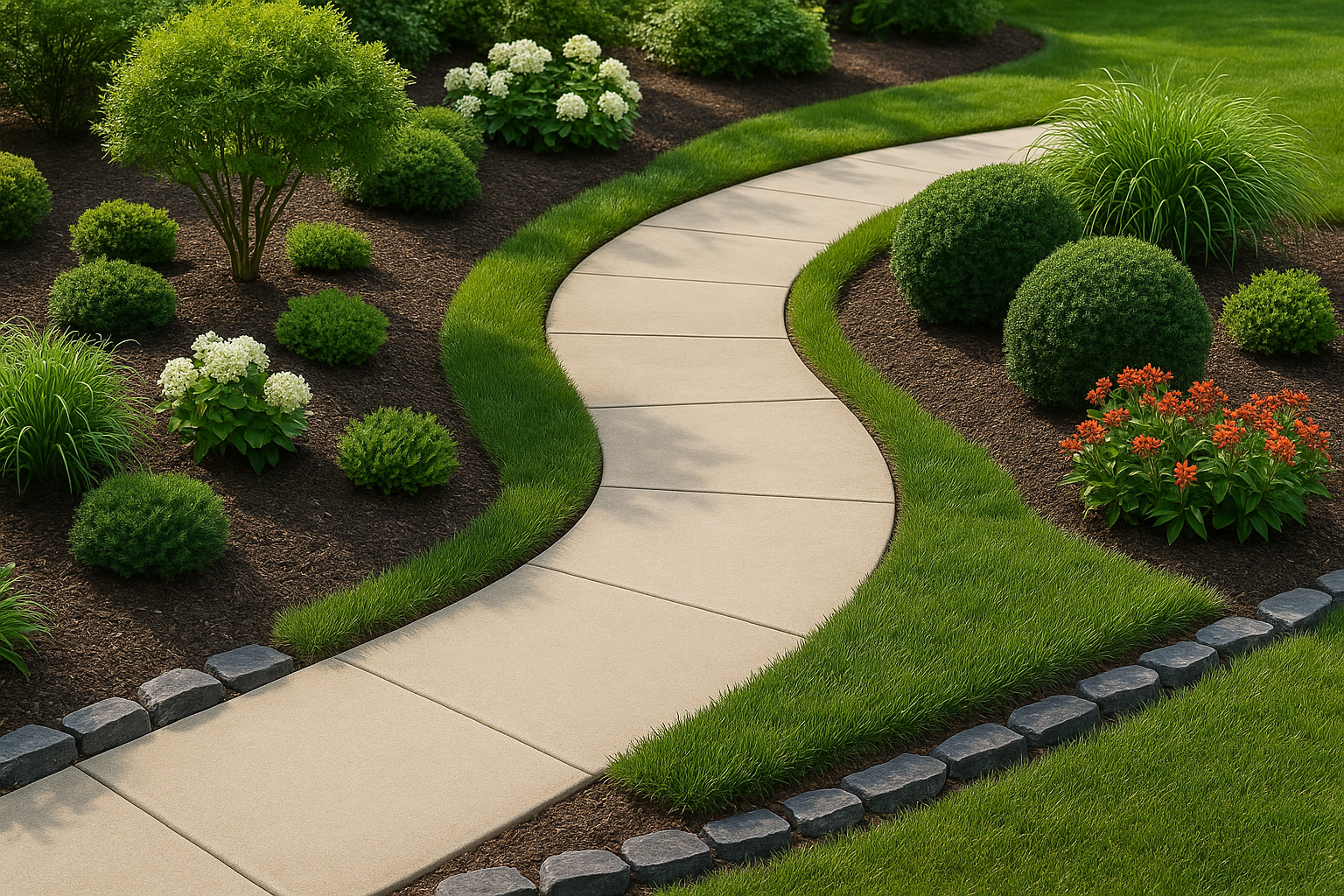
Curved walkways bring movement, softness, and a sense of discovery to any landscape. Unlike straight paths, curves encourage the eye to travel and create inviting transitions between spaces. They can also help navigate around trees, slopes, or garden beds—turning constraints into design features.
Planning Your Curved Walkway
Start with Flow and Purpose
Before picking materials or plants, decide how the path will be used. Is it a casual garden stroll, a formal entrance, or a service route to the side yard? The intended use will determine width, materials, and how bold your curves should be.
Work with Scale and Radius
Large properties can support broad, sweeping curves; small yards benefit from gentle S-shapes or short arcs. As a rule of thumb, use wider curves with larger radii for primary walkways and tighter curves for secondary garden paths. Aim for a minimum width of 3 feet for a comfortable single-file path and 4–5 feet if people will pass each other often.
Draw a Rough Plan
Mark the intended line with rope, garden hose, or spray paint and walk it. This low-cost mockup shows how the path feels in real life and helps you tweak the curvature for the best sightlines and approach to focal points.
Materials and Edging Options
Popular Surface Materials
- Pavers: Offer a neat, durable surface and come in patterns that emphasize curves.
- Flagstone: Natural, irregular shapes create an organic look that pairs beautifully with planting.
- Gravel or Decomposed Granite: More informal, budget-friendly, and easy to install; works well with edging.
- Stamped or Colored Concrete: Good for durable, low-maintenance paths; can be poured to follow smooth curves.
- Mulch or Bark: Soft, natural option for garden paths where light foot traffic is expected.
Edging for Clean Lines
Edging keeps material contained and defines the shape of your curve. Use steel, plastic, stone, brick, or planted edges depending on the style. For very smooth curves, flexible steel edging or poured concrete curbs work best.
Planting Ideas for Curved Walkways
Layer Plants for Depth
Think in layers: low groundcovers at the path edge, mid-height perennials and grasses behind them, and taller shrubs or small trees as background. This approach creates depth and frames the walkway without overwhelming it.
Plant Suggestions
- Groundcovers: Creeping thyme, Irish moss, sedum, or ajuga—soft underfoot and fragrant when stepped on.
- Perennials: Lavender, salvia, geraniums, and catmint add color and attract pollinators.
- Ornamental Grasses: Festuca, Pennisetum, and Carex add movement alongside a curving path.
- Shrubs & Accents: Boxwood for structure, hydrangea for seasonal drama, or Japanese maple for a focal turn.
Repetition and Rhythm
Repeating a few plants along the path helps create rhythm and continuity. Vary height, texture, and bloom time so the path looks interesting through multiple seasons.
Lighting and Accessories
Light for Safety and Atmosphere
Low-voltage path lights, solar stakes, or in-ground uplights can highlight curves and steps while improving safety at night. Place lights to minimize glare and accentuate key bends or focal plants.
Add Seating and Focal Points
Benches, birdbaths, sculpture, or a small water feature placed at a gentle bend create destinations and encourage people to pause and enjoy the landscape.
Construction Tips and Maintenance
Pay Attention to Base and Drainage
A stable base is crucial—compact crushed stone and a permeable bedding layer prevent settling. Make sure the path has a slight cross-slope or a nearby drain to avoid puddles forming on the surface.
Weed Control and Upkeep
Install landscape fabric under gravel or decomposed granite to reduce weeds. For stone or paver joints, use polymeric sand or plant low groundcovers to keep spaces filled. Regular sweeping, occasional resetting of displaced pavers, and seasonal pruning will keep the walkway looking its best.
Design Inspiration and Common Mistakes to Avoid
Design Tips
- Use broader curves for main entries and tighter ones for garden nooks.
- Anchor curves with taller plants or a focal point at key bends.
- Keep sightlines clear—avoid placing large, blocking shrubs right at the turn.
Common Mistakes
- Making the path too narrow—think about how people will use it.
- Overloading the edge with too many competing plants, which can feel cluttered.
- Ignoring grade and drainage, leading to erosion or pooling water.
Conclusion
Curved walkways are a powerful design element that can transform a yard by adding movement, guiding visitors, and showcasing plants and features. With thoughtful planning, the right materials, and seasonal plantings, you can create a functional and beautiful path that enhances your home’s curb appeal for years to come.