
Concrete Walkway Landscaping: Design Ideas, Plants, and Practical Tips
Introduction
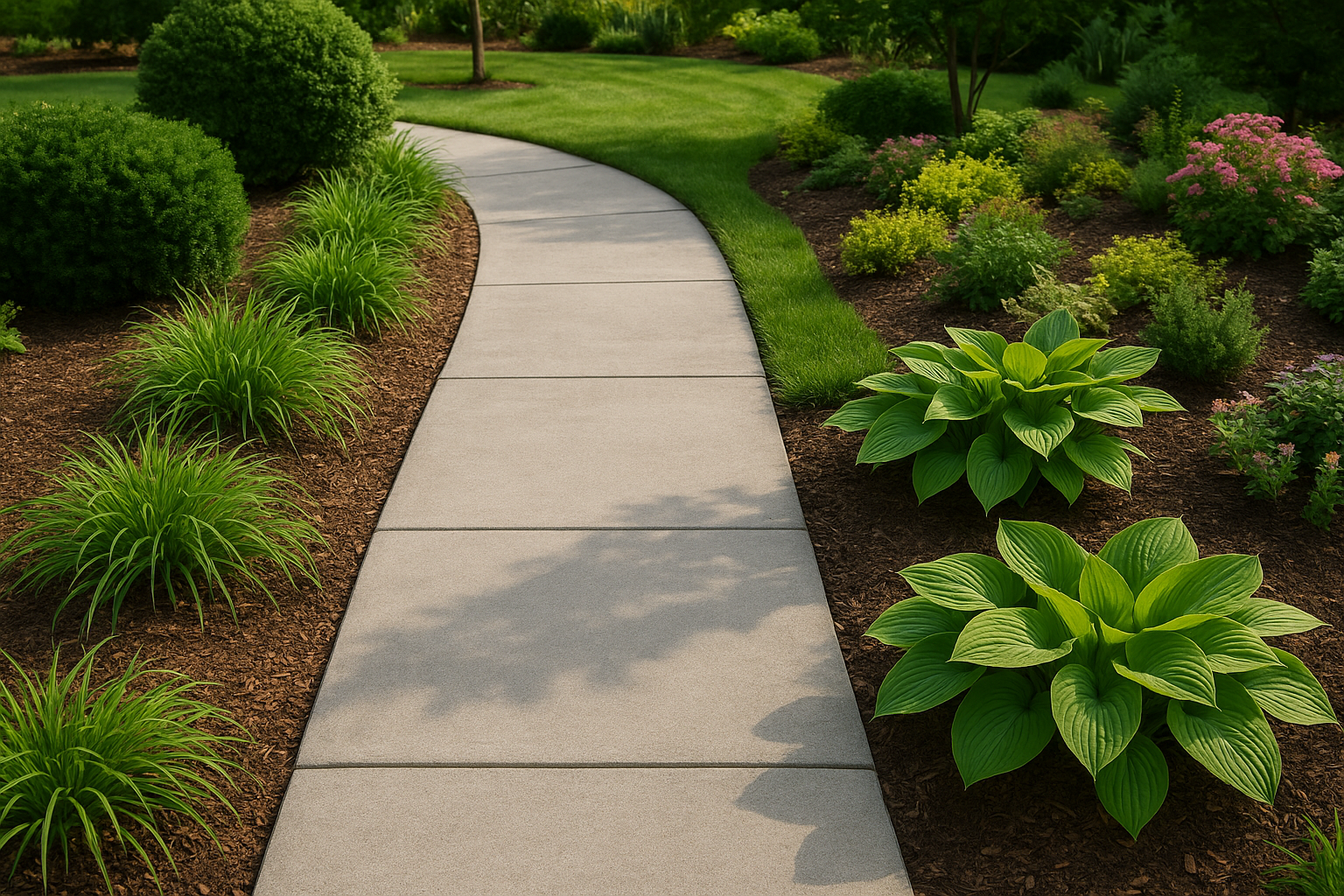
A concrete walkway is more than a functional path — it’s an opportunity to enhance curb appeal, guide visitors, and create a welcoming first impression. With a few design choices, plant selections, and practical additions like lighting and edging, your plain concrete path can become a beautiful landscape feature that complements your home.
Planning Your Concrete Walkway Landscape
Good landscaping starts with a plan. Consider the walkway’s purpose, the architectural style of your home, and how people actually use the path. A few planning points to keep in mind:
- Width and flow: For clear two-way foot traffic, aim for at least 4 feet (48 inches); 3 feet works for single-person paths.
- Style harmony: Match materials and plant choices to your home’s design—formal, cottage, modern, or rustic.
- Maintenance capacity: Pick plants and features you can realistically maintain.
- Drainage and grade: Make sure the walkway sheds water away from the house and avoids pooling or erosion.
Layout Options
Decide whether the path will be straight, curved, or stepping-stone style. Straight paths feel formal and efficient; gentle curves are friendlier and soften hard surfaces. For long runs, break monotony with widened areas or planting pockets.
Design Ideas for Concrete Walkways
Concrete is versatile. Use finishes, patterns, and accents to create character.
- Stamped concrete: Mimics stone, brick, or tile without separate pavers.
- Colored or stained concrete: Adds warm tones or bold accents to suit your palette.
- Exposed aggregate: Rustic texture and slip resistance.
- Concrete with inlays: Insert brick or stone borders for contrast.
- Permeable concrete: Environmentally friendly option that reduces runoff.
Edge Treatments
Edging defines the walkway and keeps landscape materials tidy. Popular options include steel edging for a contemporary look, brick or stone for a traditional feel, and low pavers for a cottage vibe. Choose an edge that complements both the concrete finish and surrounding plants.
Plant Choices and Placement
Plants should frame the path without obstructing it. Think in layers: low groundcovers nearest the concrete, medium perennials and grasses behind them, and occasional shrubs for structure.
Low-Growing Options (closest to the walkway)
- Creeping thyme — fragrant, soft underfoot, and tolerates light traffic.
- Dwarf mondo grass or sedges — evergreen, low-maintenance.
- Ajuga (bugleweed) — colorful foliage and spring blooms.
- Thyme-leaved stonecrop — drought-tolerant and spreads to fill gaps.
Mid-Height Plants
- Lavender or Russian sage — fragrant, pollinator-friendly, and architectural.
- Heuchera (coral bells) — colorful foliage and compact habit.
- Ornamental grasses like fountain grass — movement and texture.
Shrubs and Accents
- Dwarf boxwood or yew for structure and evergreen interest.
- Hydrangeas or roses as focal points at path turns or entrances.
- Small trees (dwarf Japanese maple, serviceberry) for vertical height where space allows.
Lighting, Safety, and Accessories
Lighting extends usability after dark and highlights landscape features. Combine options for layered effects:
- Low-voltage path lights for consistent, warm illumination.
- Solar lights for easy, wiring-free installs (choose quality units for longevity).
- Recessed step lights or ground-level insets for a modern look.
- Accent uplights to showcase trees or architectural details.
Also consider non-slip textures, reflective markers for safety, and benches or planters to create resting spots.
Installation and Practical Considerations
If you’re installing or renovating a concrete walkway, these tips will help ensure long-term success:
- Base and compaction: A well-compacted base prevents settling and cracking.
- Control joints: Proper joint spacing reduces random cracking.
- Sealing and finish: Seal stamped or colored concrete to preserve color and prevent stains.
- Permeability: Consider permeable options for yards prone to runoff or where you want to recharge groundwater.
Maintenance Tips
Routine care keeps the walkway attractive and safe:
- Sweep and power-wash annually to remove debris and prevent algae buildup.
- Trim plants so they don’t encroach on the walking surface.
- Re-seal concrete every few years depending on wear and exposure.
- Repair cracks quickly to prevent water infiltration and freeze-thaw damage.
Budgeting and DIY vs. Professional Help
Costs vary widely. Simple poured concrete can be budget-friendly; stamped and colored finishes add labor and material costs. If you’re handy and tackling a small path, DIY may be feasible. For complex forms, drainage issues, or high-end finishes, hire a reputable contractor to avoid expensive mistakes.
Conclusion
Concrete walkway landscaping blends practical function with design potential. By choosing the right finish, edging, plants, and lighting — and by planning for drainage and maintenance — you can transform a plain path into a polished landscape feature that enhances curb appeal and usability. Start small if needed: even a few well-chosen groundcovers and path lights will make a noticeable difference.